
Best Dual eSIM Phones in 2026: iPhone 16 Wins Overall
Best overall dual eSIM phone in 2026: the Apple iPhone 16, which stores up to eight eSIM profiles and runs two active at once. Best Android pick: the Google Pixel 9, built for simultaneous dual-active eSIM without a physical SIM tray. Best flagship alternative: the Samsung Galaxy S24 in its international, unlocked variant. Best fix if your current phone doesn't support dual eSIM at all: the Switch eSIM Adapter Max, a physical card that adds eSIM profile switching to any compatible SIM slot.
- Apple iPhone 16 wins overall for dual eSIM: 8 stored profiles, 2 active simultaneously.
- Google Pixel 9 is the best Android phone for dual-active eSIM without disabling the physical SIM slot.
- Samsung Galaxy S24 international variants support dual eSIM; many US carrier variants restrict it to one active eSIM.
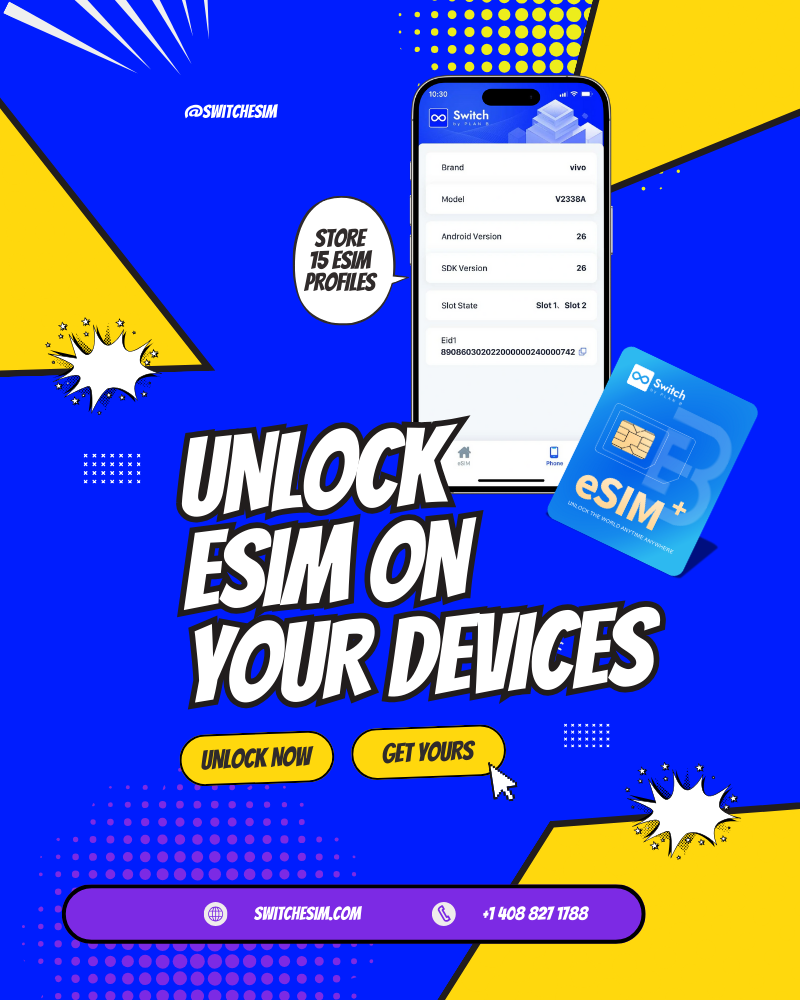
- No native dual eSIM support on your phone: Switch eSIM Adapter Max fits a physical SIM tray and holds up to 15 profiles.
- Carrier lock and region variant matter more than the phone model when picking a best dual esim phone in 2026.
Why this matters
Most "best dual esim phones" lists ignore the two facts that actually decide whether dual eSIM works on your unit: the regional variant you bought, and whether your carrier locked the eSIM slot. A US-market Galaxy S24 and an international Galaxy S24 can behave completely differently for eSIM, even though they look identical.
If your phone doesn't qualify, buying a new one isn't the only option. A physical eSIM adapter card — Switch Pro for Android, Switch Max for Android and iPhone — fits into an existing SIM tray and gives you profile switching without native dual eSIM hardware. That's the second half of this guide.
What makes the best dual eSIM phone
- Simultaneous active profiles — can both eSIMs handle calls/data at once, or does the phone only support one active eSIM plus a physical SIM
- Storage capacity — how many eSIM profiles the phone can hold even if only 1-2 run active
- Region and carrier variant — US carrier-locked units frequently restrict eSIM behavior compared to unlocked international models
- Network band support — matters for travel and multi-carrier switching, not just eSIM capability
- Physical SIM tray availability — required if you want to add a Switch Pro or Switch Max adapter later
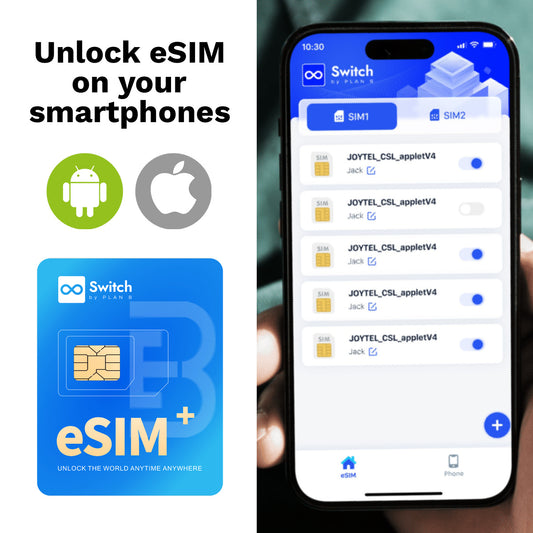
- Software profile management — how the phone's OS lets you rename, toggle and prioritize eSIM profiles
Dual eSIM phones at a glance
| Phone | Best for | Standout feature | Key limitation |
|---|---|---|---|
| Apple iPhone 16 | Overall dual eSIM use | 2 eSIM profiles active simultaneously, 8 stored | No physical SIM tray on US models |
| Google Pixel 9 | Android dual-active eSIM | Dual eSIM, dual standby without disabling SIM slot | Carrier eSIM onboarding varies by region |
| Samsung Galaxy S24 (international) | Flagship alternative | Dual eSIM support on unlocked global units | US carrier variants often limit to single active eSIM |
| Phone without native dual eSIM + Switch Max | Older or budget phones with a SIM slot | Adds up to 15 switchable eSIM profiles via physical card | Requires a working SIM tray; not a software fix |
1. Apple iPhone 16: best dual eSIM phone overall
The iPhone 16 runs two eSIM profiles active at the same time and can store up to eight profiles total, which covers a home line, a work line and a travel data plan without swapping hardware. US models ship without a physical SIM tray, so eSIM is the only option — there's no fallback slot.
iPhone 16 pros:
- Two eSIM profiles active simultaneously for calls, texts and data
- Stores up to 8 eSIM profiles, switch between them in Settings
- Consistent eSIM behavior across US models since the tray was dropped
iPhone 16 cons:
- No physical SIM tray on US units — if an eSIM profile fails to activate, there's no backup slot
- International units still ship with a tray, so eSIM behavior differs by region
- Carrier-locked units may restrict which eSIM profiles activate
Best for: buyers who want the simplest dual eSIM setup and don't need a physical SIM fallback. Verdict: Buy.
2. Google Pixel 9: best Android phone for dual-active eSIM
Pixel phones have supported dual eSIM, dual standby since the Pixel 6 generation, meaning both eSIM profiles stay active without disabling the other. The Pixel 9 continues that behavior and pairs it with stock Android's straightforward eSIM toggle menu.
Pixel 9 pros:
- Both eSIM profiles active at once, no need to toggle one off to use the other
- Stock Android eSIM management is simpler than most manufacturer overlays
- Retains a physical SIM slot in most regional variants
Pixel 9 cons:
- Carrier eSIM QR activation support varies by network and country
- Fewer stored-profile options than iPhone's 8-profile ceiling in some markets
- Availability and variant differences affect band support for travel
Best for: Android users who want two eSIM profiles running live at the same time. Verdict: Buy.
3. Samsung Galaxy S24: best flagship alternative outside the US
International, unlocked Galaxy S24 units support dual eSIM. US carrier variants have historically shipped with eSIM restricted to a single active profile alongside a physical SIM, which changes the phone's practical dual eSIM capability depending purely on where it was bought.
Galaxy S24 pros:
- Full dual eSIM support on unlocked international units
- Retains a physical SIM tray on most variants
- One UI's eSIM profile labeling makes multi-line management easy to read
Galaxy S24 cons:
- US carrier variants often restrict eSIM to a single active profile
- Behavior differs enough between regions that the same model name means different capability
- Carrier bloatware can complicate eSIM QR activation
Best for: buyers who can source or confirm an international unlocked unit. Verdict: Hold — confirm variant before buying.
4. Phone without native dual eSIM + Switch Max: best for older or budget devices
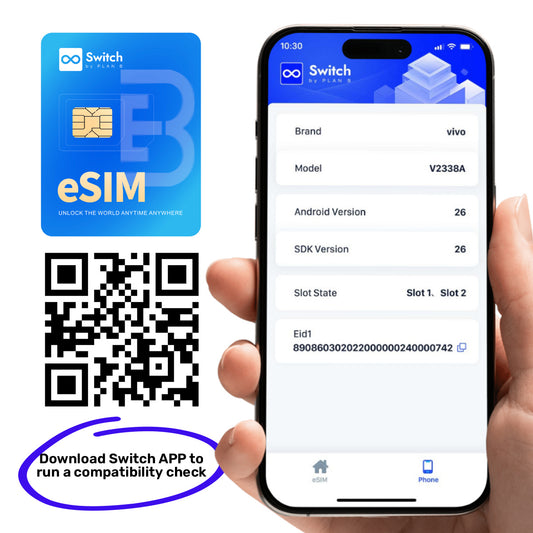
If your phone predates dual eSIM support, or your carrier variant restricts it, a physical Switch eSIM Adapter Max card fits into the existing SIM tray and adds eSIM profile switching without replacing the phone. It works with both Android and iPhone as long as the device has a compatible physical SIM slot.
Switch Max pros:
- Adds eSIM capability to phones with no native eSIM support at all
- Holds up to 15 eSIM profiles on one card
- Works across Android and iPhone, unlike single-OS adapters
Switch Max cons:
- Requires a working physical SIM tray — no tray, no adapter
- Not a software fix; it's a hardware workaround, so profile loading still depends on carrier QR support
- Compatibility depends on phone model, regional variant and carrier-lock status, not just "any phone with a SIM slot"
Best for: anyone whose current phone lacks dual eSIM and isn't due for an upgrade. Verdict: Buy if your SIM tray checks out.
How we ranked
The order above follows simultaneous-active profile capability first, then storage capacity, then how consistent that behavior is across regional variants. Phones that only support dual eSIM in specific markets, like the Galaxy S24's US units, get penalized versus phones with consistent behavior everywhere, like the Pixel 9 and iPhone 16.
What if your phone doesn't support dual eSIM
This is the gap most "best dual esim phones in 2026" roundups skip. If your phone is a few years old, region-locked, or a budget model, none of the four options above may apply to you directly.
Switch eSIM sells three ways to get eSIM profile switching without a native dual eSIM phone:
- Switch eSIM Adapter Pro — Android-only, manages profiles through the Switch Android app, holds up to 15 eSIM profiles on one card.
- Switch eSIM Adapter Max — works on compatible Android and iPhone devices, same 15-profile capacity.
- Open Source Bluetooth eSIM Card Reader — loads and manages profiles on a Switch card without going through a phone at all, useful for routers, hotspots and IoT devices with a physical SIM slot.
All three require a working physical SIM tray on the target device — they don't add eSIM to phones that have no SIM slot whatsoever, and compatibility still depends on model, regional variant, carrier-lock status and network bands, not "any phone."


Which dual eSIM phone should you choose?
Buy the Apple iPhone 16 if you want the simplest, most consistent dual eSIM setup in 2026 and don't need a physical SIM fallback. Buy the Google Pixel 9 if you're on Android and want both eSIMs live at the same time. Confirm the variant before buying a Samsung Galaxy S24 — international units support dual eSIM, US carrier units often don't.
If none of that applies because your phone is older or region-locked, the Switch eSIM Adapter Max solves the same problem without a new phone, as long as your SIM tray is intact and functional.
FAQ
What's the best dual esim phone in 2026?
The Apple iPhone 16 is the best overall dual eSIM phone in 2026, running two active eSIM profiles simultaneously and storing up to eight. The Google Pixel 9 is the top Android alternative for the same dual-active capability.
Is the Galaxy S24 a dual eSIM phone?
International, unlocked Galaxy S24 units support dual eSIM. US carrier variants frequently restrict the phone to a single active eSIM profile, so the region and variant matter more than the model name.
Can I add dual eSIM to a phone that doesn't support it?
A physical adapter like the Switch eSIM Adapter Max fits into an existing SIM tray and adds eSIM profile switching, holding up to 15 profiles. It requires a working physical SIM slot and depends on the phone's model, region and carrier-lock status.
How many eSIM profiles can the iPhone 16 store?
The iPhone 16 stores up to 8 eSIM profiles and runs 2 active at the same time for calls, texts and data.
Does the Switch Pro adapter work on iPhone?
No. Switch Pro is Android-only and manages profiles through the Switch Android app. Switch Max is the version built for both Android and compatible iPhones.
What's the difference between Switch Pro and Switch Max?
Switch Pro works with Android phones only through the Switch app. Switch Max extends the same 15-profile card to compatible iPhones as well, covering both operating systems.
Do I need a physical SIM slot to use an eSIM adapter?
Yes. Switch Pro, Switch Max and the Bluetooth reader all require a physical SIM tray on the target device — they don't work on phones with no SIM slot at all.
Can a Bluetooth eSIM reader load profiles without a phone?
Yes. The Open Source Bluetooth eSIM Card Reader loads and manages profiles on a Switch card directly, which is useful for routers, hotspots and IoT devices with a physical SIM slot but no phone attached.
One last thing
The detail buyers miss most in 2026: the same phone model number can be two different dual eSIM phones depending on the carrier variant. Check the exact regional model before assuming your Galaxy S24 or any other flagship supports dual eSIM the way the marketing page implies.