
Best eSIM Adapter for Digital Nomads in 2026: Ranked
For digital nomads, the best esim adapter for digital nomads in 2026 depends on one thing before any feature list: whether your phone has a physical SIM slot and which operating system it runs. Best overall for Android nomads: Switch Pro. Best for iPhone and mixed Android/iOS households: Switch Max. Best for phone-free profile provisioning: the Open Source Bluetooth Card Reader. Best all-in-one starter kit: the eSIM adapters + Bluetooth Card Reader bundle. Best for a data-ready plan on arrival: the Switch Max Pre-loaded Destination Data card.
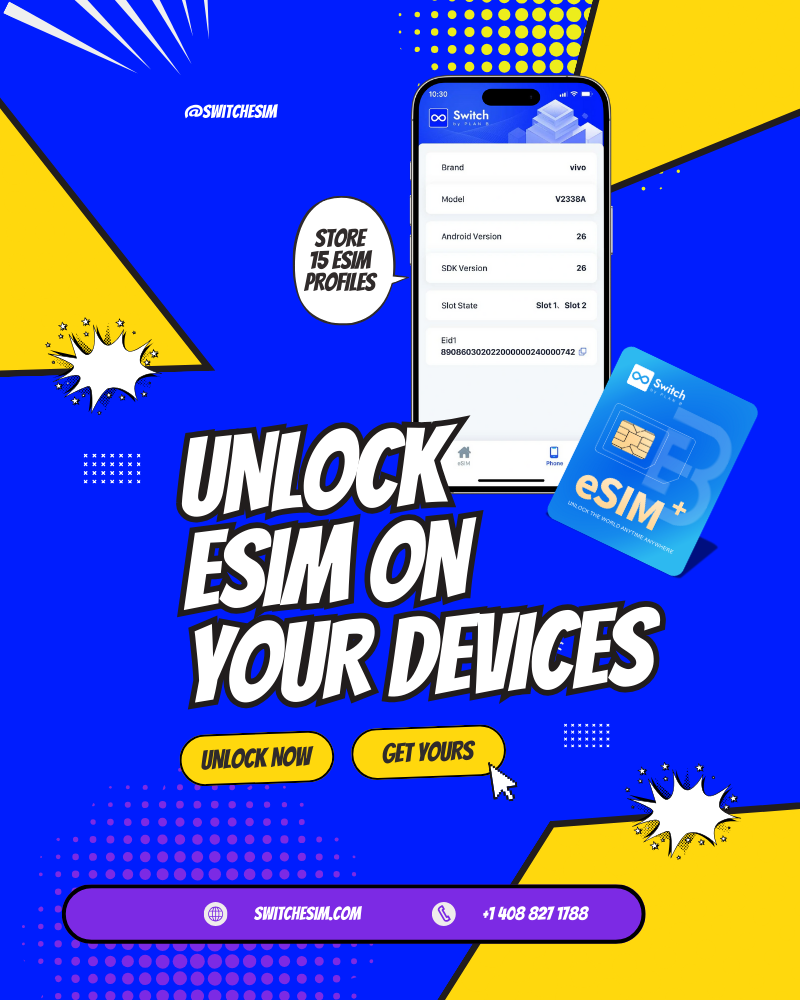
- Switch Pro fits Android phones with a physical SIM slot and holds up to 15 eSIM profiles; it does not run on iPhone.
- Switch Max extends the same 15-profile capacity to compatible iPhones and Android phones, built for mixed-device households.
- The Open Source Bluetooth Card Reader loads profiles onto a Switch card without a phone app, useful for routers and hotspots too.
- No eSIM adapter card works on a phone without a physical SIM tray — confirm that before checking OS support.
- The right esim adapter for digital nomads depends on phone OS, SIM-slot presence, and whether you manage profiles from a phone or a reader.
Why this matters
Most eSIM adapter searches skip the hardware question and jump straight to "best travel eSIM." That's backwards for a nomad juggling three or four country plans a year. A physical eSIM adapter card, like Switch Pro, sits in your phone's SIM tray and stores multiple eSIM profiles on the card itself instead of your phone's internal eUICC.
That matters because carrier-lock status, phone model variant, and native eSIM support vary by region even within the same phone line. A 2026 flagship sold in one market may ship without a SIM tray at all. Before comparing features, confirm your device has a physical slot — no adapter, including Switch eSIM's own cards, works around a soldered-only design.
What makes the best eSIM adapter for digital nomads
- Physical SIM slot on the target device — the adapter card needs a tray to sit in; native-eSIM-only phones with no tray are excluded entirely.
- Operating system path — Android profile management through an app differs from iPhone use of a pre-configured card, which differs again from reader-based provisioning.
- Profile capacity — how many eSIM profiles the card stores at once, since nomads rotate home, work, and destination plans.
- Provisioning method — QR-code or manual activation through a phone app versus loading profiles via a Bluetooth reader with no phone involved.
- Carrier-lock and network band fit — a locked phone or missing band support blocks activation regardless of adapter compatibility.
- Privacy model — profiles stored on a removable card versus tied to the phone's internal eUICC.
eSIM adapters for digital nomads: at a glance
| Adapter | Best for | Standout feature | Key limitation |
|---|---|---|---|
| Switch Pro | Android nomads with one primary phone | Up to 15 stored eSIM profiles on Android | No iPhone support |
| Switch Max | iPhone and mixed Android/iOS households | Same 15-profile capacity, works with compatible iPhones | Requires phone-model and carrier-lock check per device |
| Open Source Bluetooth Card Reader | Phone-free profile loading | Provisions a Switch card via Bluetooth without a phone app | Needs a Switch card already; not a standalone adapter |
| eSIM adapters + Bluetooth Card Reader bundle | Nomads starting from zero | Card and reader in one purchase | More setup steps than card-only options |
| Switch Max Pre-loaded Destination Data card | Landing with data already on the card | Ready-to-use profile, no self-sourcing an eSIM | Destination coverage limited to what's pre-loaded |
1. Switch Pro: best eSIM adapter for Android-only nomads
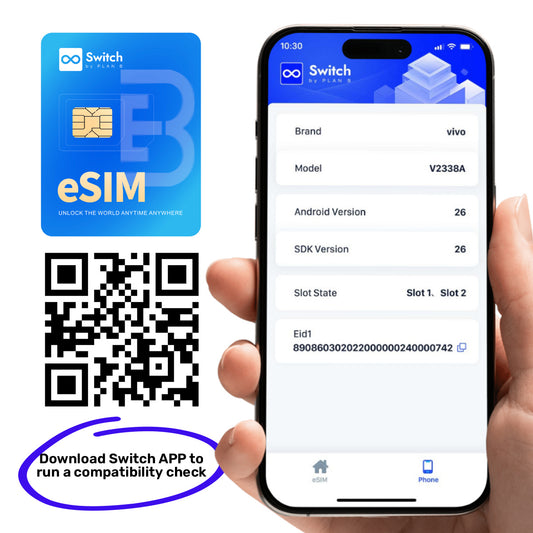
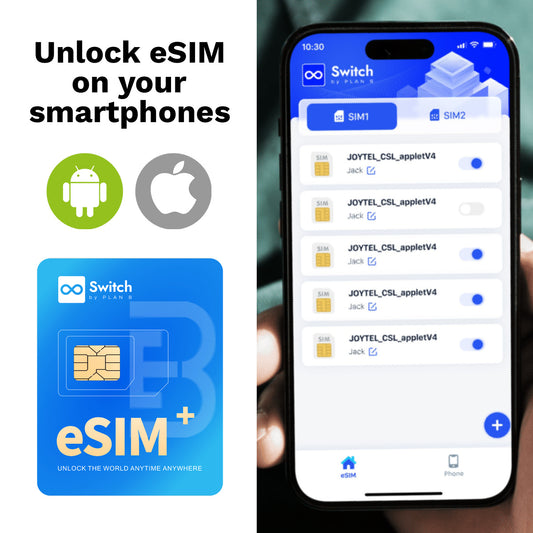
Switch Pro is a SIM-sized adapter card for compatible Android phones with a physical SIM slot. It stores up to 15 eSIM profiles at once, so a home plan, a work line, and a destination plan sit on one card without swapping physical SIMs at each border.
Profile management runs through the Switch Android app — no Bluetooth reader required for day-to-day switching.
Switch Pro pros:
- Up to 15 eSIM profiles on one card
- Managed directly through an Android app, no extra hardware needed for daily switching
- Works across compatible routers and hotspots with a SIM slot, not just phones
Switch Pro cons:
- Android only — does not extend to iPhone
- Still depends on the phone's SIM-slot presence and carrier-lock status
- Network band support varies by regional phone variant
Best for: Android-first nomads who want profile switching without touching a second device. Verdict: Buy if your Android phone has a physical SIM slot and you're not carrying an iPhone.
2. Switch Max: best eSIM adapter for iPhone and mixed households
Switch Max extends the same 15-profile card capacity to compatible iPhones alongside Android phones, which makes it the pick for households or travel pairs running both operating systems.
On iPhone, Switch Max works as a configured card rather than through an on-device management app — profile switching depends on how the card was set up before insertion.
Switch Max pros:
- Same 15-profile capacity as Switch Pro, extended to iPhone
- Single adapter format covers Android and iPhone households
- Compatible with routers and hotspots that have a SIM slot
Switch Max cons:
- iPhone compatibility depends on model, regional variant, and carrier-lock status
- No native on-device app for iPhone profile switching — relies on pre-configuration or the Bluetooth reader
- Still requires a physical SIM tray on the target device
Best for: Nomads switching between an iPhone and an Android device, or couples traveling with one of each. Verdict: Buy if you've confirmed your iPhone model and carrier status support it.
3. Open Source Bluetooth Card Reader: best for phone-free profile loading
The Open Source Bluetooth Card Reader loads and manages eSIM profiles on a Switch card without going through a phone at all. Insert the card, connect the reader, and provision profiles directly — useful for IoT devices, hotspots, and routers with a SIM slot but no interface for eSIM management.
Bluetooth Card Reader pros:
- Provisions profiles independent of any phone's app ecosystem
- Works across phones, routers, hotspots, and compatible IoT devices with a SIM slot
- Open-source design, so the provisioning process isn't locked to one app
Bluetooth Card Reader cons:
- Requires a Switch card already in hand — it's not a standalone adapter
- Adds a second piece of hardware to carry and pair over Bluetooth
- Setup is more technical than tapping through a phone app
Best for: Nomads managing profiles across multiple devices, not just one phone. Verdict: Buy as a companion to Switch Pro or Switch Max, not as a first purchase.
4. eSIM adapters + Bluetooth Card Reader bundle: best starter kit
This bundle pairs a Switch eSIM adapter card with the Open Source Bluetooth eSIM card reader in one purchase, covering both the card and the phone-free provisioning path from day one.
Bundle pros:
- One purchase covers both the adapter card and reader hardware
- Useful if you already know you'll manage profiles across more than one device
- Avoids a second, separate purchase later
Bundle cons:
- More upfront cost than a card alone
- Still requires confirming your phone's SIM-slot and OS compatibility separately for each device
Best for: Nomads setting up a multi-device eSIM workflow from scratch in 2026. Verdict: Buy if you already plan to use the reader; Skip if you only need one card for one phone.
5. Switch Max Pre-loaded Destination Data card: best for landing with data ready
This is a Switch Max card pre-loaded with a destination data plan, aimed at nomads who'd rather land with connectivity already active than source and activate an eSIM after arrival.
Connectivity is only half the arrival checklist. If your route runs through Southeast Asia, sorting data access alongside on-the-ground logistics like wynajem samochodu na Filipinach belongs in the same pre-arrival block — both need to be locked in before you land, not improvised at the airport.
Pre-loaded card pros:
- Data plan active on the card before you arrive
- Skips the step of manually sourcing and activating a destination eSIM
- Available for both iOS and Android devices
Pre-loaded card cons:
- Coverage is limited to whatever destination was pre-loaded — not a general-purpose multi-country card out of the box
- Still depends on the target phone having a physical SIM slot and matching OS support
Best for: Nomads who want zero setup steps on landing day. Verdict: Buy if your next destination is confirmed in advance; Hold if your route is still changing.


“If your phone doesn't have a physical SIM tray, no eSIM adapter card will work — check the tray before checking anything else.”
How we ranked these
Each adapter was weighed against the six criteria above: physical SIM-slot dependency, OS path (Android app, iPhone use, or reader-based), profile capacity, provisioning method, carrier-lock exposure, and where profiles are stored. Cards that only work on one OS were labeled for that OS rather than scored down across the board — a nomad running Android exclusively doesn't need iPhone support, and vice versa.
Which eSIM adapter for digital nomads should you choose?
If you're on Android and traveling with one phone, Switch Pro is the default pick for 2026 — 15 profiles, app-based switching, no second device to carry. If your setup spans an iPhone, Switch Max covers that path, provided the model and carrier-lock status check out first. Add the Open Source Bluetooth Card Reader only once you're managing profiles across more than a phone — a router, hotspot, or IoT device changes the calculus. For a route with a confirmed next stop, the pre-loaded destination card removes the activation step entirely.
FAQ
What is the best esim adapter for digital nomads in 2026?
Switch Pro is the best pick for Android-only nomads, storing up to 15 eSIM profiles managed through an app. Switch Max covers the same use case for iPhone and mixed-device households.
Does an eSIM adapter work on any phone?
No. The target phone needs a physical SIM slot, and compatibility also depends on the exact model, regional variant, operating system, carrier-lock status, and network bands.
Can an eSIM adapter work on an iPhone?
Switch Max is built to work with compatible iPhones as a pre-configured card, since iPhone does not have the on-device Switch app path that Android does. Model and carrier-lock status still need confirming per device.
How many eSIM profiles can one adapter card hold?
Switch Pro and Switch Max both hold up to 15 eSIM profiles on a single card in 2026. That lets a nomad keep a home, work, and destination plan on hand at once.
What does the Bluetooth Card Reader do that the adapter card does not?
The Open Source Bluetooth Card Reader provisions profiles onto a Switch card without a phone app. That matters for routers, hotspots, and IoT devices that have a SIM slot but no eSIM interface.
Is a pre-loaded destination eSIM adapter worth it for nomads?
It is worth it if your next destination is confirmed, since the data plan is already active on the card. It is a weaker choice if your route is still changing, because coverage is limited to what was pre-loaded.
Are Switch eSIM adapters available in bulk or white-label?
Yes. Switch eSIM offers bulk purchase packs and unbranded white-label eUICC cards with a minimum order quantity, aimed at resellers rather than individual nomads.
Does a carrier-locked phone block eSIM adapter use?
A carrier-locked phone can block activation regardless of adapter compatibility, because the lock sits at the carrier level rather than the adapter level. Check lock status before buying any adapter card.
One last thing
The detail nomads skip most often in 2026 is the SIM-tray check on their specific regional phone variant — the same model name can ship with or without a tray depending on the market it was sold in. Confirm that one line item before comparing any adapter's profile capacity or provisioning method; it decides whether you are shopping at all.