
Best eSIM Compatible Phones in 2026: Full Ranking
The best eSIM compatible phones in 2026 split into four honest categories, not one leaderboard. Best overall: Apple iPhone 15/16 series. Best for keeping a physical SIM slot free: Samsung Galaxy S24 series. Best budget eSIM phone: Google Pixel 8a. Best for stacking more than two profiles: any Android phone with a free SIM slot paired with the Switch eSIM Adapter Pro, or a tray-equipped iPhone paired with the Switch eSIM Adapter Max.
- Apple iPhone 15/16 series is the most reliable native eSIM compatible phone in 2026, but US models ship with no physical SIM tray at all.
- Samsung Galaxy S24 series keeps a physical SIM slot in most non-US markets, useful if you also want to run a physical eSIM adapter.
- Google Pixel 8a is the cheapest phone with full eSIM support after Google added it to the A-series starting with the 7a.
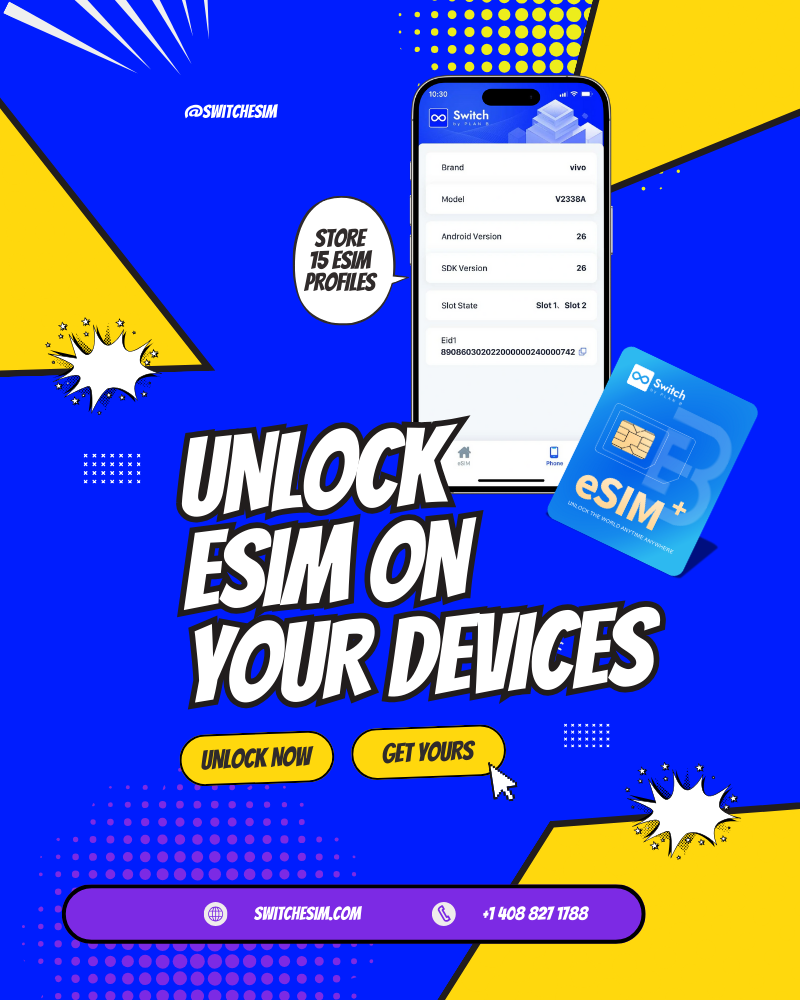
- Native eSIM phones typically cap out at two active profiles at once; the Switch eSIM Adapter Pro and Max both hold up to 15 stored profiles on one card.
- Device fit always depends on model, regional variant, carrier lock and SIM slot presence — never assume a phone qualifies without checking.
Why this matters
A phone listed as "eSIM compatible" tells you almost nothing about how many profiles it can hold, whether it keeps a physical SIM slot, or whether your specific regional variant even ships with eSIM enabled. Carriers, models and countries all change the answer. Switch eSIM exists precisely because native eSIM support on a phone is rarely enough for anyone juggling a home line, a work line, and destination data — most phones cap active eSIM use at two profiles regardless of how many you can store.
This guide separates phones by what they actually do well, then shows where a physical eSIM adapter picks up the slack native software leaves behind in 2026.
What makes the best eSIM compatible phone in 2026
- Confirmed eSIM support for your exact model and region — not just the product line
- A free physical SIM slot, if you also want to run a Switch Pro or Switch Max adapter alongside native eSIM
- Carrier-lock status — a locked phone restricts which eSIM profiles it will activate
- Number of active profiles supported at once, separate from how many can be stored
- QR-code or manual activation support from your destination carrier
- Network band coverage for the countries you actually travel to
At a glance
| Phone | Best for | Standout feature | Key limitation |
|---|---|---|---|
| iPhone 15/16 series | Best overall eSIM reliability | Dual eSIM standby with fast QR-code carrier activation | US models ship with zero physical SIM tray |
| Samsung Galaxy S24 series | Keeping a physical SIM slot alongside eSIM | Physical SIM + eSIM dual-SIM in most non-US markets | Configuration varies heavily by carrier and region |
| Google Pixel 8 / 8a | Budget-friendly eSIM access | eSIM standard across the whole 8-series, A-line included | Pixel 6a and older A-series models shipped without eSIM |
| Android phone + Switch eSIM Adapter Pro | Stacking more than 2 eSIM profiles | Loads up to 15 profiles onto one physical card | Needs a phone with an open physical SIM slot |
| Compatible iPhone + Switch eSIM Adapter Max | Bypassing Apple's 2-active-eSIM cap | Works across Android app management and tray-equipped iPhones | Won't fit US eSIM-only iPhone models |
1. iPhone 15/16 series: best eSIM compatible phone overall
Apple has shipped eSIM-capable iPhones since the iPhone XS launched in 2018, and by 2026 the implementation is the most tested on the market. QR-code activation from most major carriers takes minutes, and dual eSIM standby lets you keep two lines ringing at once.
iPhone 15/16 pros:
- Broadest global carrier support for QR-based eSIM activation
- Two eSIM profiles can stay active simultaneously
- Consistent software behavior across markets outside the US
iPhone 15/16 cons:
- US models carry no physical SIM tray, which rules out any physical eSIM adapter
- Apple's own limitation still caps active use at two profiles even though more can be stored
- Non-US, tray-equipped variants are required if you want to add a Switch Max card
Best for: buyers who won't exceed two live carrier profiles at once. Verdict: Buy.
2. Samsung Galaxy S24 series: best for keeping a physical SIM slot
Most non-US Galaxy S24 variants retain a physical SIM tray next to eSIM support, which matters if you want native eSIM and a Switch adapter running side by side. US carrier variants increasingly push eSIM-only configurations, so the tray isn't guaranteed everywhere.
Galaxy S24 pros:
- Physical SIM tray preserved in most international markets
- Dual SIM (physical + eSIM) works well for a home number plus a travel data profile
- Broad Android compatibility with third-party eSIM management tools
Galaxy S24 cons:
- Exact SIM/eSIM configuration depends on carrier and regional variant
- Some US carrier models drop the physical tray entirely
Best for: Android users who want a free SIM slot for a Switch eSIM Adapter Pro while still running native eSIM. Verdict: Buy.
3. Google Pixel 8 / Pixel 8a: best budget eSIM compatible phone
Google extended eSIM support down to its budget A-series starting with the Pixel 7a; the Pixel 6a and earlier A-series models shipped without it. By 2026, the full Pixel 8 lineup, including the 8a, ships with eSIM as standard.
Pixel 8/8a pros:
- Full eSIM support across flagship and budget models alike
- Clean Android build with straightforward carrier switching
- Lower cost of entry than flagship Samsung or Apple options
Pixel 8/8a cons:
- Fewer pre-loaded carrier partnerships than Samsung or Apple in some countries
- Older Pixel A-series models (6a and earlier) have no eSIM at all — check the exact model before buying used
Best for: buyers who want native eSIM without paying flagship prices. Verdict: Buy.
4. Any Android phone + Switch eSIM Adapter Pro: best for stacking more than two profiles
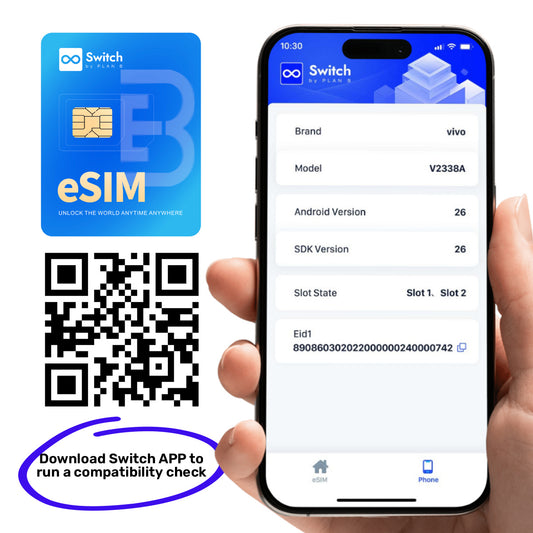
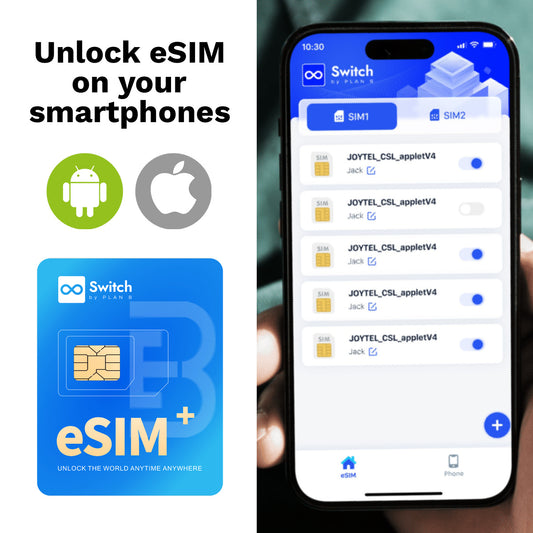
Most eSIM compatible phones, Android and iOS alike, cap active use at two profiles no matter how many are stored. The Switch eSIM Adapter Pro is a physical card for Android phones with a free SIM slot that holds up to 15 eSIM profiles, managed through the Switch Android app rather than the phone's baseband.
Switch eSIM Adapter Pro pros:
- Expands well past the native 2-profile limit most phone makers enforce
- Profiles live on the card, portable between compatible devices
- Works on routers and hotspots with a physical SIM slot, not just phones
Switch eSIM Adapter Pro cons:
- Requires Android for app-based profile management
- Still needs an open physical SIM slot — won't work on tray-less phones
Long-haul travelers who load a Switch eSIM Adapter Pro often stack a home profile, a work profile, and a handful of destination-data profiles on one card before a trip. The same planning discipline that goes into lining up self-drive car rental in the Philippines before you land applies to eSIM profiles too: sort what you need in advance, not after you've already burned data roaming on the wrong network.
Best for: multi-line users and frequent travelers who exceed two stored or active eSIMs on a stock phone. Verdict: Buy.
5. Compatible iPhone + Switch eSIM Adapter Max: best for bypassing Apple's 2-active cap
The Switch eSIM Adapter Max is a SIM-sized card that extends the same 15-profile capacity to compatible iPhones with a physical tray, alongside Android devices managed through the Switch app.
Switch eSIM Adapter Max pros:
- Works around Apple's 2-active-eSIM limit by rotating stored profiles on the card
- Same card also works in compatible Android phones
- Useful for a single iPhone carrying trip-specific or line-specific profiles
Switch eSIM Adapter Max cons:
- Only fits iPhone models that still ship with a physical SIM tray — not applicable to US eSIM-only iPhones
- Profile loading runs through the Switch app or the reader, not Apple's native eSIM settings
Best for: tray-equipped iPhone owners who need more than two live carrier profiles at once. Verdict: Buy.


How we ranked these phones
Each phone was scored against the criteria above: confirmed eSIM support for the specific model and region, physical SIM slot presence, carrier-lock exposure, and the number of profiles supported active at once. Phones that only support eSIM in select carrier bundles, or that vary by regional SKU, lost points against phones with consistent behavior across markets.
For readers who never want to touch a phone at all to swap profiles, the open-source Bluetooth eSIM card reader loads a Switch card's profiles directly, which matters for routers and hotspots as much as it does for phones.
Which eSIM compatible phone should you choose?
If you want the most consistent native eSIM experience and never exceed two active profiles, buy the iPhone 15 or 16 series — just confirm your regional variant still has a SIM tray if you plan to add hardware later. If you want a physical SIM slot kept free alongside eSIM, the Galaxy S24 series wins. On a budget, the Pixel 8a is the clear pick for 2026.
If your use case involves more than two carrier profiles — freelancers, fleet operators, frequent flyers — the phone itself stops being the deciding factor. The Switch eSIM Adapter Pro or Max becomes the actual answer, regardless of which eSIM compatible phone you're carrying, as long as it keeps a physical SIM slot.
FAQ
What is the best eSIM compatible phone in 2026?
The iPhone 15/16 series offers the most consistent native eSIM experience across carriers in 2026, though US models drop the physical SIM tray entirely. Samsung Galaxy S24 series is the better pick if you need to keep a physical SIM slot free.
Do all iPhones support eSIM?
No. Apple added eSIM starting with the iPhone XS in 2018, but US models from the iPhone 14 onward ship with no physical SIM tray at all, meaning eSIM-only. International variants generally keep a tray alongside eSIM.
Can Samsung Galaxy phones use eSIM and a physical SIM at the same time?
Most non-US Galaxy S24 variants support dual SIM with one physical card and one eSIM active together. Exact behavior depends on the carrier and regional model, so check before buying.
Do budget Android phones support eSIM?
Some do. Google's Pixel A-series added eSIM starting with the Pixel 7a; the Pixel 6a and earlier A-series phones shipped without it. Always confirm the exact model.
How many eSIM profiles can a phone store natively?
Storage varies by model, but most current iPhones and Android flagships limit active use to two eSIM profiles at once even when more are stored. That cap is why physical eSIM adapters exist.
Do I need an eSIM adapter if my phone already supports eSIM?
Only if you need more than two active profiles at once, want profiles portable across devices, or want to manage eSIMs without going through your phone's native settings. The Switch eSIM Adapter Pro and Max both hold up to 15 profiles on one card.
Does OnePlus support eSIM?
Support is inconsistent. Many OnePlus models, including some flagships, have shipped without eSIM support depending on region, so check the specific model and market before assuming compatibility.
Can I use a Switch eSIM Adapter in a phone without a physical SIM slot?
No. Both the Switch eSIM Adapter Pro and Max require a physical SIM slot to insert the card. US eSIM-only iPhones and other tray-less phones are not compatible with either adapter.
One last thing
The detail most buyers miss in 2026: a phone marketed as supporting "multiple eSIMs" almost always means multiple stored profiles, not multiple active ones. Apple's own limit sits at two active eSIMs regardless of how many you've loaded, and most Android flagships follow the same pattern. That single number — two — is the real reason physical eSIM adapters exist for anyone running more than a home line and one travel profile.