
Best iPhones With eSIM Support in 2026: 16 Pro Max Wins
iPhone 16 Pro Max wins as the best overall iPhone with eSIM support in 2026 because it runs two active eSIM lines at once and covers the widest set of 5G bands. iPhone SE (2022) is the best budget eSIM iPhone, and an international-variant iPhone 15 with a physical SIM tray is the best pick if you also want to run a Switch Max adapter card. iPhone XS remains the best entry point on the used market as the first iPhone with eSIM hardware, going back to 2018.
- iPhone 16 Pro Max is the best overall pick among iPhones with eSIM support in 2026, running two active eSIM lines at once.
- US retail models of iPhone 14 and later have no physical SIM tray — eSIM only, which blocks any physical adapter card.
- An international-variant iPhone 15 with a SIM tray pairs with Switch Max for extra profile storage beyond Apple's limit.
- iPhone SE (2022) is the cheapest current iPhone that still supports eSIM, with one active line.
- iPhone XS, launched in 2018, is the oldest iPhone with eSIM hardware and a common used-market pick.
Why this matters
Every iPhone from the XS onward has eSIM hardware, but "supports eSIM" hides three separate limits that decide what you can actually do with it: whether the phone still has a physical SIM tray, how many eSIM lines it can run active at the same time, and which region's retail unit you're holding.
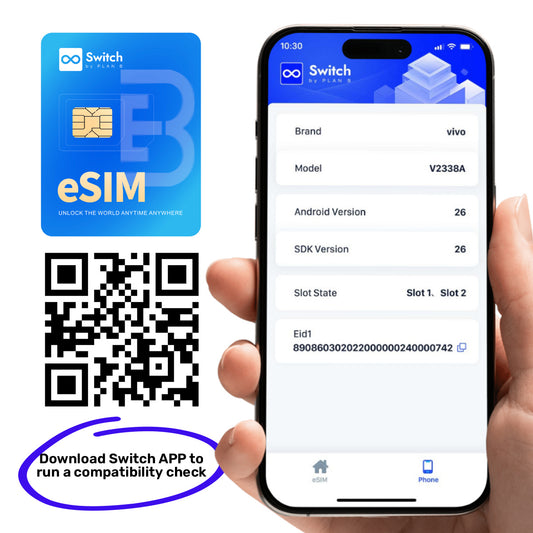
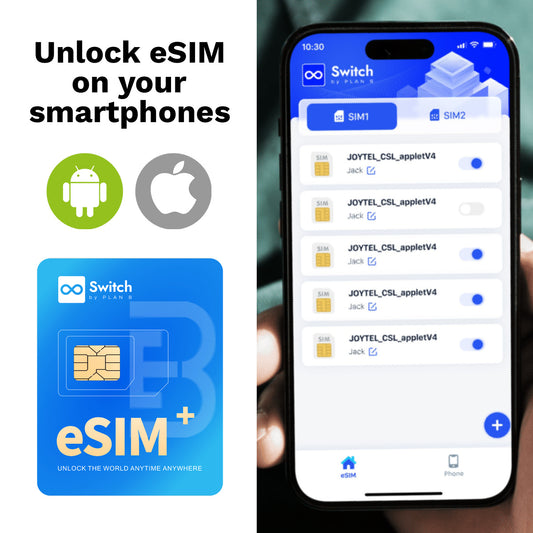
Apple caps most iPhones at two active eSIM lines running at once, a feature that arrived with iOS 15. That's fine for a home line plus a work line. It's not enough for someone juggling four or five destination eSIMs on a work trip, which is where a physical adapter card like Switch Max comes in — it slots into a compatible phone's physical SIM tray and holds up to 15 eSIM profiles, switching between them without touching Apple's carrier settings menu.
The catch: Switch Max needs an actual SIM tray to sit in. US models of iPhone 14, 14 Plus, 14 Pro, 14 Pro Max, and every US iPhone 15 and 16 variant, ship without one — eSIM only, no adapter possible. International variants of the same generations usually keep the tray. Check your exact model and region before assuming compatibility.
What makes the best iPhone for eSIM support
- Physical SIM tray presence — required if you want to run a physical adapter card alongside native eSIM
- eSIM-only vs dual-SIM variant — US retail units from iPhone 14 onward are eSIM-only; most international units still have a tray
- Active eSIM line limit — one line active vs two lines active at once, a software feature since iOS 15
- Carrier-lock status — a locked iPhone restricts which eSIM providers will activate, regardless of hardware
- Network band and eSIM provider support — matters more for travel eSIMs than for home carrier lines
- iOS version — older iOS builds may block eSIM Quick Transfer between two iPhones
iPhones with eSIM support at a glance
| iPhone | Best for | Standout feature | Key limitation |
|---|---|---|---|
| iPhone 16 Pro Max | Overall eSIM iPhone | Two active eSIM lines, full 5G band set | US models have no SIM tray |
| iPhone 15 (international, tray model) | Pairing with Switch Max | Physical SIM tray plus eSIM in one device | Must confirm the exact regional variant before buying |
| iPhone 13 | Budget dual-eSIM | Two active eSIM lines since iOS 15 | Older chipset, no Dynamic Island |
| iPhone SE (2022) | Budget single-line eSIM | Smallest, cheapest current eSIM-capable body | One active eSIM line only |
| iPhone XS | Used-market entry point | First iPhone with eSIM hardware (2018) | One active line, needs an iOS update to unlock later eSIM features |
1. iPhone 16 Pro Max: best overall eSIM iPhone for dual-line travel
iPhone 16 Pro Max runs two eSIM lines active at the same time, covers the broadest 5G band list Apple ships in 2026, and takes eSIM Quick Transfer directly from an older iPhone during setup. It's the newest hardware on this list, which also means the newest software support window.
iPhone 16 Pro Max pros:
- Two active eSIM lines out of the box
- Widest 5G and carrier-band support in Apple's current lineup
- Fastest eSIM Quick Transfer between two recent iPhones
iPhone 16 Pro Max cons:
- US retail units ship with no physical SIM tray at all
- No option to add a Switch Max or similar adapter card on the US model
- Highest cost of entry on this list
Best for: buyers who only need Apple's native eSIM limit and never plan to load more than two lines. Verdict: Buy.
2. iPhone 15 (international, physical-tray variant): best for pairing with Switch Max
An iPhone 15 or 15 Pro sold outside the US typically keeps a physical SIM tray next to its eSIM support. That combination matters if you want to go past Apple's two-active-line cap: a Switch eSIM Adapter Max card slots into that tray and holds up to 15 eSIM profiles, switching through the Switch app instead of Apple's cellular settings.
iPhone 15 (tray variant) pros:
- Keeps a physical SIM tray alongside native eSIM
- Compatible with Switch Max for profile counts well past Apple's own limit
- Still current hardware with iOS 26 support in 2026
iPhone 15 (tray variant) cons:
- Not the model Apple sells at US retail — sourcing the right variant takes checking model numbers
- Adapter card compatibility still depends on carrier-lock status and eSIM provider
- Switch Max manages profiles through its own app, not Apple's native eSIM screen
Best for: travelers who want more simultaneous profiles than Apple's own eSIM limit allows. Verdict: Buy, after confirming the model number has a tray.
3. iPhone 13: best budget dual-eSIM iPhone
iPhone 13 got dual active eSIM support with the iOS 15 update in 2021 and has carried it forward through every iOS release since, including iOS 26 in 2026. It's the oldest iPhone that still runs two eSIM lines at once on current software.
iPhone 13 pros:
- Two active eSIM lines since iOS 15
- Lower cost than 15- or 16-series models on the used and refurbished market
- Still receiving current iOS updates in 2026
iPhone 13 cons:
- Older camera and battery hardware than newer models
- No Dynamic Island or Action button
- US units from this generation still have a SIM tray, which some buyers won't need
Best for: buyers who want dual active eSIM lines without paying flagship prices. Verdict: Buy.
4. iPhone SE (2022): best budget single-line eSIM iPhone
iPhone SE (3rd generation, 2022) is Apple's smallest and least expensive current iPhone body that still ships with eSIM support. It runs one active eSIM line, not two, which is the trade-off for the lower cost.
iPhone SE (2022) pros:
- Lowest cost of any current eSIM-capable iPhone
- Compact body with Touch ID instead of Face ID
- Still supports current iOS versions in 2026
iPhone SE (2022) cons:
- One active eSIM line only, no dual-eSIM mode
- Smaller battery and older camera system than mid-range and flagship models
- No 5G mmWave on some carrier variants
Best for: buyers who want the cheapest way into eSIM and don't need a second active line. Verdict: Buy for budget use, skip if you need dual lines.
5. iPhone XS: best used-market entry point
iPhone XS, launched in 2018, was the first iPhone with eSIM hardware. It's a common used and refurbished pick for buyers who just need one eSIM line active and don't care about current-generation cameras or chips.
iPhone XS pros:
- Cheapest way to get genuine eSIM hardware on the used market
- Still runs enough of iOS's eSIM feature set for a single line
- Widely available refurbished stock in 2026
iPhone XS cons:
- One active eSIM line only, no dual-eSIM support
- Needs a current iOS build to unlock eSIM Quick Transfer and some carrier apps
- Battery health on 2018 hardware varies a lot by unit
Best for: used-market buyers who want the lowest-cost iPhone that still does eSIM. Verdict: Buy only from a seller who states battery health.
How we ranked
Each model was checked against the six criteria above: SIM tray presence, US vs international eSIM-only status, active-line limit, carrier-lock exposure, network band support, and iOS version. Models that fail the SIM tray check are still ranked on native eSIM merit but flagged clearly for adapter compatibility, since that's the detail buyers miss most often.
Which iPhone should you choose?
If you only need Apple's native eSIM and never plan to run more than two lines, buy iPhone 16 Pro Max or the current flagship in your budget range. If you want to store more profiles than Apple allows and you're willing to source an international, tray-equipped variant, pair an iPhone 15 or similar model with a Switch Max adapter. If you're on a tight budget, iPhone SE (2022) does the job with one active line, and iPhone 13 is the better pick if you need two lines without flagship pricing.
For iPhones that keep a SIM tray, a Bluetooth eSIM card reader loads profiles onto the Switch card directly, without needing an Android phone in the loop first. And if you'd rather skip manual profile hunting entirely, pre-loaded destination-data eSIM cards ship with a plan already provisioned.


FAQ
Which iPhones support eSIM in 2026?
Every iPhone from iPhone XS (2018) through iPhone 16 series supports eSIM. The exact behavior differs by model: newer iPhones run two active eSIM lines, while iPhone XS and iPhone SE (2022) run one.
Do all iPhone 14 models have a physical SIM tray?
No. US retail units of iPhone 14, 14 Plus, 14 Pro, and 14 Pro Max ship without a physical SIM tray — eSIM only. Most international variants keep the tray.
Can I run two eSIMs on an iPhone at the same time?
Yes, on iPhone XS and later running iOS 15 or newer, you can have two eSIM lines active simultaneously. Older iOS builds or iPhone SE (2022) support one active line.
Does Switch Max work with iPhone?
Switch Max works with iPhones that still have a physical SIM tray. It won't fit US models from iPhone 14 onward, since those ship eSIM-only with no tray.
Which iPhone works best with a physical eSIM adapter card?
An international-variant iPhone 13, 14, or 15 that kept its physical SIM tray is the best fit, since the adapter card needs that tray to sit in.
How many eSIM profiles can an iPhone store?
Apple's native eSIM storage varies by model and carrier, but only one or two lines can be active at once. A Switch Max card adds up to 15 stored profiles independent of Apple's limit.
What's the difference between Switch Pro and Switch Max?
Switch Pro manages eSIM profiles through the Switch Android app and is built for Android phones. Switch Max extends that same card format to compatible iPhones with a physical SIM tray.
Do I need a Bluetooth reader to use eSIM on an iPhone?
No, it's optional. The Bluetooth eSIM card reader loads profiles onto a Switch card without needing a phone at all, which helps if the iPhone in question isn't the one managing the card.
One last thing
The generation number on the box doesn't tell you if an iPhone has a SIM tray anymore — the region does. Two iPhone 15 Pro Max units bought the same week, one from the US and one from outside it, can have completely different physical SIM capability. Check the model number against Apple's regional specs page before assuming your iPhone can take a physical adapter card in 2026.