
Best eSIM Adapter for Android in 2026: Switch Pro Wins
Android eSIM adapter hardware is a SIM-sized card that adds eSIM profile storage to any phone with a physical SIM tray, letting Android owners run multiple numbers without waiting on a carrier's eSIM rollout. Android's eSIM support is fragmented by OEM, region, and carrier in a way iPhone's isn't, so the same phone model can support eSIM in one country and block it in another.
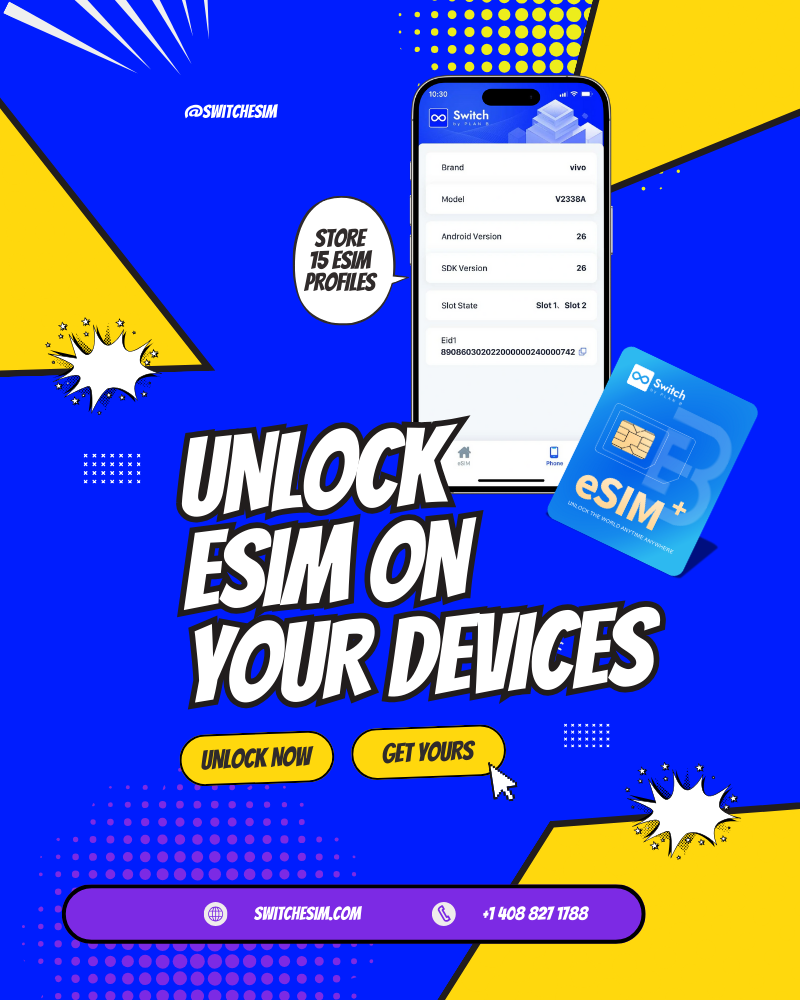
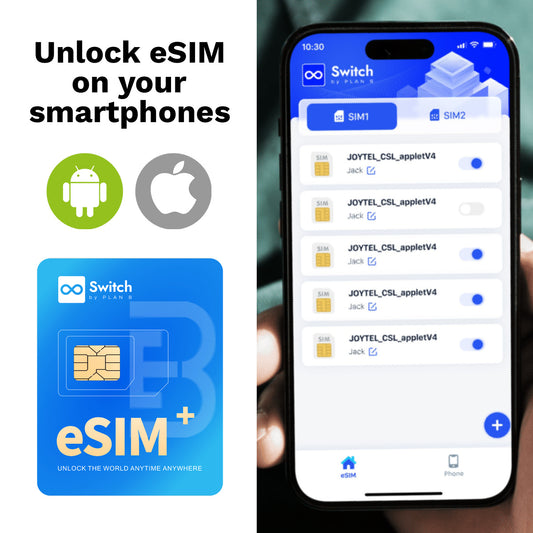
- Switch Pro is the pick for Android-only phones that never got native eSIM support; it holds 15 profiles on one card.
- An esim adapter for android bypasses the OS-level and carrier locks that block native eSIM on many Android models sold in 2026.
- Switch Max covers Android and iOS in the same household or reseller kit.
- Pair either card with the Open Source Bluetooth Card Reader to swap profiles without touching phone settings.
Why eSIM adapters matter for Android users
Android eSIM support isn't a single standard — it's a patchwork. A Galaxy or Pixel sold in the US may ship with eSIM enabled, while the identical model number sold in another region ships with the eSIM radio disabled at the firmware level. Budget and mid-range Android phones frequently skip eSIM hardware entirely, even in 2026, because it adds cost to a segment that competes on price.
A physical esim adapter for android routes around this because it uses the SIM tray the phone already has, not the OS-level eSIM feature carriers gate behind firmware or region checks. Switch eSIM builds adapters specifically to work inside that existing slot rather than depend on a carrier flipping a switch on their end.
Check whether your Android phone's SIM tray can take an adapter
Start here before buying anything — most of this costs nothing but five minutes.
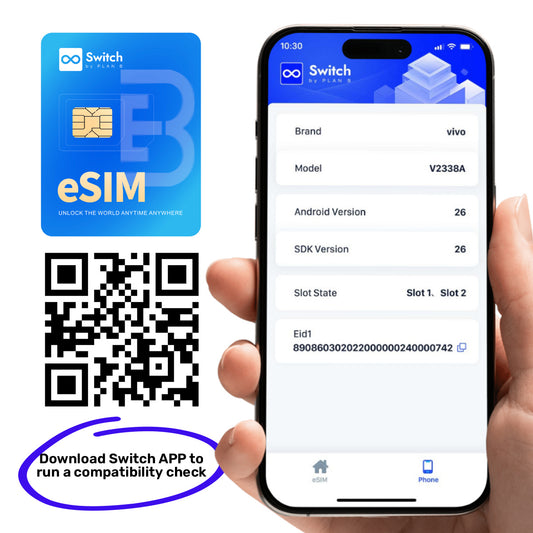
- Dial *#06# to pull up your IMEI and EID and confirm the phone has an eSIM-capable chipset
- Check the phone's spec page for your exact regional model number, not just the marketing name
- Look for "hybrid slot" language in the manual — some trays take either a SIM or a memory card, not both
- Confirm the phone isn't carrier-locked, since a lock can block third-party eSIM profiles regardless of hardware
Test native eSIM support before buying hardware
Don't skip this — some Android phones already support what you're trying to solve for.
- Go to Settings > Network & Internet > SIM manager and look for an "Add eSIM" option
- Contact your carrier directly and ask if your specific plan supports eSIM activation
- Check whether the phone was purchased carrier-locked, since locked units often disable eSIM add-on options
- Note the region the phone was manufactured for — firmware differences are common across markets
Decide between native eSIM and a physical adapter
If native eSIM is blocked, disabled, or simply absent, a physical adapter is the faster fix. This is where the Switch eSIM Adapter Pro and Switch eSIM Adapter Max earn their place.
- Choose Switch Pro if your phone is Android-only and you just need multiple profiles on one device
- Choose Switch Max if the same household or business mixes Android and iOS hardware
- Both cards fit a standard SIM tray and store up to 15 eSIM profiles at once
- Neither depends on your carrier flipping an eSIM switch on their end
Load profiles without draining your phone's settings menu
Managing profiles through the phone's SIM manager works, but it's slow if you're switching numbers often or managing several cards.
- Insert the card into the Open Source Bluetooth eSIM Card Reader instead of the phone
- Connect the reader over Bluetooth and load profiles without opening phone settings
- Switch active profiles without a phone reboot, which matters for resellers testing multiple cards
- Keep the reader as a standalone tool if you manage adapters for more than one device
Manage and rotate multiple numbers on one card
With 15 profile slots available, organization matters more than capacity.
- Label each profile by carrier or purpose so you're not guessing mid-trip
- Keep one data-only profile reserved for travel
- Keep a separate voice profile for your home number
- Delete unused profiles periodically to keep slot management simple
Test the profile before you travel or resell
- Turn off Wi-Fi and confirm data loads on the new profile alone
- Check that APN settings match what the carrier specifies
- Confirm voice and SMS work if the plan includes them
- Compare signal bars against your native SIM to rule out a bad profile load
Comparing your options for Android eSIM
| Option | Best for | Setup method | Key limitation |
|---|---|---|---|
| Native eSIM (built into phone) | Flagship Android phones with carrier-approved firmware | Carrier app or QR code | Blocked by region, OEM, or carrier lock on many 2026 models |
| Switch eSIM Adapter Pro | Android-only users juggling multiple plans | Insert into SIM tray, load via phone | Not built for iOS devices |
| Switch eSIM Adapter Max | Mixed Android/iOS households or resellers | Insert into SIM tray | Higher profile count means a longer first-time setup |
| Switch Pro + Open Source Bluetooth Card Reader | Resellers or enterprises managing several cards | Reader manages profiles off-phone | Reader is an extra device to carry |
The verdict: Switch Pro is the esim adapter for android worth buying if your phone never got native eSIM, and Switch Max is the better call the moment iOS devices enter the same setup.


Common mistakes Android users make with eSIM adapters
- Assuming a model name means the same firmware everywhere — regional variants of the same phone often differ on eSIM support
- Skipping the carrier-lock check — a locked phone can block a third-party eSIM profile even with compatible hardware
- Overloading one profile with conflicting APN settings instead of keeping data and voice profiles separate
- Not testing a new profile before travel — signal issues show up faster on the ground than in a settings menu
- Buying reseller-quantity hardware without checking minimum order quantities — white label cards ship at a 1,000-unit minimum, which isn't the right fit for a single user
FAQ
What's the best esim adapter for android in 2026?
Switch Pro is the best esim adapter for android in 2026 if your phone is Android-only, since it stores up to 15 profiles on a single SIM-sized card. Switch Max is the better pick if the same setup also includes iOS devices.
Does every Android phone support eSIM?
No. eSIM support on Android varies by manufacturer, region, and carrier, and many budget or mid-range models ship without eSIM hardware at all. Checking your exact regional model number is the only reliable way to know.
Can I use a physical eSIM adapter and still keep my physical SIM slot?
The adapter itself sits in the SIM tray, so it replaces rather than supplements a physical SIM in that slot. Profiles stored on the adapter can be switched without swapping physical cards.
Is Switch Max better than Switch Pro for Android?
Switch Max is built for mixed Android and iOS setups, while Switch Pro is built specifically for Android phones. For an Android-only user, Switch Pro is the simpler choice.
How many eSIM profiles can I store on one adapter?
Switch Pro and Switch Max both hold up to 15 eSIM profiles at once. That's enough for a home plan, a work number, and several travel profiles on one card.
Do I need a Bluetooth card reader to use a Switch eSIM adapter?
No, the adapter works by loading profiles through the phone directly. The Open Source Bluetooth eSIM Card Reader is an optional tool for managing profiles without opening phone settings each time.
Can resellers buy Switch eSIM adapters in bulk?
Yes, bulk packs of the Pro and Max adapters are available for resellers and enterprises. A separate white label option ships unbranded eUICC cards at a 1,000-unit minimum for businesses selling under their own brand.
Will an eSIM adapter work if my carrier blocks native eSIM?
Yes, since the adapter uses the phone's existing SIM tray rather than the carrier's eSIM activation system. This is the main reason Android users turn to physical adapters instead of waiting on carrier support.
One last thing
The detail most Android buyers miss is the white label option: resellers who want their own branding on the card, not just the Switch name, can order unbranded eUICC cards with custom packaging at a 1,000-unit minimum. That's a different buying decision than a single Switch Pro for personal use, and worth knowing about before you commit to a quantity in 2026.