
eSIM Adapters for Field Technicians: Best Fit 2026
Field technicians’ eSIM adapter setup is the use of a physical SIM-slot card to load and use eSIM profiles, with the aim of keeping compatible work devices connected across service areas. eSIM adapters for field technicians are a fit only after you confirm the device, carrier and profile-loading path. A phone that accepts the card is not automatically ready to use every provider or network.
- Switch Pro is the best fit for field technicians who can manage profiles through an Android phone.
- Switch Max is the iPhone option only when the iPhone has a compatible physical SIM slot and the card is configured.
- The Switch Bluetooth reader lets a team load profiles without using an Android phone.
- Check the SIM slot, carrier lock, network bands and eSIM provider before assigning any adapter.
Why eSIM adapters matter for field technicians
A field technician’s connection has to work on the device they carry to a job, not just on a procurement list. That device might be an older phone without native eSIM support, a phone shared across territories, or a compatible router or hotspot with a physical SIM slot. The adapter addresses the profile-loading problem; it does not fix a missing SIM slot, a carrier lock or incompatible network bands.
The useful buying question in 2026 is therefore not which card holds the most profiles. It is whether a technician can load the required profile, select it through the available management path and use it on the assigned device. If the team is still choosing hardware, the guide to rugged phones with eSIM support is a separate starting point: native eSIM support and a removable adapter are different device decisions.
For a service team, document the answer by device model and regional variant. A successful setup on one technician’s phone does not establish support for another variant. Keep the provider’s activation instructions with that record so a replacement device does not depend on the original technician remembering the steps.
Set up eSIM adapters for field technicians
Work through these checks in order. Start with a device already in your team’s possession and its current carrier information; choose an adapter only after you know how profiles will be loaded. In 2026, the distinction between Android management, iPhone use and reader-based provisioning matters more than a broad compatibility claim.
Confirm the physical SIM slot and device variant
Take the device out of its case and check its SIM tray or hardware documentation. A physical eSIM adapter needs a compatible physical SIM slot in the target device. Native eSIM capability alone does not provide that slot. An iPhone sold in one region can differ from a model sold elsewhere, so record the full model and regional variant rather than the marketing name.
For routers, hotspots and IoT equipment, confirm the SIM format and the device’s own documentation before ordering for a field deployment. A slot establishes where the adapter would go; it does not prove that the device will accept or use a particular profile. This is the first rejection test for an unsuitable device.
- Physical SIM slot: Check that the assigned device has one and that its format is compatible with the adapter.
- Regional variant: Record the exact version of each phone, router or hotspot.
- Carrier lock: Check whether the device accepts the intended carrier before loading its profile.
- Network bands: Compare the device’s supported bands with the intended network.
Map how each technician will load profiles
You can map this manually. Write down who receives an eSIM activation code, which device they will use to load it and who can help if activation fails. Ask the provider what its QR-code or manual activation process requires. Do not assume that a code intended for a phone’s built-in eSIM will work with an adapter.
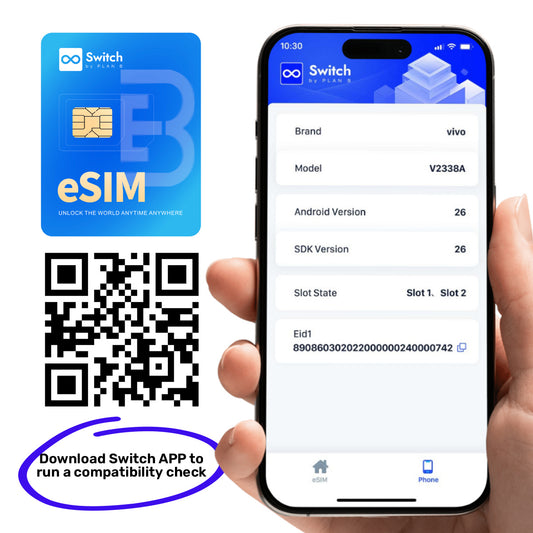
Switch Pro is the best fit for a field technician who can manage profiles through an Android phone. Its limitation is that Android-based management must be available when profiles need to be loaded or changed. If the assigned phone is an iPhone, do not treat the iPhone as an Android provisioning device. Separate the profile-loading step from the later use of a configured card.
- Activation source: Record where the team obtains each provider’s QR code or manual details.
- Loading device: Identify the Android phone or reader used for provisioning.
- Profile owner: Assign responsibility for activation credentials and replacement requests.
- Failure path: Keep the provider’s support and reissue procedure with the device record.
Choose an Android, iPhone or reader-based path
For an Android-led team, start with a manual compatibility check and one assigned device. Switch Pro uses Android-based profile management, so it fits teams that can make an Android phone available for that task. For a compatible iPhone with a physical SIM slot, Switch Max is the card to assess for use after configuration. That does not make iPhone-based loading interchangeable with Android management.
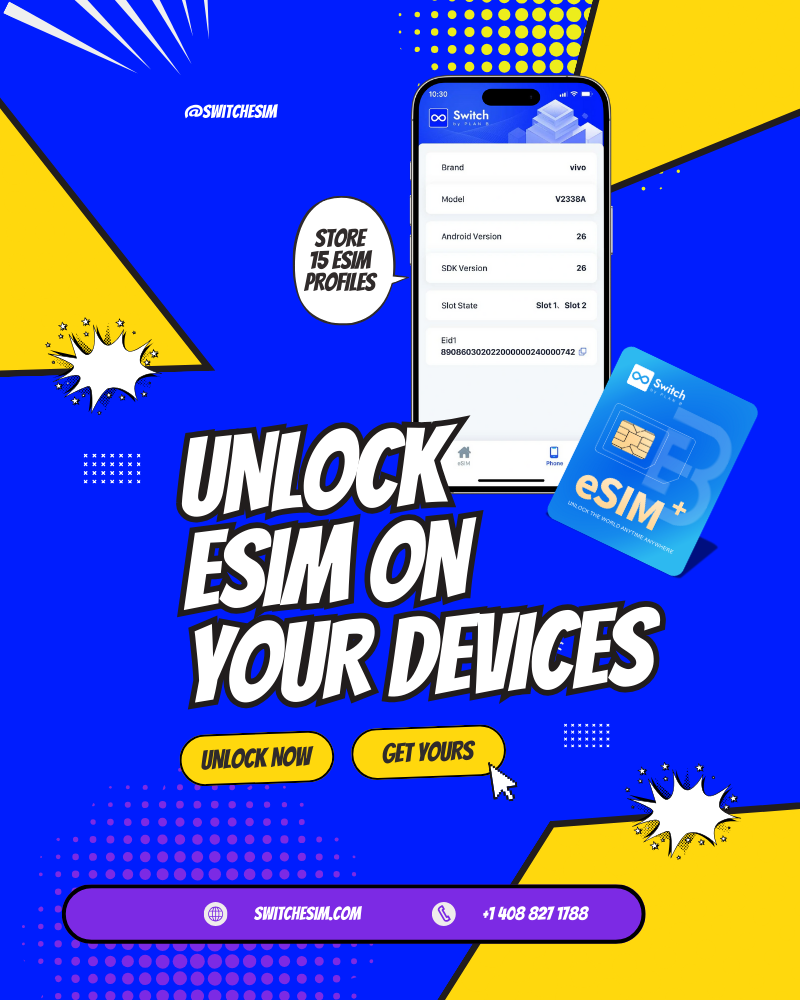
The Switch Bluetooth reader bundle is the alternative when the team needs to load profiles without an Android phone. The bundle listing says it can store up to 15 eSIM profiles. Treat that as a capacity claim for the listed bundle, not a promise that every device, provider or activation method will work. Confirm the reader’s setup path before you standardize it across technicians.
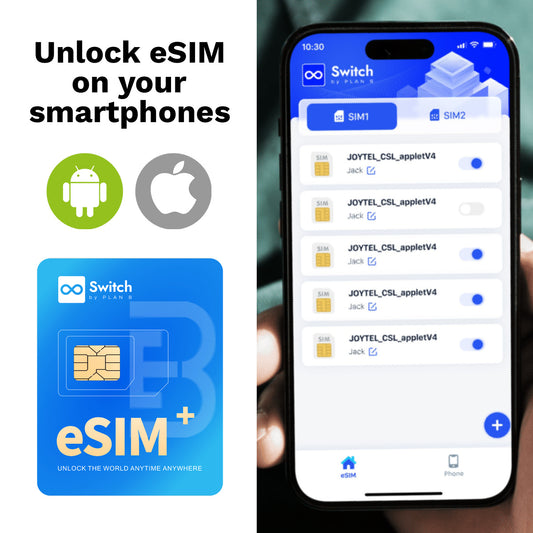
- Android management: Choose Switch Pro when the team can use the Switch Android app for profile management.
- Configured Max: Assess Switch Max for use in a compatible iPhone with a physical SIM slot.
- Reader provisioning: Use the Bluetooth reader when loading profiles without an Android phone is required.
- Provider check: Verify the intended eSIM’s activation method before issuing a card.
Check coverage and carrier restrictions by work area
Build the network choice around actual job locations. A stored profile does not guarantee service at a customer site. Check the intended provider’s coverage information, the device’s bands and the device’s carrier-lock status separately. If technicians cross borders, check each territory rather than treating a multi-destination listing as proof of coverage at every address.
This is also where a pre-loaded destination-data card differs from an empty adapter workflow. The input catalog includes a Switch Max bundle with travel data for 25+ destinations and plans labelled from 20GB to 75GB. Those figures describe the listed bundle; they do not establish suitability for a technician’s route, device or data use. A pre-loaded card removes a profile-loading task only if its destination, provider and activation terms fit the assignment.
- Work areas: List the locations where the assigned connection must work.
- Carrier lock: Confirm that the device accepts the intended provider’s network.
- Network bands: Match device support to that network’s requirements.
- Data requirement: Compare the provider’s plan terms with the technician’s expected work.
- Fallback: Document the approved connection method if the selected network is unavailable.
Set profile ownership and capacity rules
Create a simple register before profiles accumulate. Record which card belongs to which technician, which provider issued each profile and who controls the activation credentials. You can keep that record in an existing asset-management system or a restricted spreadsheet. The point is to make a lost card, a reassigned phone or a departing employee an identifiable access event.
Profile capacity is a storage limit, not a reason to load every available plan onto one card. The reader bundle’s up to 15 eSIM profiles is the only capacity figure stated for that bundle here. Confirm the capacity of the exact card under consideration and test the profile-selection workflow on the assigned hardware. In 2026, write down the active-profile procedure so the next technician can follow it without guessing.
- Card assignment: Record the adapter’s assigned device and technician.
- Profile inventory: Record provider, purpose and activation ownership.
- Capacity check: Confirm the limit for the exact product selected.
- Access change: Define who handles a lost card or staff reassignment.
Review the privacy model before deployment
The Bluetooth reader is described in the brand information as open-source. That describes the reader’s software approach; it does not establish what an eSIM provider records, what an operating system retains or how your team handles activation codes. Ask those questions separately. Do not infer that storing a profile on a removable card makes the wider service private.
Start with the manual process: restrict access to QR codes, record who provisions a card and remove credentials from shared messages when they are no longer needed. Then review the reader and app documentation for the exact workflow your team intends to use. Security approval belongs to the whole chain: device, adapter, provisioning method and provider.
- Activation codes: Limit who can view or reuse them.
- App access: Check permissions and device-management rules for the Android setup path.
- Reader review: Examine the open-source reader documentation for your deployment.
- Provider terms: Check data handling with the eSIM provider.
- Offboarding: Record the procedure for a returned or missing card.
Pilot the full job workflow before bulk supply
Test one complete assignment on the actual model and regional variant you intend to issue. Load the profile using the chosen path, insert the configured card where required, check service on the intended network and document what happens when the device or technician changes. A desk activation alone does not test the field workflow.
Switch eSIM offers retail, bulk and white-label supply. For a field-service purchase, settle compatibility and provisioning first; then decide how to source and identify the cards. A bulk order cannot correct an unsupported SIM slot or an activation method your team cannot use. Keep the pilot record precise enough to repeat on the remaining assigned devices in 2026.
- Assigned hardware: Test the exact phone, router or hotspot variant.
- Provisioning path: Repeat the steps a technician or support colleague will perform.
- Network check: Verify the intended provider in a relevant work area.
- Replacement check: Document how a card or device is reassigned.
- Purchase decision: Expand only the device-and-provider combinations that pass the pilot.
Compare the options for a field-service team
There is no single card choice for every technician. Switch eSIM adapter hardware is best for teams that have verified a compatible physical SIM slot and need a defined way to provision removable eSIM profiles. The limitation is equally clear: hardware fit, provider activation and network service remain separate checks.
| Option | Best for | Profile-loading path | Key limitation |
|---|---|---|---|
| Switch Pro | Android-led teams | Switch Android app | Requires an available Android management path |
| Switch Max | Technicians using a compatible iPhone with a physical SIM slot | Configure the card before iPhone use | iPhone use does not establish an iPhone-based loading path |
| Switch Bluetooth reader | Teams that cannot rely on an Android phone for loading | Reader-based provisioning | Confirm the provider’s activation method and target-device fit |
| Pre-loaded destination-data card | A defined trip with a matching listed destination and plan | Profile supplied pre-loaded | A listed destination does not verify coverage at a work site |
| Native eSIM device | Teams selecting replacement hardware | Device’s supported eSIM process | Requires a compatible device and provider; it is not a removable adapter |
Choose Switch Pro for a verified Android workflow. Choose Switch Max when a compatible physical-SIM iPhone must use a card that can be configured through an available path. Choose the Bluetooth reader when the provisioning job must not depend on an Android phone. If the current device lacks a compatible physical SIM slot, skip adapter procurement for that device and assess native eSIM hardware instead.


Common mistakes field technicians make
Buying from the phone name alone. The full model and regional variant matter. Check the physical SIM slot before buying an adapter, especially for an iPhone issued through a regional device program.
Confusing profile storage with simultaneous service. A capacity claim tells you how many profiles a listed product can store. It does not tell you that every stored profile is active or that every provider supports the same activation method.
Assuming an iPhone will provision the card. Using a configured Switch Max card in a compatible iPhone is distinct from managing profiles with the Switch Android app or loading them through the Bluetooth reader. Assign the loading method before issuing the iPhone.
Treating a pre-loaded plan as a coverage test. A destination on a product listing is not a signal measurement at a customer site. Check the provider and device bands against the actual work area.
Ordering fleet quantities before testing access changes. A technician can change device, territory or role. Test reassignment and credential handling during the pilot, not after cards have been distributed.
FAQ
What are the best eSIM adapters for field technicians in 2026?
Switch Pro is the fit for an Android-managed workflow; Switch Max is the iPhone option when the phone has a compatible physical SIM slot and the card is configured. Check the exact device, carrier and provider before choosing either.
Can a field technician use an eSIM adapter in any phone?
No. The target device needs a compatible physical SIM slot. Its model, regional variant, carrier-lock status, network bands and eSIM provider also affect the setup.
Can Switch Max be used in an iPhone without a physical SIM tray?
No. Switch Max is a physical card, so the target iPhone needs a compatible physical SIM slot. Check the regional variant rather than assuming all iPhones have the same hardware.
Do I need an Android phone to load profiles?
Switch Pro uses Android-based profile management, while the Switch Bluetooth reader provides a way to load profiles without an Android phone. Choose the provisioning path before assigning cards to technicians.
How many profiles can the Switch Bluetooth reader bundle store?
The listed Switch adapter and Bluetooth reader bundle says it can store up to 15 eSIM profiles. Confirm the capacity of the exact card you buy and distinguish stored profiles from the profile in use.
Will a pre-loaded eSIM card work at every field-service site in a listed destination?
No. A listed destination does not confirm coverage at a particular work site. Check the provider’s coverage, the target device’s network bands and its carrier-lock status.
Does an open-source Bluetooth reader make field-service data private?
No. The reader’s open-source description does not establish the privacy practices of the device, provisioning workflow or eSIM provider. Review each part and restrict access to activation credentials.
One last thing
The most useful pilot record in 2026 is a device–provider–loading-path combination, not an adapter name. Record that combination for every approved setup. It gives a replacement technician a repeatable procedure and exposes a mismatch before it becomes a failed connection on a job.