
eSIM Adapters for Rideshare Drivers: Best Fit 2026
Rideshare and delivery driver eSIM adapters are physical SIM-format devices that let compatible phones use eSIM profiles, with the aim of keeping a working data connection available for driver apps. In 2026, the first question is whether your phone has a compatible physical SIM slot; the second is how you will load and switch profiles. Switch Pro is the best Switchesim eSIM adapter fit for drivers who manage profiles on Android; Switch Max is the fit for compatible iPhones once its profile is configured.
- For eSIM adapters for rideshare drivers, check the physical SIM slot and carrier lock before choosing hardware.
- Switch Pro fits drivers who can manage profiles through the Switch Android app.
- Switch Max fits compatible iPhones, but profile loading needs a separate setup path.
- The Switchesim Bluetooth reader loads profiles without an Android phone; confirm the complete device and provider setup first.
Why eSIM adapters matter for rideshare and delivery drivers
Your driver app, maps and customer messages depend on a usable data connection. An adapter gives a phone without native eSIM support a way to use eSIM profiles through a compatible physical SIM slot. It does not improve coverage by itself: coverage comes from the chosen provider, the phone's supported network bands and the network available on your route.
A second profile is useful only if it solves a specific problem, such as separating work data from personal data or using another provider on a route where your current one performs poorly. Before buying another plan, compare the providers you can actually use on your phone. The guide to eSIM adapters for switching carriers covers that decision in more detail.
For drivers, setup timing matters as much as storage capacity. Loading a profile while parked and connected is different from trying to repair a failed connection between jobs. Keep a known working connection until you have tested the new one on the routes you drive.
Set up an eSIM adapter for driving work
Check your physical SIM slot
Start with the phone, not the adapter. Find your exact model and regional variant, then confirm that it has a physical SIM slot and that the slot can use the adapter you are considering. Some iPhones lack a physical SIM tray; an adapter card cannot be installed in a phone without one.
If your phone already supports native eSIM, compare that built-in setup with an adapter before adding hardware. The adapter is most relevant when native eSIM is unavailable or when you have a specific reason to keep profiles on a removable card. Do not treat a product's iOS and Android wording as proof that every regional variant works.
- Identify the exact phone model and regional variant.
- Confirm that a physical SIM tray is present and usable.
- Check the adapter's stated device and operating-system requirements.
- If native eSIM is available, test whether it already meets your needs.
Check your carrier lock and network fit
A second provider is not a backup if your phone cannot use it. Check the phone's carrier-lock status before buying an adapter or data plan. Then check whether the phone supports the network bands used by the provider in the places you drive. An unlocked phone and a compatible slot do not establish coverage.
Use your existing plan and the prospective provider's own coverage information as a starting point. Test on actual work routes before depending on the new profile. A map cannot confirm reception inside a particular building, car park or pickup area.
- Check carrier-lock status in the phone settings or with your carrier.
- Confirm provider support for your exact phone variant.
- Compare network coverage along your regular routes.
- Keep your current connection active until the new one works.
Plan your profile-loading method
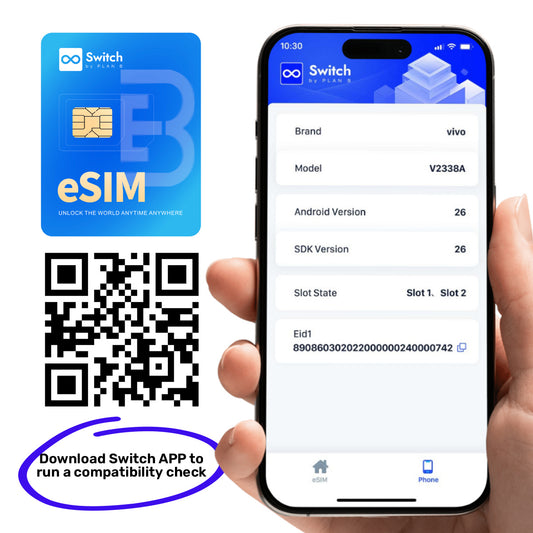
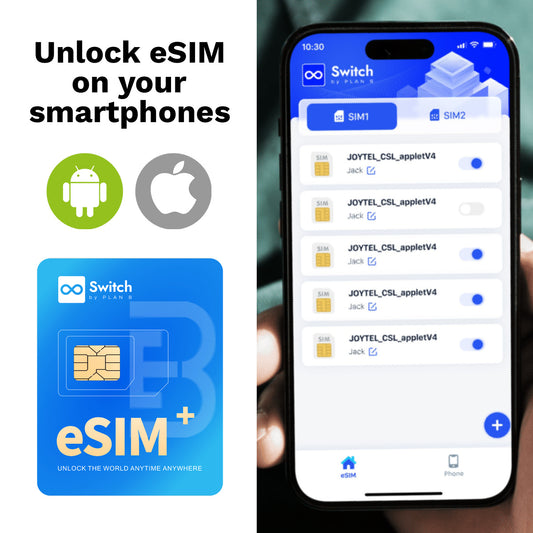
Choose how the profile gets onto the card before choosing the card. Switch Pro uses the Switch Android app for profile management. That makes it the direct Switchesim choice when you have a compatible Android setup and want to manage profiles there. Switch Max extends use to compatible iPhones, but using a configured card in an iPhone is not the same task as loading a new profile onto it.
The open-source Bluetooth reader provides a separate provisioning path that does not require an Android phone. It is the relevant addition when your phone cannot perform the Android management step. Check the reader and adapter pairing, the profile provider's activation method and the phone's compatibility before relying on that path.
- Choose Android-app management if your setup supports it.
- Choose reader-based provisioning if you need to load profiles without an Android phone.
- For iPhone use, confirm how the Max card will be configured before insertion.
- Keep the provider's activation details available during setup.
Match the provider to your working area
An adapter stores and presents a profile; the provider supplies the mobile service. Select the provider for the places where you accept jobs, not just for its destination list. Check whether its activation instructions give you a QR code or manual details that work with your chosen loading method.
Read the plan's terms before using it for driver work. Confirm that the plan covers your location and intended use, and check what happens when its data allowance ends. If you work across borders, check each destination rather than assuming one profile covers the full route.
- Map the areas where your current connection fails.
- Check the prospective provider's coverage in those areas.
- Confirm its activation method against your loading method.
- Read the plan's data and usage terms before activation.
Decide how many profiles you need
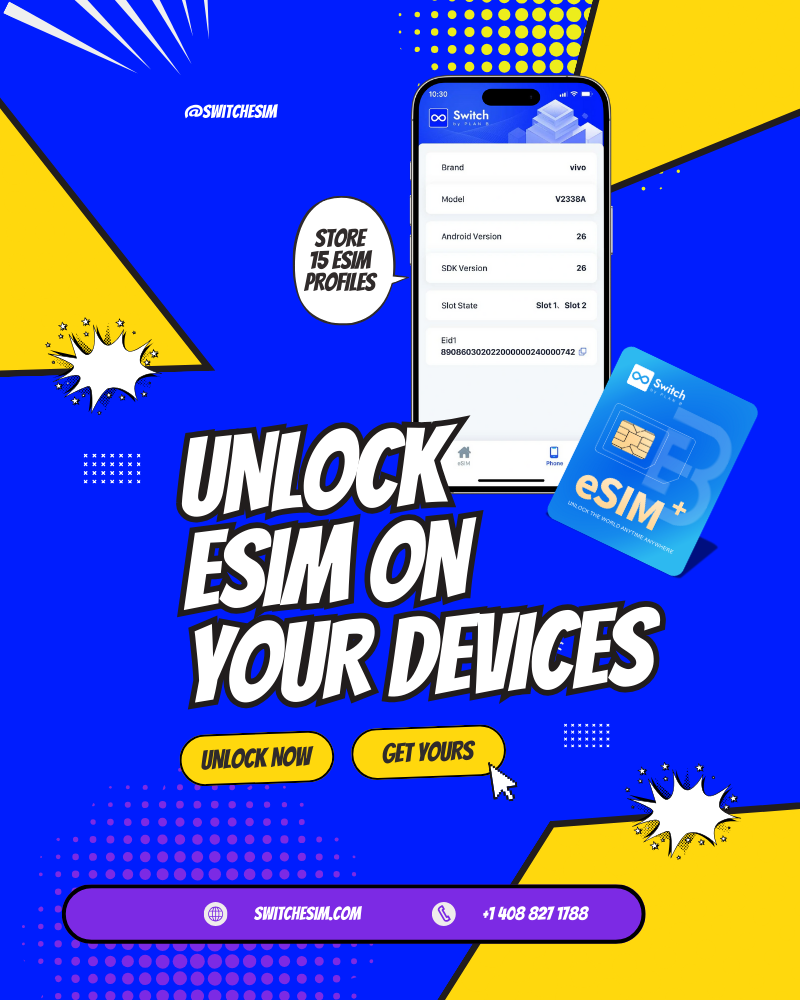
Count the profiles you will actually use: your main provider, a tested alternative and any destination-specific plan. Do not choose an adapter by its storage claim alone. The Switchesim adapter and Bluetooth reader bundle describes storage for up to 15 eSIM profiles; that figure does not tell you how many profiles can be active at once on your phone.
Profile storage and simultaneous service are separate questions. Your phone's SIM configuration determines how you use the adapter alongside another line. Check that behavior on your exact device if calls, texts and driver-app data must stay available together.
- List the providers and destinations you need.
- Separate stored-profile capacity from active-line capability.
- Confirm how your phone handles calls and data with the adapter installed.
- Remove unused profiles only after saving any details needed to reinstall them.
Check the privacy model
Profile-loading software handles activation details, so treat setup as an account-security task. The Switchesim Bluetooth reader is described as open-source, but that description alone does not establish where every piece of account or activation data is stored. Check the app, reader and provider documentation for the parts of the process you use.
Avoid sharing activation codes in driver-group chats or leaving them visible in screenshots. If you are comparing provisioning methods, ask which device performs the loading step and which account controls the mobile plan. Hardware choice does not replace provider-account security.
- Check the permissions requested by the management method.
- Review where activation details are entered and retained.
- Secure the account used to buy and manage the mobile plan.
- Keep QR codes and manual activation details out of public messages.
Test the route before your shift
Activate and test a new profile while you still have another connection. Confirm that the phone registers on the intended network, that mobile data works and that the driver app can load the screens you need. Repeat the check on a regular route; a successful setup at home does not establish route coverage.
Do the switching while parked. If you plan to alternate between work and personal profiles, write down the steps that restore your known working connection. A backup you have never switched to is an untested setup, not a dependable work option.
- Confirm network registration and mobile data.
- Open the driver app and maps on the new connection.
- Test where you usually pick up and deliver.
- Switch back to your known working profile once before relying on the setup.
The sequence is device fit, provider fit, profile loading, then route testing. Buying a larger data allowance cannot fix a missing SIM tray, a carrier lock or an unsupported loading method.
Compare your options in 2026
Choose the option that matches your phone and loading method. The table separates configuring a profile from using an already configured card; those are different steps, especially on iPhone. Check the current listing for commercial terms rather than treating a guide as a live product listing.
| Option | Best for | Starting price | Key limitation |
|---|---|---|---|
| Switch Pro | Drivers with a compatible Android setup who want Android-app profile management | Check current listing | Requires a compatible device and an Android management path. |
| Switch Max | Drivers using a compatible iPhone with a physical SIM slot | Check current listing | iPhone use does not remove the need to configure the card. |
| Open-source Bluetooth eSIM card reader | Drivers who need to load profiles without an Android phone | Check current listing | It is a provisioning tool, not a mobile data plan. |
| Native eSIM on the phone | Drivers whose existing phone supports the profiles they need | Check provider terms | Not available on phones without native eSIM support. |
| Existing physical SIM | Drivers whose current provider already covers their routes | Check provider terms | It does not add another provider unless the phone's SIM setup supports one. |
Switch Pro is the cleaner choice when Android profile management is already available. For a compatible iPhone, choose Switch Max only after you have identified how the profile will be loaded. The Bluetooth reader addresses that loading step; it does not override phone, carrier or provider restrictions.
A pre-loaded destination-data card is a different buying decision. It pairs hardware with a specified plan rather than letting you select a local provider later. That can suit a defined cross-border route, but inspect the named destinations, allowance and validity before choosing it for recurring local shifts. For example, a listed Switch Max option specifies 20 GB over 30 days for Australia and New Zealand. That specification says nothing about coverage on your particular delivery route.


Common mistakes rideshare and delivery drivers make
Buying before checking the SIM tray. A physical adapter needs a compatible physical slot. Check the exact phone variant, especially if you use an iPhone sold in a different region from the one described in a product guide.
Confusing iPhone use with iPhone provisioning. A configured Switch Max card can be used in a compatible iPhone. That does not mean the iPhone performs the same profile-management steps as the Switch Android app. Establish your loading path before the card arrives.
Treating stored profiles as simultaneous connections. The bundle's up-to-15-profile storage claim describes profiles on the adapter. It is not a claim that your phone runs 15 mobile connections. Check your phone's active-line behavior separately.
Buying data before checking the provider. A plan with a suitable allowance still needs compatible activation, coverage and network support on the device. Test the provider before moving driver work onto it.
Making the first switch during a job. Profile loading and network registration belong in a parked setup session. Keep your existing service available until the replacement profile has passed a route test.
FAQ
What are the best eSIM adapters for rideshare drivers in 2026?
Switch Pro is the Switchesim choice for compatible Android setups with app-based profile management; Switch Max fits compatible iPhones with a physical SIM slot. Confirm how you will load the profile before choosing either.
Can an eSIM adapter work in an iPhone without a SIM tray?
No. A physical eSIM adapter needs a compatible physical SIM slot. Check the exact iPhone model and regional variant before buying.
Can I load a Switch Max profile directly through the iPhone?
Do not assume iPhone use includes iPhone-based profile loading. Switch Max can be used in a compatible iPhone once configured; identify an appropriate provisioning method, such as the Bluetooth reader, first.
Do eSIM adapters improve coverage for delivery drivers?
No. An adapter provides a way to use a compatible eSIM profile in a physical SIM slot. Coverage depends on the provider, available network and your phone's network support.
How many profiles can the Switchesim reader bundle store?
The Switchesim adapter and Bluetooth reader bundle describes storage for up to 15 eSIM profiles. Stored-profile capacity does not establish how many lines your phone can use at once.
Should I use an adapter if my phone already has native eSIM?
Use native eSIM first if it supports your required provider and profile setup. Add an adapter only when you have a specific need that the built-in setup does not meet.
What should I check before using a second provider for driver work?
Check carrier-lock status, phone and network compatibility, the provider's activation method and coverage on your working routes. Test the connection before relying on it for a shift.
One last thing
In 2026, the decisive test is not whether an adapter stores multiple profiles. It is whether you can restore a working driver-app connection on your actual route using a profile you have already loaded and tested. Make that test while parked, with your existing connection still available.