
eSIM keyword CPC benchmarks by carrier network 2026
There is no verified, published CPC figure for eSIM keywords split by mobile carrier network, and this 2026 page does not invent one. CPC attaches to a keyword and an auction, not to a carrier. Below is how carrier names behave in eSIM search, what to measure, and how to build a benchmark table you can trust.
- No public dataset gives esim cpc by carrier for 2026; any table that claims one is unsourced.
- Carrier names change CPC through query intent: lock status, activation, and plan comparison queries differ.
- Benchmark by keyword cluster in your own Google Ads account, then split by carrier name inside each cluster.
- Switch eSIM adapters need a compatible physical SIM slot, so adapter ads should target hardware-fit queries, not generic eSIM queries.
Why this matters
Most eSIM CPC tables circulating in 2026 average across mixed intent. A query about buying a travel data plan and a query about unlocking a phone from a specific carrier sit in different auctions with different advertisers. Averaging them by carrier name produces a number that describes nothing.
The practical consequence: if you budget from a carrier-level average, you will misprice hardware queries. A product like Switch Pro, which an Android user manages through the Switch app, is bought by someone searching for device fit. That buyer does not search like a traveler comparing data plans.
The short answer
The benchmark that holds up is CPC by keyword cluster, with carrier name as a modifier inside each cluster. Carrier-only rows are not defensible in 2026 because Google Keyword Planner returns ranges per keyword, and carrier names are rarely the bid driver by themselves.
| Keyword cluster | Query pattern | Buyer | What moves CPC |
|---|---|---|---|
| Carrier-lock | "[carrier] unlock esim" | Existing subscriber with a locked phone | Carrier advertisers bidding on their own brand terms |
| Travel data plan | "[country] esim data" | Traveler buying a plan | Plan resellers competing on destination terms |
| Adapter hardware | "esim adapter for [phone model]" | Buyer whose phone lacks native eSIM | Few advertisers; device-specific intent |
| Reader and provisioning | "bluetooth esim card reader" | Technical buyer, reseller, IoT user | Narrow auction, low advertiser count |
| Provider alternatives | "[provider] alternatives" | Comparison shopper | Competitor brand bidding and trademark rules |
The table shows structure, not prices. Fill the last column with your own account data or a dated Keyword Planner export.
High and low clusters
Without a sourced dataset, no cluster is named the most expensive or the cheapest here. What the structure does tell you:
- Carrier brand terms attract the carrier itself as a bidder. Expect the most competitive auctions where the carrier's own ads appear.
- Hardware-fit terms attract few advertisers, because the buyer must own a phone with a physical SIM slot or a compatible device.
- Destination plan terms attract plan resellers, who compete per country.
Treat these as hypotheses to test, not measured results.
Methodology
A usable benchmark takes four steps:
- Export keyword ideas from Google Keyword Planner for your target country. Record the date and the location setting.
- Tag each keyword with one cluster from the table above.
- Within each cluster, tag carrier names as a separate column.
- Record low and high bid ranges as returned. Do not average them across clusters.
Limitation: Keyword Planner ranges are estimates, not your realised CPC. Realised CPC depends on Quality Score, match type, device and time of day. Carrier-level splits also leave many keywords with too little volume to show a range at all.
Where carrier names matter for hardware
Carrier names matter to eSIM adapter buyers for a reason unrelated to auctions: compatibility. The target device needs a compatible physical SIM slot. It may also depend on its model, regional variant, operating system, carrier-lock status and network bands.
That gives you the best keyword angles for Switch eSIM:
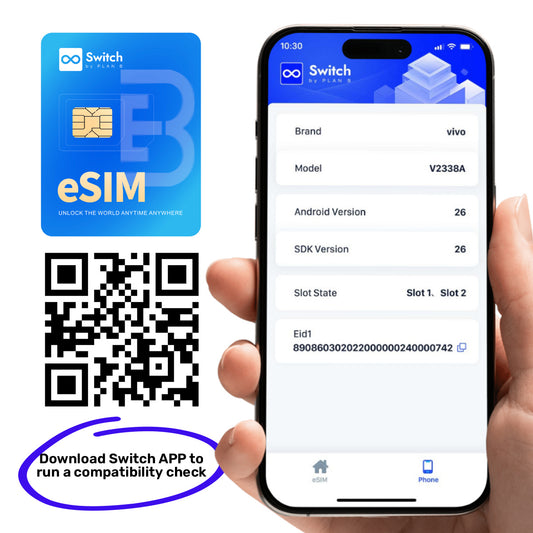
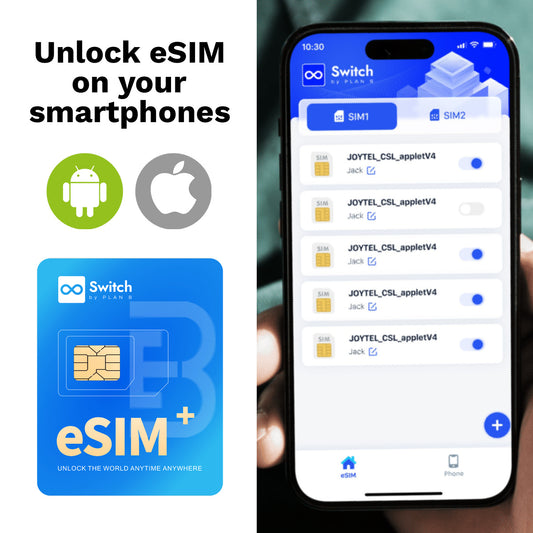
- Android management: Switch Pro profiles are managed through the Switch Android app.
- iPhone use: Switch Max extends use to compatible iPhones once configured.
- Phone-free provisioning: the Bluetooth reader loads profiles without an Android phone.
- Capacity: Switch states that the reader bundle stores up to 15 eSIM profiles.
Each of these maps to a narrow query. Narrow queries are where a small hardware advertiser can compete without bidding against carriers.


How to use these benchmarks
- Start with clusters, not carriers. Build ad groups per cluster, then add carrier names as keyword modifiers.
- Avoid carrier brand terms first. The carrier bids on its own name, and trademark rules limit your ad copy.
- Lead with fit. State the physical SIM slot requirement in the ad. It filters out clicks from phones that cannot use the product.
- Review quarterly. Re-export Keyword Planner each quarter in 2026 and date every row.
Pre-launch checklist
- Keyword Planner export dated and scoped to one country.
- Every keyword tagged with exactly one cluster.
- Carrier name stored as a separate column.
- No cross-cluster averages in the reporting sheet.
- Landing page names the device requirement before the benefit.
FAQ
What is the average eSIM CPC by carrier in 2026?
No sourced public average exists for 2026. CPC depends on keyword cluster and auction, so a single per-carrier figure would mix unlike queries. Build your own table from a dated Keyword Planner export.
Why is CPC not tied to a carrier network?
Google prices clicks per auction, not per mobile network. A carrier name only matters when it changes who bids and what the searcher wants.
Which eSIM keyword clusters should I benchmark first?
Start with hardware-fit and reader queries, then destination plans, then carrier-lock queries. Hardware-fit queries have the clearest buyer and the narrowest auction.
Does an eSIM adapter work on any phone?
No. The target device needs a compatible physical SIM slot and can also depend on model, regional variant, operating system, carrier-lock status and network bands.
Can I trust Keyword Planner ranges as real CPC?
Treat them as estimates. Your realised CPC depends on Quality Score, match type, device and timing, so validate with a small live test in 2026.
How often should I refresh an eSIM CPC benchmark?
Quarterly is a workable cadence in 2026. Date each export so the table shows when the figures were pulled.
One last thing
The cheapest click is the one from a buyer whose phone cannot use your product. Put the SIM-slot requirement in the ad headline and your reported CPC may rise while cost per qualified sale falls. Track cost per sale in 2026, not CPC alone.