
How do you switch phones without losing your eSIM?
To switch phones without losing your eSIM service in 2026, use your carrier’s supported transfer process or request a replacement activation for the new phone, then confirm the line works before erasing the old device. Do not assume your original QR code can be reused. If your profile is already stored on a removable eSIM adapter, moving that card to a compatible phone is a different process from transferring a phone’s built-in eSIM.
- How to switch phones with eSIM: confirm carrier transfer support before deleting the old profile.
- A phone backup is not a substitute for eSIM activation on the replacement device.
- Switchesim eSIM adapters suit users moving removable profiles between compatible physical-SIM devices.
- Switch Pro uses Android profile management; a configured Switch Max supports compatible iPhone use.
- Test mobile data and, where included, calls and texts before resetting the old phone.
How do you switch phones without losing your eSIM?
Keep the old phone intact until the replacement phone has a working connection. Your carrier controls activation of its service; copying apps, photos and settings does not establish that the mobile line transferred successfully.
First, identify where the profile lives. A built-in eSIM belongs to the phone’s embedded hardware. A removable eSIM adapter stores profiles on a physical card. These require different handover procedures.
Use this sequence:
- Check the destination phone. Confirm the exact model, regional variant, operating system and carrier-lock status. The eSIM-compatible phones guide provides a starting point for device selection; confirm your particular variant before activation.
- Confirm the carrier’s transfer route. Establish whether the line supports a phone-to-phone transfer, account-based activation or a newly issued activation code.
- Prepare account access. Have your carrier login and an available verification method. Keep the old phone accessible if it receives account-security messages.
- Activate on the new phone. Follow the carrier’s instructions rather than deleting the old profile to make room for the transfer.
- Test the service. Turn off Wi-Fi and check mobile data. Test incoming and outgoing calls and text messages if your plan includes them.
- Retire the old device last. Remove personal data only after the new line works and you no longer need the old phone for verification.
The goal is service continuity, not preserving an identical installation. A replacement profile can provide the same line without copying the original profile between devices.
Why this matters
Losing access to your mobile number affects more than calls. Text-based account verification can become a problem while you are signing in to your carrier, bank or other services on the replacement phone.
For a 2026 phone change, separate the tasks: move personal data, activate mobile service, then erase the old device. Treat each as its own checkpoint. Completing the first does not prove the second is finished.
Also distinguish a mobile number from a data connection. Installing a travel-data profile gives you connectivity according to that plan; it does not transfer your existing carrier number.
Which transfer method fits your situation?
Choose the method by where the profile is stored and what the carrier supports. Do not choose it simply because both devices advertise eSIM support.
| Method | Best for | Main benefit | Main limitation |
|---|---|---|---|
| Supported phone-to-phone transfer | An eligible line and compatible device pair | Uses the supported device transfer workflow | Depends on carrier, device and operating-system support |
| Carrier-issued replacement activation | A line without a supported direct transfer route | Establishes service on the replacement device | Requires carrier access and its activation procedure |
| Moving a configured removable adapter | A profile already stored on a compatible physical card | Moves the profile-bearing hardware between devices | Requires a compatible physical SIM slot and provider support |
A removable adapter is not a tool for extracting an existing profile from a phone’s built-in eSIM. If the profile is currently installed in embedded hardware, ask the provider whether it can issue an activation suitable for your intended destination.
Built-in eSIM: use the supported transfer or replacement route
A carrier-supported transfer is the appropriate first choice when it covers your line and both phones. Check the instructions for that exact combination before starting. A general phone setup prompt is not proof that every carrier line qualifies.
If direct transfer is unavailable, request the carrier’s replacement-device procedure. Do not repeatedly scan an old QR code as a substitute. Activation-code reuse depends on the provider’s rules.
Keep your account recovery route available throughout activation. Avoid trading in or shipping the old phone before you have checked service on the replacement.
Removable eSIM adapter: move the card, then verify service
If the working profile is already stored on a removable adapter, the profile-bearing card is the hardware you move. Follow the card and phone instructions for removal and insertion. Confirm the destination device supports that adapter before making the change.
A physical SIM slot alone does not establish compatibility. The phone’s regional variant, carrier lock, network bands, operating system and eSIM provider still matter. Moving the card does not remove those restrictions.
What must you check on the new phone?
Verify the exact destination device, not just the phone family. Regional versions can differ in their SIM hardware, and a locked phone restricts the networks it accepts.
For native eSIM use, check the carrier’s supported-device requirements and the destination phone’s eSIM capability. For adapter use, confirm a compatible physical SIM slot. An eSIM-only phone cannot accept a removable card.
Use this device-fit checklist before changing phones in 2026:
- Model and regional variant: identify the specific device you will activate.
- Physical SIM slot: confirm it exists if you intend to move an adapter.
- Carrier-lock status: establish whether the phone accepts the intended provider.
- Operating system: confirm the requirements for activation and profile management.
- Network bands: check support for the network where you will use the phone.
- Provider acceptance: confirm that the activation method supports the destination hardware.
Separate profile management from everyday use. A card that works in a phone does not automatically mean that phone can load or manage its profiles through the same method as another device.
Which Switch hardware matches your setup?
Switchesim eSIM adapters are best for users who want removable profile storage across compatible physical-SIM devices. They are not a replacement for carrier approval when transferring a line currently installed on a built-in eSIM.
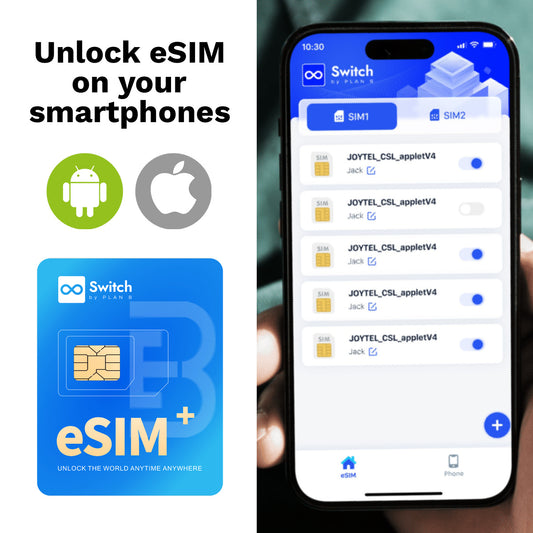
Switchesim describes distinct setup paths: Android-based management for Pro, configured-card use on compatible iPhones for Max, and Bluetooth-reader provisioning without an Android phone. Choose the management path before choosing the card.
| Hardware | Best for | Profile-loading or management path | Benefit | Limitation to check |
|---|---|---|---|---|
| Switch Pro | Users managing profiles through Android | Switch Android app | Android-based profile management | Exact Android-device and physical-slot compatibility |
| Switch Max | Users needing a configured card for a compatible iPhone | Confirm the loading method before iPhone use | Extends adapter use to compatible iPhones | Physical SIM tray required; use and provisioning are separate questions |
| Adapter and Bluetooth card reader bundle | Users needing provisioning without an Android phone | Open-source Bluetooth reader | Provides a separate profile-loading route | Reader workflow, controlling-device support and provider acceptance |
According to Switchesim’s bundle description, the adapter-and-reader bundle stores up to 15 eSIM profiles. That is a storage claim, not a statement that 15 lines operate simultaneously. Do not apply that capacity automatically to every card or bundle.
For privacy, distinguish storing a profile from handling its activation credentials. Keep QR codes and manual activation details private. Before provisioning, check the current app or reader documentation for permissions, credential handling and any network-service requirements; an open-source label alone does not establish a complete privacy model.
Pre-loaded destination-data cards serve a separate purpose: obtaining destination connectivity rather than transferring an existing carrier line. Bulk and white-label options concern supply arrangements, not a different way to preserve your personal number.


Why the transfer process varies
The transfer procedure follows your carrier and hardware combination. There is no universal sequence that applies equally to a built-in eSIM, a removable adapter and every mobile provider.
- Profile location: embedded hardware requires transfer or replacement activation; a removable card can move between compatible devices.
- Carrier procedure: the provider determines the supported activation and account-verification route.
- Device combination: changing operating systems can change the available transfer workflow.
- Regional hardware: the destination variant determines whether a physical adapter is an option.
- Activation credentials: a previously used QR code is not proof of permission to install again.
- Plan type: a data-only profile does not provide the same functions as a line with calls and texts.
Confirm these conditions before deleting anything. That instruction applies whether you are replacing a broken phone, upgrading a working device or moving between Android and iPhone.
Can you keep your number when switching phones with eSIM?
You can keep your number when the carrier transfers or reactivates the same line on the new phone. Changing devices is different from changing providers; if you also change providers, follow the number-porting procedure separately.
Tell the carrier you want to retain the existing line. Buying a new data profile is not the same request.
Can you reuse your old eSIM QR code?
Reuse depends on the provider’s activation rules. Some activation credentials are limited to their intended installation, so ask for the supported replacement-device process rather than assuming the code remains valid.
Deleting the old installation does not establish that the QR code can be used again. Confirm first.
What should you test before erasing the old phone?
Test mobile data with Wi-Fi disabled, then test calls and texts if those services are included. Check that incoming messages reach the intended number and that the new phone uses the correct line for mobile data.
With multiple profiles, label the lines clearly. A successful internet connection through a different profile does not prove your main carrier line transferred.
Pre-purchase and handover checklist
Before buying hardware or starting a 2026 transfer, write down the destination device and the service you need to preserve. Make the decision from those requirements, not from a broad compatibility claim.
- Confirm whether the current profile is embedded or stored on a removable adapter.
- Confirm that the provider supports your intended destination and activation route.
- Check the physical SIM slot if choosing adapter hardware.
- Select Android-app management or reader-based provisioning deliberately.
- Verify the exact card’s profile capacity rather than borrowing another product’s specification.
- Preserve account access until activation and service testing are complete.
For destination data, match allowance and validity to the trip separately from the phone transfer. The supplied product range includes a Max destination plan with 20GB over 30 days and another with 50GB over 180 days. These are data-plan specifications, not transfer limits or promises that your existing number moves with the card.
FAQ
How do I switch phones with eSIM without losing service?
Use your carrier’s supported transfer or replacement activation, and test the new phone before erasing the old one. Keep account-verification access available during the change.
Does restoring a phone backup transfer my eSIM?
A restored backup does not by itself confirm that your mobile line is activated. Complete the supported eSIM activation process and test service separately.
Should I delete my old eSIM before activating the new phone?
Do not delete the old profile unless the carrier’s procedure specifically requires it. Keep the old device accessible until the new line works.
Can I move an eSIM from Android to iPhone?
Use the carrier’s supported process for that exact Android-to-iPhone combination. If direct transfer is unsupported, request replacement activation for the iPhone.
Can an eSIM adapter copy the profile already inside my phone?
An adapter is not a method for extracting an installed profile from built-in eSIM hardware. Ask the provider whether it can issue activation credentials for the adapter.
Can I use a configured Switch Max in an eSIM-only iPhone?
No. A removable Switch Max card requires a compatible physical SIM slot, so an eSIM-only iPhone cannot accept it.
How many profiles does the adapter and Bluetooth reader bundle store?
Switchesim states that the adapter and Bluetooth reader bundle stores up to 15 eSIM profiles. Storage capacity does not mean those profiles operate simultaneously.
Will a pre-loaded travel-data card keep my existing phone number?
A pre-loaded destination-data card does not transfer your existing carrier number. Retain or transfer that carrier line separately if you need its calls, texts or verification messages.
One last thing
Test the number, not just the internet connection. In 2026, a replacement phone can have working data while the line you need for calls or account verification remains inactive. Check the specific service you intended to preserve before handing over the old device.