
How long does it take to set up an eSIM adapter?
eSIM adapter setup has no fixed duration: you need to check device compatibility, load or confirm a profile, and establish a network connection. Loading the profile is not the same as activating service, so a completed installation does not mean your phone is ready to use mobile data.
- How long does esim adapter setup take? Separate compatibility checks, profile loading, and network activation; there is no fixed duration.
- Switchesim eSIM adapters suit compatible physical-SIM devices; choose the management method before buying.
- Switch Pro uses Android-based management; a configured Switch Max supports compatible iPhone use.
- The Bluetooth reader provides a provisioning route without an Android phone; it does not replace the adapter.
How long does it take to set up an eSIM adapter?
Treat setup as a sequence, not a promised number of minutes. Your starting point matters: an empty adapter needs profile loading, while a pre-loaded destination-data card already contains the supplied profile. Both still require a compatible target device and working service.
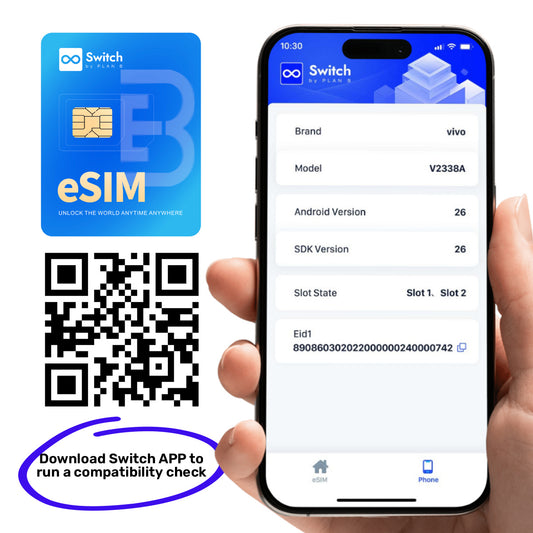
For Android-based management, follow the Switch app and Switch Pro profile-management guide. Keep the provisioning device separate from the device that will ultimately use the card.
Use these checkpoints for your 2026 setup:
- Device fit: Confirm the target device has a compatible physical SIM slot. Check the exact model, regional variant, operating system, carrier-lock status, and network bands.
- Management route: Choose Android-based profile management or Bluetooth-reader provisioning before attempting to load anything.
- Profile loading: Follow the adapter and provider instructions to install the intended profile, unless the card arrives pre-loaded.
- Service activation: Follow the provider's activation requirements and configure the target device as instructed.
- Connection test: Confirm the intended profile supplies the service you need. For a data plan, test mobile data rather than treating a recognized SIM as proof of connectivity.
Setup is complete when the intended service works on the target device, not when the profile download finishes. This distinction gives you a useful stopping point and prevents you from troubleshooting the wrong stage.
Why this matters
A physical eSIM adapter occupies a physical SIM slot. It does not add a SIM tray to a phone that lacks one, remove a carrier lock, or change the phone's supported network bands. Resolve those limits before choosing a profile-loading method.
The setup path also depends on which device performs management. Android app management, using a configured card in an iPhone, and loading a card through a Bluetooth reader are different tasks. Do not assume that support for one means support for all three.
Switchesim eSIM adapters are best for users with a compatible physical SIM slot who need removable profile storage. For a practical 2026 purchase, device fit comes before profile capacity or destination coverage.
Which setup route should you choose?
Choose the route you can actually complete with your equipment. A product intended for Android-based management is not interchangeable with a reader-based provisioning workflow, even when the final goal is the same.
| Option | Best for | Setup route | Useful capability | Limitation to check first |
|---|---|---|---|---|
| Switch Pro | Buyers with a compatible Android management device | Android-based profile management | Provides an Android management route for the adapter | Confirm the exact Android device and target-device fit |
| Switch Max | Buyers using a configured card in a compatible iPhone | Configure the card through a supported provisioning route, then use it in the iPhone | Extends adapter use to compatible iPhones | The iPhone needs a compatible physical SIM slot; use does not establish native iPhone management |
| Bluetooth reader | Buyers who need to load profiles without an Android phone | Reader-based provisioning | Provides a separate profile-loading route | Requires a compatible adapter and a supported reader workflow |
| Pre-loaded destination-data cards | Buyers who want the supplied destination profile already loaded | Confirm the supplied plan, then set up service on the target device | Removes the need to load that supplied profile yourself | Device fit, activation rules, and destination coverage still apply |
The Bluetooth reader is a provisioning accessory, not a substitute for the adapter card. A configured Switch Max is the card you use in a compatible iPhone; the reader is equipment you use to load profiles.
For Switchesim eSIM adapter buyers, that distinction is more useful than an unsupported speed comparison. Choose Switch Pro for Android-based management, Switch Max for compatible iPhone use, and the Bluetooth reader when you need provisioning without an Android phone.
Android setup: use the supported management device
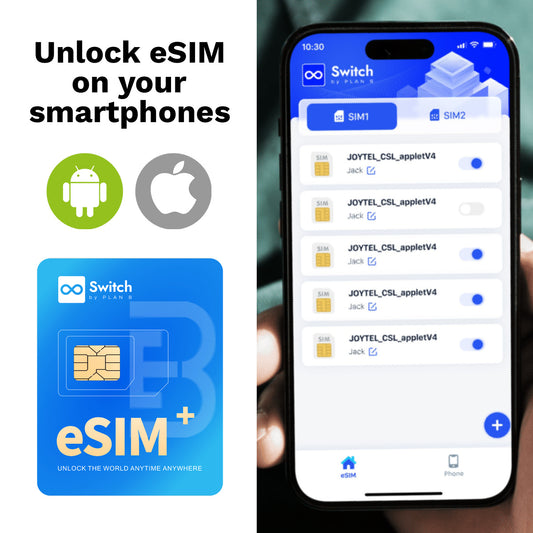
Switch Pro uses Android-based profile management. Start by checking the management phone's compatibility, not just whether the target phone has a SIM tray. The ability to accept a physical SIM and the ability to manage an adapter are separate requirements.
Follow the Switch Android app instructions for the exact card and device. Confirm that the management workflow recognizes the adapter before moving on to profile loading. Keep the provider's activation details accessible throughout the process.
After loading, follow the instructions for selecting and using the intended profile. Then configure the target device's service settings as required by the provider. A successful management operation is one checkpoint; a working mobile connection is another.
Best for: Buyers who already have access to a compatible Android management device. The limitation is the dependency on that supported management route, so confirm it before buying an adapter solely for another device.
iPhone setup: distinguish configuration from use
A compatible iPhone needs a physical SIM slot to use a configured Switch Max card. Check the exact regional variant rather than relying on the model family name. A phone without the required tray cannot accept the adapter.
Configure the card through a supported provisioning route before relying on it in the iPhone. Do not assume that an iPhone's built-in eSIM settings manage profiles stored on a removable adapter. Follow the card's instructions for profile selection and use.
In 2026, the useful buying question is still specific: can your exact iPhone use the configured card, and do you have a supported way to provision it? Answer both before purchasing a destination plan.
Best for: Buyers who want removable eSIM-profile use in a compatible iPhone. The trade-off is that iPhone use and profile provisioning remain distinct parts of the setup.
Bluetooth-reader setup: load profiles without an Android phone
The Bluetooth reader provides a provisioning route without an Android phone. You still need an adapter card and the supported workflow for communicating with the reader. Confirm the provisioning device and its operating system before starting.
Switchesim lists its open-source Bluetooth reader as working with iPhone and Android, with no app or account required. Treat that as the brand's stated reader capability, not a claim that every phone, browser, or operating-system version is compatible.
Use a simple sequence: establish the reader connection, follow the profile-loading instructions, confirm the intended profile, and then use the configured card in the compatible target device. Keep reader-connection troubleshooting separate from mobile-network troubleshooting.
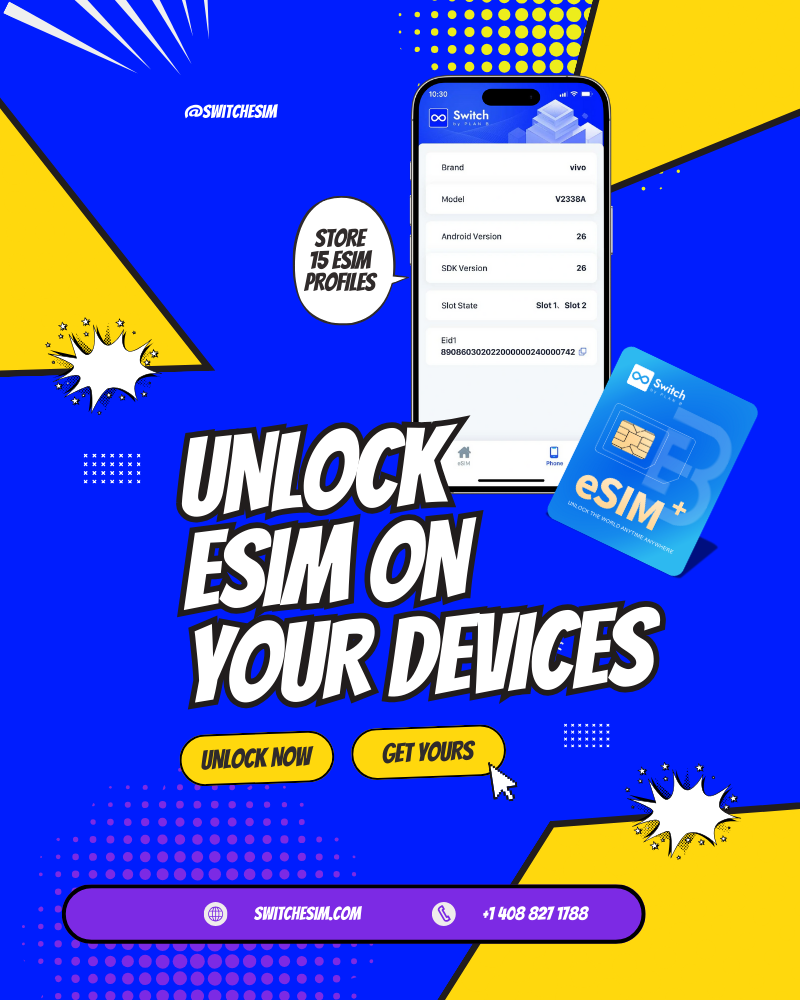
The adapter-and-reader bundle description specifies storage for up to 15 eSIM profiles. That is a storage-capacity claim for the listed bundle, not a setup-time measurement or a promise of simultaneous connections. Do not apply it automatically to every adapter variant.
Best for: Buyers who need a provisioning path without Android-based management. The additional hardware is useful only when it solves that requirement.

Pre-loaded cards: skip loading, not compatibility checks
A pre-loaded destination-data card changes your starting point. The supplied profile is already loaded, but you still need to check the device, plan coverage, activation conditions, and required network settings. Do not confuse pre-loaded with already connected.
For example, the listed Switch eSIM Adapter Max + United Arab Emirates package specifies 10GB and a 30-day data plan. Those figures describe the package, not installation speed. Check the provider's validity-start rules before deciding when to activate it.
Best for: Buyers who want the supplied destination profile loaded before they receive the card. The limitation is that the supplied plan still needs to match the destination and intended use.
Switchesim also offers bulk and white-label supply. For those purchases, document the target-device requirements and provisioning route before rollout; a single working setup does not establish compatibility across different hardware variants.
Why eSIM adapter setup time varies
The setup path changes when the equipment, profile, or service requirements change. Use these factors to identify the stage that needs attention rather than repeatedly starting from the beginning.
- Physical device fit: A compatible SIM slot is mandatory. Model and regional-variant differences must be checked before installation.
- Carrier-lock status: An adapter does not remove a carrier restriction. Confirm that the intended service is permitted on the target device.
- Management method: Android app management and Bluetooth-reader provisioning use different equipment. Choose the supported route in advance.
- Profile starting state: An empty card needs loading; a pre-loaded card starts with its supplied profile present. Neither state proves network service works.
- Provider requirements: Activation instructions, plan validity, destination coverage, and required service settings determine what happens after loading.
- Network compatibility: The target device's supported bands and the intended network still need to match. Profile storage cannot fix a radio-compatibility problem.
For a 2026 setup checklist, keep these factors separate. A reader connection problem belongs to provisioning; an unsupported network band belongs to device fit. Different failures require different actions.
What should you check before buying an eSIM adapter?
Choose the hardware only after confirming device fit and the provisioning route. Complete this checklist before buying a plan or assuming a particular card will work:
- Record the target device's exact model and regional variant.
- Confirm a compatible physical SIM slot is present and available.
- Check the operating-system requirements for management and use separately.
- Confirm carrier-lock status and intended network compatibility.
- Decide between Android-based management and Bluetooth-reader provisioning.
- Check the specific card's profile capacity; distinguish stored profiles from active service.
- Confirm the provider's supported installation method and activation requirements.
- Read the privacy information for the management workflow you will use.
Privacy needs its own check. The reader's open-source and no-account claims describe that product's stated approach; they do not establish every part of the provider's data handling. Review the provisioning workflow and mobile-service provider separately.
Keep activation credentials private. If you need setup help, avoid publishing an activation code or an unredacted screenshot containing installation details.
Does storing more profiles make setup take longer?
The listed adapter-and-reader bundle supports up to 15 eSIM profiles, but that capacity does not establish a setup duration. Loading additional profiles adds additional provisioning tasks; the storage figure alone says nothing about how quickly each task finishes.
For your first setup, verify the intended profile and working service before building a larger collection. This keeps compatibility and activation troubleshooting focused on the connection you need now.
Can you finish setup before reaching your destination?
You can prepare the hardware and follow the supported provisioning process before departure, subject to the provider's activation rules. Confirm when plan validity begins before activating a destination profile.
Separate preparation from a destination-network test. Loading the correct profile in advance does not prove that the intended destination network is reachable from your current location.
FAQ
How long does eSIM adapter setup take in 2026?
There is no fixed setup duration. Device checks, profile loading, provider activation, and a working-service test are separate stages, and completing one does not complete them all.
Can I set up an eSIM adapter without an Android phone?
The Bluetooth reader provides a provisioning route without an Android phone. Confirm the reader workflow, adapter compatibility, and provisioning-device requirements before starting.
Can I use Switch Max in an iPhone without a physical SIM tray?
No. A compatible physical SIM slot is required to use the removable Switch Max card, so check your exact iPhone model and regional variant.
Is a pre-loaded eSIM adapter ready to connect immediately?
A pre-loaded adapter already contains its supplied profile, but working service still depends on device compatibility and the provider's activation and network requirements. Follow those instructions before treating setup as complete.
Does an eSIM adapter remove a carrier lock?
No. An eSIM adapter does not remove the target device's carrier lock; confirm that the intended service is permitted before buying or loading a profile.
How many profiles can the adapter-and-reader bundle store?
The listed adapter-and-reader bundle specifies storage for up to 15 eSIM profiles. That figure describes storage capacity, not simultaneous active connections or setup speed.
Does the Bluetooth reader require an app or account?
The product listing states that the open-source Bluetooth reader requires no app or account. Check the supported provisioning workflow separately; that claim does not establish every provider's account or activation requirements.
How do I know my eSIM adapter setup is finished?
Setup is finished when the intended service works on the target device. For a data plan, verify mobile data rather than relying only on a successful profile installation or SIM recognition.
One last thing
Before your first 2026 setup, write down the management device and the target device separately. They do not have to perform the same role. That small distinction prevents you from buying a card you can use but cannot provision with the equipment you have.
Keep the same separation when asking for help: identify whether the failure occurs during device recognition, profile loading, or network connection. Include the exact model and regional variant, but keep activation credentials private.