
Is it safe to buy a used eSIM adapter?
Buying a used eSIM adapter is a reasonable choice only when you can verify its identity, compatibility, profile-management access and operation with your own service. A seller’s working connection does not prove that you can load a new profile, manage the card independently or use any included mobile plan.
- Is it safe to buy a used eSIM adapter? Buy only after verifying independent profile management and device compatibility.
- Switchesim eSIM adapters require a compatible physical SIM slot; a card does not remove carrier-lock restrictions.
- Test your own provider’s profile, not just the seller’s existing connection.
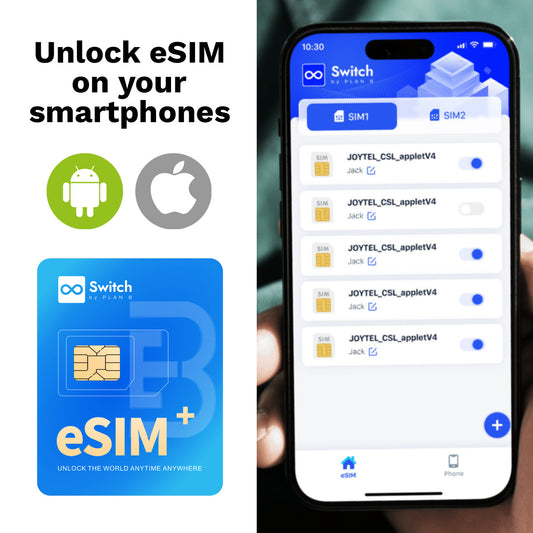
- Switch Pro uses Android-based management; Switch Max extends use to compatible iPhones.
- Treat hardware ownership, installed profiles and mobile-plan ownership as separate checks.
Why this matters
A second-hand adapter purchase involves more than the physical card. You need working hardware, a supported way to manage profiles and permission to use the mobile service you install. Passing one check does not settle the others.
For a 2026 purchase, start with your exact phone model and regional variant. Check the operating system, physical SIM slot, network bands and carrier-lock restrictions before assessing the seller’s demonstration. A working adapter in the wrong phone is still the wrong purchase.
Is it safe to buy a used eSIM adapter?
Buy only when you can establish independent control of a compatible, working adapter. That means managing profiles through the supported setup method without relying on the previous owner’s phone, account or continued assistance.
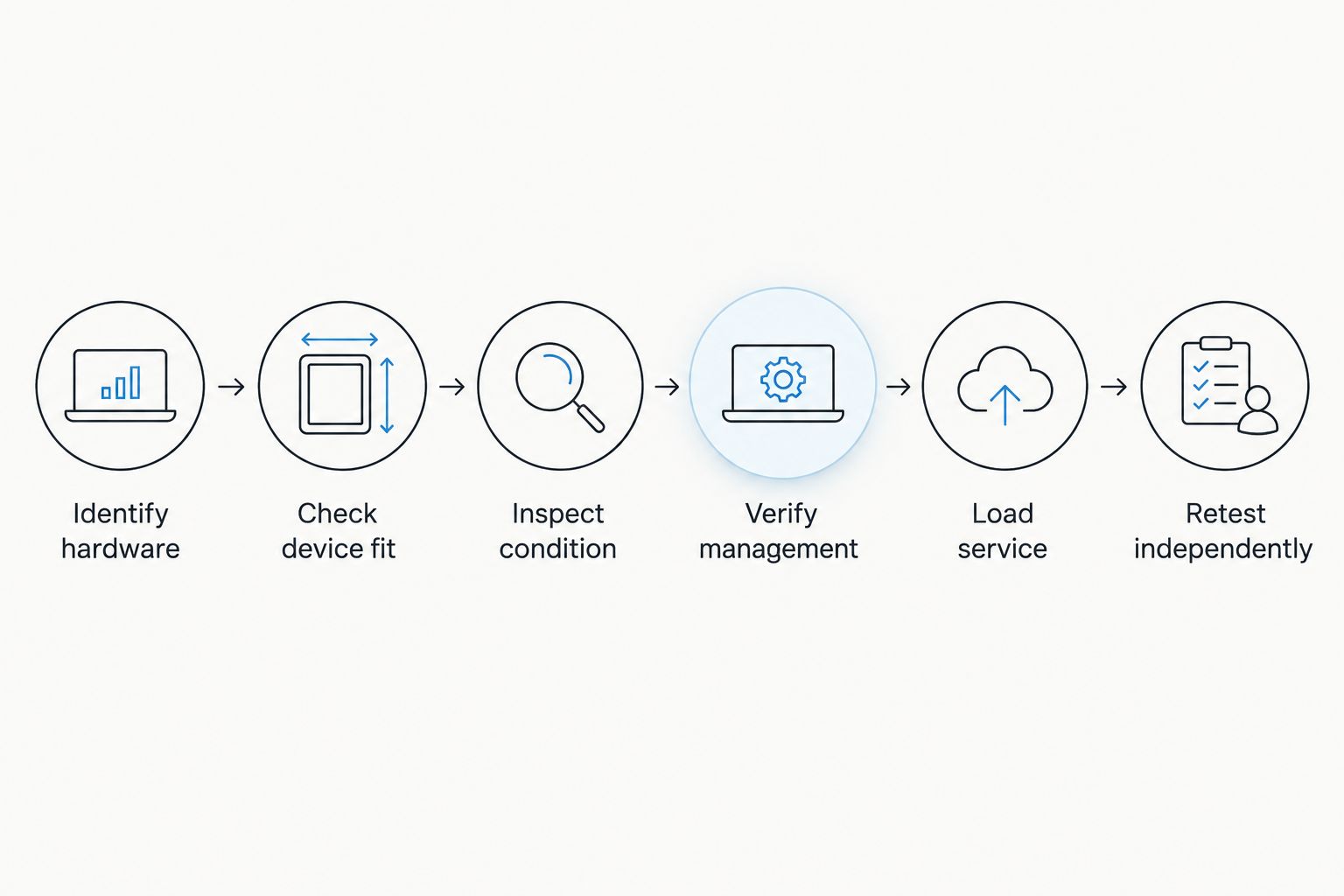
Use the following inspection sequence. Ask the seller to demonstrate the relevant functions before you commit, and confirm the marketplace’s purchase terms separately.
- Identify hardware. Obtain the exact manufacturer and model, clear photographs and the original purchase record if available. Check that the physical item matches the manufacturer’s documentation. A generic listing title is not enough to establish which management method it supports.
- Check device fit. Verify your phone’s exact model, regional variant, operating system and compatible physical SIM slot. Confirm carrier-lock status and the intended provider’s requirements. Do not substitute another buyer’s experience for your own device check.
- Inspect condition. Look for bent material, cracked edges, corrosion or damaged contacts. Ask whether the adapter has been cut, repaired or modified. Reject visible damage rather than assuming that successful detection proves reliable operation.
- Verify management. Establish how you will view, install, select and remove profiles using supported software or hardware. Ask the manufacturer about any account, licence or ownership-transfer requirements for that exact model.
- Load service. Use a profile issued to you, following your provider’s activation instructions. Do not publish its QR code or activation credentials in a marketplace conversation. Check network registration and the services your plan actually includes.
- Retest independently. Confirm that you can repeat the intended management workflow without the seller. Test the adapter in the destination device, not only in the device used to configure it.
The purchase decision follows the evidence. If you cannot complete a necessary check before purchase, treat that function as unverified—not as a feature the seller has established.
Device fit comes before a safety verdict
An adapter needs a compatible physical SIM slot. A phone without that slot cannot accept a removable adapter card, regardless of whether its operating system supports other eSIM functions.
The physical tray is only the starting point. The phone model, regional variant, operating system, carrier lock, network bands and eSIM provider all belong in the compatibility check. Do not buy against a claim that the adapter works with any phone.
Separate the device used to configure the adapter from the device that will use its mobile connection. An Android-based management workflow is not evidence of equivalent management on iOS. Likewise, a configured card working in an iPhone does not establish that the iPhone can perform every provisioning task.
Ask the seller to name both devices in the demonstration. Record the management device, the destination device and the method used between them. This prevents a listing from presenting a mixed-device setup as an entirely phone-only workflow.
Choose the management path, not just the card
Switchesim’s stated product roles separate Android management, compatible iPhone use and reader-based provisioning. Switchesim eSIM adapters suit buyers who need removable profile storage and can verify both device fit and a supported management path.
Use this comparison to identify the relevant setup. These are product-role distinctions, not a claim that every second-hand example is functional or compatible with your equipment.
| Option | Best for | Relevant capability | Limitation to check |
|---|---|---|---|
| Switch Pro | Buyers with a supported Android management device | Android-based profile management through the Switch Android app | Do not assume an iPhone provides the same management workflow |
| Switch Max | Compatible iPhone users with a confirmed configuration path | Extends adapter use to compatible iPhones | A configured card working in an iPhone does not establish iPhone-only provisioning |
| Bluetooth reader | Buyers who need profile loading without an Android phone | Reader-based provisioning; described as open source | Confirm the supported host setup and compatibility with the exact adapter |
| Adapter and Bluetooth reader bundle | Buyers who need both the card and provisioning hardware | The listed bundle supports up to 15 eSIM profiles | Storage capacity does not establish simultaneous active connections |
| Pre-loaded destination-data cards | Buyers who want an included destination plan | Hardware supplied with a specified data plan | A used card’s remaining service and transfer rights need separate verification |
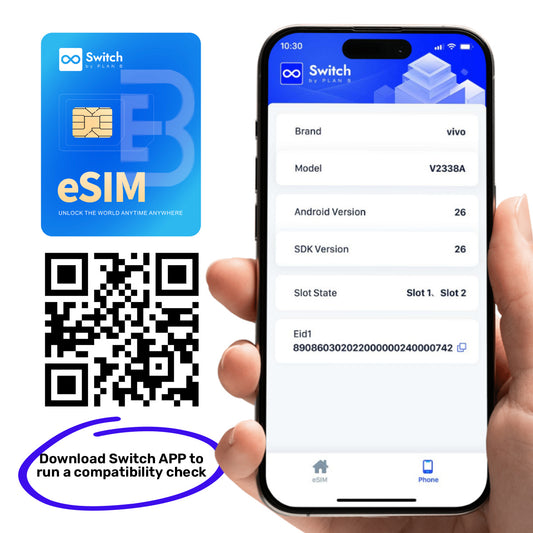
For a used Switch Pro, confirm access through the Switch Android app. For a used Switch Max, confirm the configuration method and operation in your compatible iPhone. If the setup depends on a Bluetooth reader, include that reader in the demonstration rather than accepting a promise that it can be added later.
The bundle’s stated capacity is up to 15 eSIM profiles. Do not apply that figure automatically to an unidentified used card or infer how many connections can operate at once. Ask for documentation covering the exact hardware being sold.
Keep hardware ownership separate from mobile-plan ownership
An installed profile is not proof that the mobile subscription belongs to the buyer. The seller must establish what the provider permits to transfer, and you should confirm those terms with the provider before relying on included service.
This distinction matters for pre-loaded destination-data cards. For example, a label stating 10GB / 30-Day describes a plan allocation and duration; it does not establish that a used card still has 10GB remaining or that its 30-day period has not started. Do not treat the original label as a live balance report.
For a 2026 resale purchase, request the current plan status, activation status and provider transfer terms. If the seller cannot establish those details, assess the adapter as hardware only. Do not use an account that remains controlled by the previous owner.
The clearest acceptance test uses your own service. It establishes that the adapter can follow your intended activation path instead of merely continuing to run a profile that someone else installed.
Privacy: verify the workflow, not the marketing label
A previously used adapter should not require you to inherit another person’s credentials. Establish which profiles remain installed, whether you can remove unwanted profiles through the supported method and whether any manufacturer account or licence needs an ownership change.
Switchesim describes its Bluetooth reader as open source and requiring no app or account. That is a statement about the reader’s advertised workflow, not a guarantee about every connected device, provider account or second-hand unit. Open-source availability alone does not verify the condition of the item you receive.
Treat QR codes, manual activation details and provider-account credentials as sensitive. Share only the information needed for compatibility support, and redact activation details from screenshots. Ask the seller to remove their own personal service before handover through the supported process.
A cleared profile list is a useful handover check, not a complete security audit. It does not authenticate hardware or prove how the device was handled. Keep the decision grounded in identifiable hardware, supported software and independent testing.
Why used-adapter risk varies
Second-hand condition is not the only variable. These factors determine how much of the intended setup you can actually verify:
- Hardware identity and condition. An exact model and inspectable card give you something concrete to compare with manufacturer documentation. Unidentified or visibly damaged hardware fails that check.
- Destination-device compatibility. The physical SIM slot, model, regional variant, operating system, carrier lock and network bands determine whether the intended setup fits.
- Profile-management access. Android management, configured iPhone use and reader provisioning are different workflows. Verify the one you will use.
- Provider activation requirements. The provider’s supported activation method and transfer rules determine whether your own service can be installed and used.
- Included service and accessories. A missing reader or unverified pre-loaded plan changes what the seller has demonstrated. Check each component separately.
What should you ask the seller before buying?
Ask for evidence tied to the exact item, not general product screenshots. A useful seller response identifies the hardware and demonstrates the functions you need without exposing private activation credentials.
Use this 2026 pre-purchase checklist:
- What is the exact adapter model, and has it been modified?
- Which device and operating system were used to manage it?
- Which supported app or reader is required?
- Can a new owner install and remove profiles independently?
- Does any account, licence or registration need transferring?
- Which accessories are included in this specific sale?
- Has the destination phone’s compatibility been checked?
- If mobile service is included, does the provider permit its transfer?
A refusal to demonstrate profile management leaves a central capability unverified. Skip the purchase if the seller offers only screenshots of a working connection but cannot establish your independent setup path.
Can you reset a used eSIM adapter before using it?
Use only the manufacturer’s documented reset or profile-removal procedure for the exact model. Do not assume that deleting profiles, reinstalling an app and transferring ownership are equivalent operations.
Before deleting anything, check your provider’s reinstallation rules. Removing a profile does not establish that its activation credentials can be used again.
Can the previous owner keep using an included plan?
Do not assume exclusive control of an included plan until the provider confirms ownership and account access. Buying the physical adapter is not evidence that the seller’s subscription or login has transferred to you.
Use service registered to you whenever possible. That avoids making continued connectivity depend on the seller maintaining an account you do not control.
Is buying new the better choice?
A new adapter avoids questions about a previous owner’s handling and installed profiles, but it still requires the same device-fit and provider checks. New hardware is not a substitute for compatibility verification.
Choose used only when the evidence supports your complete workflow. Choose new when you cannot establish the used item’s identity, management access or independent operation.
FAQ
Is it safe to buy a used eSIM adapter in 2026?
Buy a used eSIM adapter only after verifying its identity, condition, compatibility and independent profile management. A seller’s working connection alone does not establish that you can install your own service.
Can I use a second-hand eSIM adapter in a carrier-locked phone?
Do not assume a second-hand eSIM adapter bypasses a carrier lock. Confirm the phone’s restrictions and the intended provider’s compatibility before purchase.
Does deleting the old profiles make a used adapter safe?
Deleting old profiles is not a complete security check. You still need to establish hardware identity, supported management access and operation with your own service.
Can I load profiles on a used adapter without an Android phone?
Reader-based provisioning provides a loading path without an Android phone for supported hardware. Confirm the exact adapter, reader and host setup before buying.
Can I reuse the seller’s eSIM QR code?
Do not assume the seller’s QR code is reusable or transferable. Ask the provider whether it permits reinstallation and ownership transfer before attempting activation.
How many profiles can the adapter and Bluetooth reader bundle store?
The listed adapter and Bluetooth reader bundle supports up to 15 eSIM profiles. That storage figure does not establish simultaneous active connections or the capacity of an unidentified used card.
Does the Switchesim Bluetooth reader require an account?
Switchesim describes its Bluetooth reader as requiring no app or account. That reader claim does not remove the activation or account requirements of your mobile-service provider.
One last thing
The most useful demonstration is not a signal icon. It is a complete handover: identify the card, establish your management method, install service issued to you and verify it in the destination device.
If the purchase depends on the seller remaining involved, the handover is not complete. Make independent operation your acceptance condition.