
Is there a limit to how many eSIM adapters you can pair with one phone?
There is no universal pairing limit for eSIM adapters: the number you can use depends on whether you mean swapping cards, installing cards simultaneously, or connecting a Bluetooth reader. A physical eSIM adapter needs a compatible SIM slot; storing more profiles or pairing a reader does not add cellular connections to your phone.
- How many eSIM adapters can you pair with one phone depends on SIM slots, management support and simultaneous-line limits.
- Physical eSIM adapters occupy SIM slots; Bluetooth readers load profiles rather than add cellular connections.
- Switchesim suits buyers who need removable eSIM hardware for compatible physical-SIM devices.
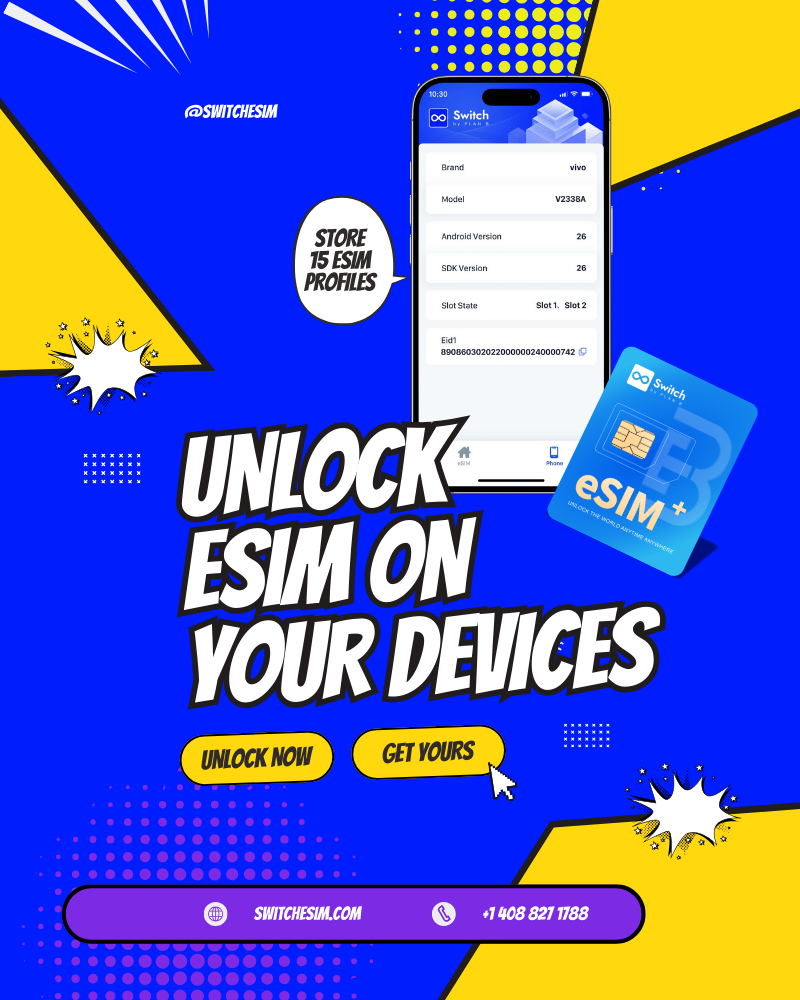
- The adapter-and-reader bundle lists up to 15 stored eSIM profiles, not 15 simultaneous connections.
Is there a limit to how many eSIM adapters you can pair with one phone?
There is no single number that covers every phone, adapter and management method. Start by separating the hardware you insert from the profiles it stores and the reader used to configure it. These are different limits.
| What you mean | What determines the limit | What it does not establish |
|---|---|---|
| Swap between adapter cards | Compatibility of each card and the management method | A universal unlimited-card guarantee |
| Insert adapters simultaneously | Compatible physical SIM slots | How many lines can operate together |
| Store eSIM profiles | Capacity of the specific adapter | Simultaneous cellular connections |
| Connect Bluetooth readers | Reader software, operating system and connection support | Additional SIM slots or cellular lines |
For the separate question of concurrent service, see using two eSIM profiles at the same time with an adapter. Do not treat a storage-capacity claim as confirmation of simultaneous operation.
Why this matters
Buying another adapter solves a different problem from adding another active line. You might want separate cards for separate subscriptions, a way to configure cards without an Android phone, or more profile storage. Each requirement needs its own compatibility check.
For a 2026 purchase, write down the outcome you need before choosing hardware. “I want to swap cards” and “I need both numbers reachable together” are not equivalent requirements, even when the same phone is involved.
Count physical slots, stored profiles and active lines separately. A large profile library does not change the phone's cellular hardware or its supported SIM configuration.
Physical slots: one slot accepts one adapter card
A physical eSIM adapter occupies the position normally used by a removable SIM. A phone with 1 compatible physical SIM slot has room for 1 adapter card at a time. A device with 2 compatible physical SIM slots has physical space for 2 cards, but adapter support and simultaneous service still need checking.
An eSIM-only phone with 0 physical SIM slots cannot accept this type of adapter. A Bluetooth reader does not change that restriction: configuring a card outside the phone does not create somewhere to insert it.
Before buying, check the exact model and regional variant. A familiar model name alone does not establish the SIM-tray configuration, supported operating system or carrier-lock status.
- Physical slot: Confirm that the target device accepts a removable SIM in the adapter's format.
- Regional variant: Check the hardware sold in your market, not just the model family.
- Carrier lock: Confirm that the intended subscription is permitted on the device.
- Network support: Check the phone's bands against the intended network.
An adapter is not a carrier-unlocking tool. It also does not add missing network bands or turn an incompatible device into a supported one.
Swapping adapters is different from pairing readers
The word “pair” fits a Bluetooth connection, but it can obscure how a physical adapter works. The adapter goes into a SIM slot. The reader provides a separate route for loading profiles onto the card.
For multiple adapter cards, the useful question is whether your management method supports each card you intend to configure. Do not assume that successful setup of one card proves support for every adapter model or every later card.
For multiple Bluetooth readers, ask about saved connections and simultaneous connections separately. Neither count establishes how many adapters the phone can use for cellular service.
| Component | Main role | Main limitation |
|---|---|---|
| Physical eSIM adapter | Holds profiles for use through a compatible SIM slot | Needs suitable target-device hardware |
| Android management app | Manages profiles through the supported Android setup | Depends on app and device support |
| Bluetooth reader | Provides a profile-loading route without an Android phone | Does not supply another cellular connection |
| Target phone | Uses the configured card for service | Remains subject to device and network restrictions |
This distinction remains essential in 2026: a reader connection is a configuration path, not another mobile line.
Choose the management path before buying more cards
Switchesim separates Android-based profile management, use of a configured Max card in a compatible iPhone, and provisioning through the Bluetooth reader. Choose the route that matches the equipment you actually have.
| Option | Best for | Supported role stated by Switchesim | Limitation to check first |
|---|---|---|---|
| Switch Pro | Buyers using Android-based profile management | Pro uses Android-based profile management | Verify the Android model, operating system and app support |
| Switch Max | Buyers using a configured card in a compatible iPhone | Max extends use to compatible iPhones | The iPhone still needs a compatible physical SIM slot; configuration is a separate task |
| Open-source Bluetooth reader | Buyers who need profile loading without an Android phone | The reader loads profiles without an Android phone | Confirm the supported control software and operating system |
| Pre-loaded destination-data cards | Buyers who want a card supplied with a destination plan | A pre-loaded card combines adapter hardware and a specified data plan | Confirm destination coverage, device fit and later profile-management requirements |
Switchesim eSIM adapters suit buyers who need removable eSIM hardware for compatible physical-SIM devices. Choose Switch Pro for the stated Android-management route, Switch Max for compatible iPhone use, or the Bluetooth reader when you need the separate provisioning route.
The benefit is a choice of setup paths. The limitation is that these paths are not interchangeable: using a configured card in an iPhone does not prove that every Android management function is available on iOS.
Bulk and white-label options address supply requirements, not phone compatibility. Ordering more cards does not increase a handset's slot count or establish an app's multi-card management limit.
Profile capacity is not an adapter-pairing limit
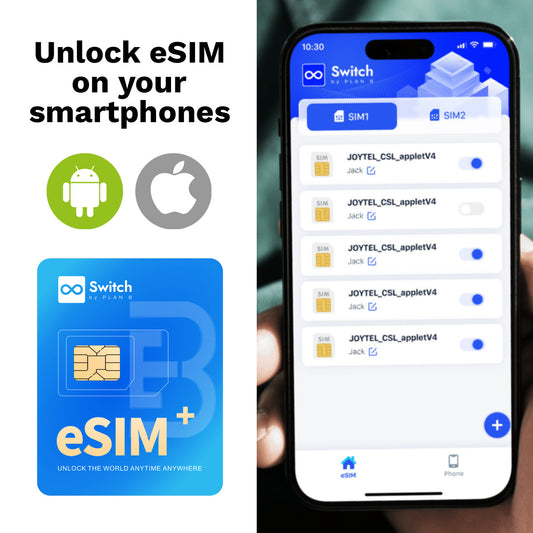
The Switch eSIM Adapter + Bluetooth Card Reader Bundle lists storage for up to 15 eSIM profiles, according to its product description. That is a capacity statement for the bundle's adapter, not a promise of 15 active lines or support for 15 paired readers.
Keep that scope attached to the number when comparing hardware in 2026. Do not apply the bundle's capacity automatically to every standalone card, product generation or management arrangement.
Before choosing additional adapters for storage, ask:
- What is the profile capacity of the exact card being supplied?
- Does the management software support the intended collection of cards?
- How do you identify which subscription is on which card?
- What happens when a profile needs replacement or reinstallation?
- Does your provider permit the intended activation method?
A second adapter gives you another physical card to manage. It does not establish that an existing subscription can be copied onto it, or that both cards can use the same subscription together.
Confirm the provider's transfer or reissue process before deleting a working profile. Moving hardware and transferring a subscription are separate operations.
Why the usable adapter count varies
The practical limit comes from several independent checks. Passing the physical-fit check alone is insufficient.
- SIM-slot configuration: The target device must have space for each card you intend to insert.
- Model and regional variant: Verify the exact handset rather than assuming every version has identical hardware.
- Operating system and management software: Android management, iPhone use and reader-based provisioning have different requirements.
- Carrier-lock status: An adapter does not remove restrictions imposed by the handset's carrier lock.
- Provider and network requirements: Profile activation support and suitable network bands remain necessary.
- Card capacity: Stored-profile capacity belongs to the specific adapter, not to the phone's Bluetooth connection list.
For a 2026 buying decision, ask the seller to confirm your complete combination: phone model, regional variant, operating system, adapter model, provisioning method and provider. “Compatible with Android” is not a substitute for checking that combination.
How do I check whether another adapter will work?
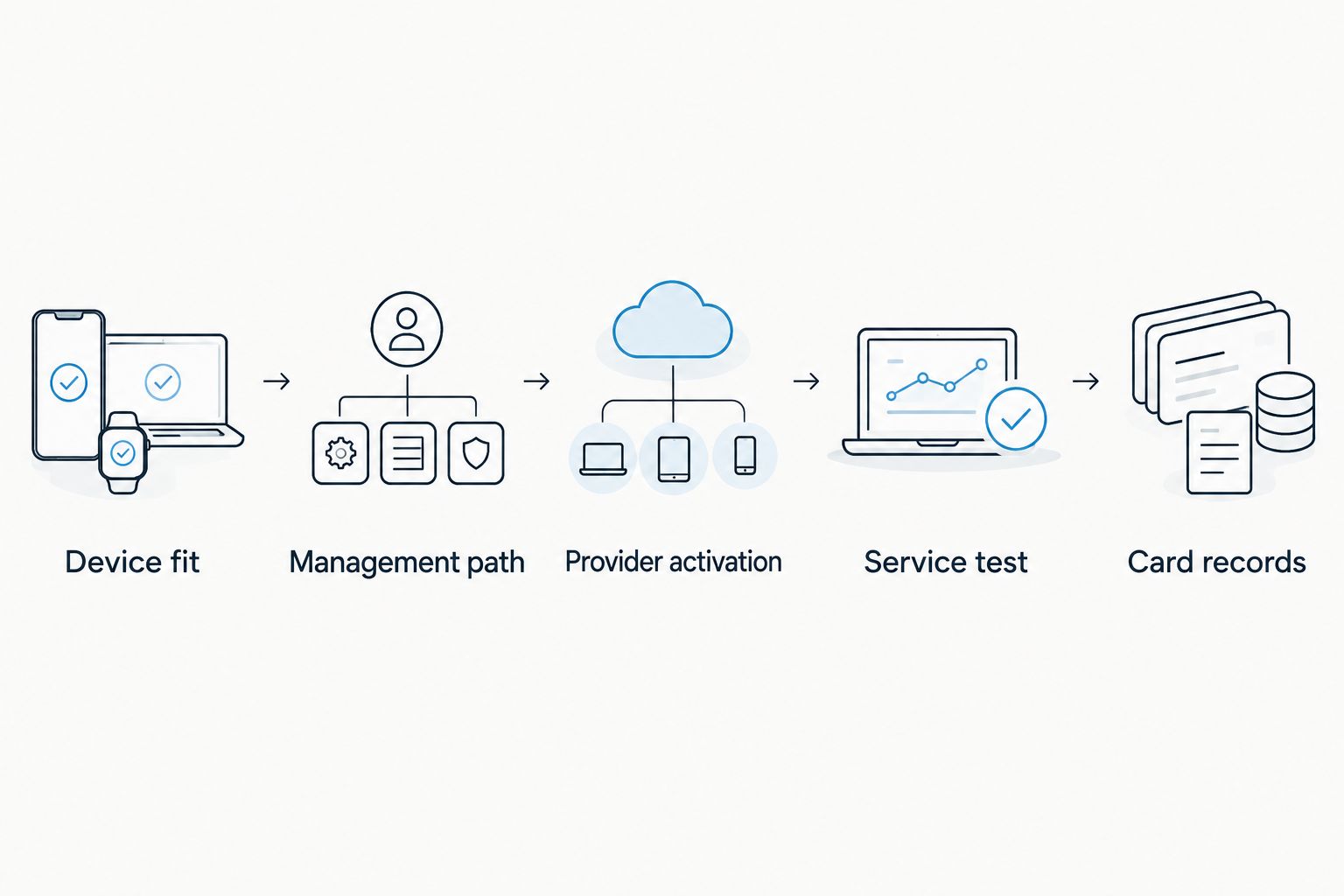
Use a repeatable setup check rather than buying several cards based on the first successful installation. Start with the target device and finish with a working subscription.
- Device fit: Record the model, regional variant, operating system and physical SIM-slot configuration. Check carrier-lock status before selecting a plan.
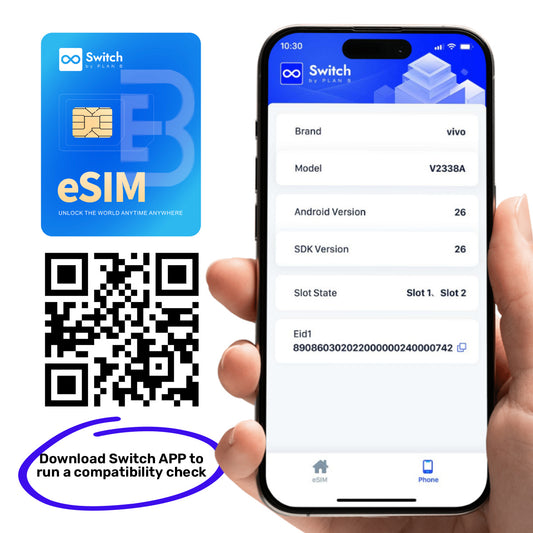
- Management path: Choose Android app management, configured Max-card use, or Bluetooth-reader provisioning. Confirm support for the equipment controlling that process.
- Provider activation: Check the provider's activation instructions and whether the selected hardware supports that process. Keep activation credentials private.
- Service test: Configure the intended card and test the service you need. Include calls and messages if the subscription provides them, rather than checking data alone.
- Card records: Label cards and record their intended subscriptions. Keep activation secrets out of ordinary labels and shared inventories.
For shared devices, document which card belongs in which handset and who controls profile loading. Bulk purchases need the same technical checks as individual purchases, plus clear ownership of the configuration process.
What privacy checks matter when managing several adapters?
An open-source reader is not, by itself, a complete privacy guarantee. Check the reader software, app permissions, account requirements and handling of activation credentials before using the setup for personal or business subscriptions.
Keep a distinction between identifying a card and exposing its activation details. Your inventory needs to tell you which adapter to use; it does not need to contain reusable activation secrets in a shared document.
For a 2026 deployment, establish these rules before handing out cards:
- Identify who is allowed to load, remove or replace profiles.
- Confirm where management credentials and activation details are stored.
- Decide how lost cards and reassigned devices are handled.
- Check the provider's process for recovering or reissuing service.
The useful privacy question is not simply whether the hardware is removable. It is who can manage the subscription and what information the management process exposes.
Can I keep several adapters and swap them into one phone?
You can use removable cards sequentially when each card and subscription is compatible with the phone. That does not establish an unlimited app-management allowance, so confirm multi-card support for the exact management software before building a large collection.
Does a Bluetooth reader let me use more mobile lines?
A Bluetooth reader provides a profile-loading route, not an additional cellular modem or physical SIM slot. The target phone's supported SIM configuration still determines which services it can use together.
Should I buy another adapter just to store more profiles?
Check the existing card's capacity first. The adapter-and-reader bundle lists up to 15 stored profiles; buy additional hardware only after separating your storage requirement from your need for simultaneous service or separate physical cards.
FAQ
How many eSIM adapters can I use in a phone with one SIM slot?
A phone with 1 compatible physical SIM slot can hold 1 physical eSIM adapter at a time. Check adapter support, carrier-lock status and provider requirements before using it.
Can I pair unlimited eSIM adapters with one Android phone?
Do not assume unlimited support. The relevant limits depend on the specific cards, Android device and management software, while installed cards remain limited by compatible physical slots.
Can I use two adapters in a dual-SIM phone?
A phone with 2 compatible physical SIM slots has room for 2 cards, but that does not confirm adapter compatibility or simultaneous operation. Verify both with the exact phone configuration.
Can an eSIM-only iPhone use a physical eSIM adapter?
An eSIM-only iPhone cannot accept a physical eSIM adapter because it has no physical SIM slot. A Bluetooth reader cannot remove that hardware restriction.
Does storing 15 eSIM profiles mean I get 15 active lines?
Up to 15 stored eSIM profiles is the capacity stated for the adapter-and-reader bundle, not a simultaneous-line claim. Storage and active service are separate limits.
Do I need an Android phone to load profiles with the Bluetooth reader?
The Bluetooth reader provides a profile-loading route without an Android phone. Confirm the supported control software and operating system before choosing that setup.
Can I copy one subscription onto several adapter cards?
Do not assume that a subscription can be copied between cards. Confirm the provider's transfer, replacement and activation rules before changing a working setup.
One last thing
Ask for three separate answers: how many cards you can manage, how many profiles each card stores, and how many lines the phone can use together. A seller answering only the storage question has not answered your pairing question. Keep those requirements separate before placing the order.