
Switch eSIM vs Holafly 2026: Which Wins for You
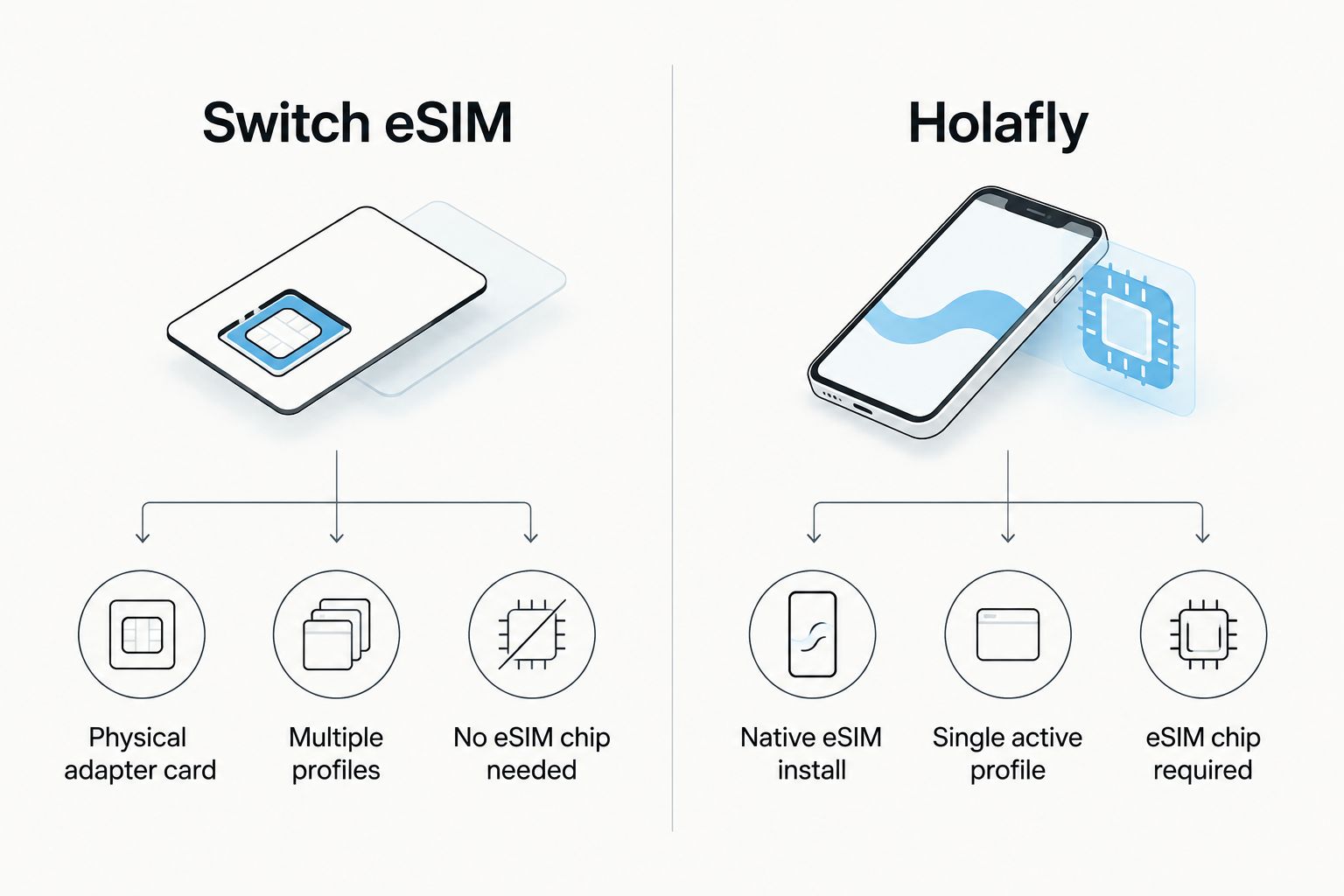
Choose Switch eSIM if you need a physical device that holds multiple eSIM profiles on a phone, router, or IoT device that lacks native eSIM support — including most Android models sold outside flagship tiers. Choose Holafly if your phone already has native eSIM support and you just need a data plan installed directly for one trip. The two aren't really competing products: Switch eSIM sells hardware that adds or extends eSIM capability, Holafly sells the data plan itself.
- Switch eSIM sells physical adapter hardware (Switch Pro, Switch Max, Bluetooth reader); Holafly sells travel data plans with no hardware involved.
- Switch Pro targets Android phones with a physical SIM slot but no native eSIM chip; Switch Max extends use to compatible iPhones.
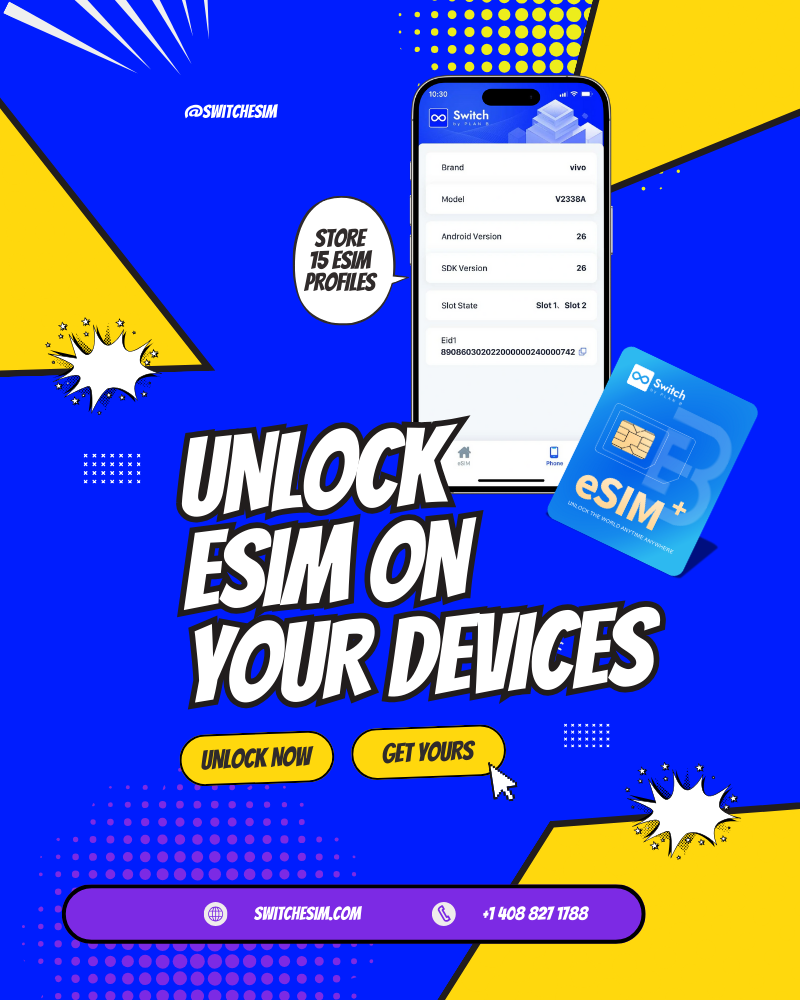
- The Bluetooth eSIM card reader bundle stores up to 15 eSIM profiles and loads them without needing an Android phone at all.
- Holafly requires a phone with native eSIM support (iPhone XS or later, most 2019+ flagship Android) and no adapter hardware.
- In 2026, pick Switch eSIM for hardware-level profile switching and pick Holafly for a straightforward data plan on an eSIM-native phone.
Why this matters
Most "eSIM adapter vs eSIM provider" searches conflate two different problems. One is a hardware problem: your phone has a physical SIM slot but no eSIM chip, or you want to carry several eSIM profiles without juggling QR codes every time you land. The other is a data problem: your phone already supports eSIM natively and you just want a plan for a specific country.
Switch eSIM solves the first problem with the Switch Pro adapter card, the Switch Max card for compatible iPhones, and a Bluetooth reader that loads profiles independently of any phone. Holafly solves the second problem by selling data-only eSIM plans you install straight into your device's native eSIM manager. Get this distinction wrong before you buy and you'll end up with hardware you can't use, or a data plan your phone can't install.
At a glance
| Dimension | Switch eSIM | Holafly |
|---|---|---|
| What it is | Physical eSIM adapter hardware + reader | Travel eSIM data plan provider |
| Device requirement | Phone with a physical SIM slot (Android or compatible iPhone) | Phone with native eSIM support |
| Profile capacity | Up to 15 profiles on the Bluetooth reader bundle | One active eSIM profile per plan purchased |
| OS support | Android (Switch Pro) plus compatible iPhones (Switch Max) | iOS and Android, both native-eSIM only |
| Provisioning method | Adapter card + app, or Bluetooth reader without a phone | QR code scanned directly into the phone's eSIM settings |
| Privacy/data model | Profiles live on a removable physical card you control | Profile tied to the plan and the phone's internal eUICC |
| Best for | Non-eSIM phones, multi-carrier switching, IoT and routers | eSIM-native phones needing a single-destination data plan |
| Pricing model | One-time hardware purchase, optional pre-loaded data cards | Per-destination data plan, no hardware cost |
| Standout feature | Bluetooth reader provisions profiles without a phone | Direct native-eSIM install, no adapter needed |
Switch eSIM works on more device types (by a lot)
Holafly's data plans only install on phones with native eSIM chips — that's mostly recent flagship iPhones and Android models. Switch eSIM's whole reason to exist is the opposite case: phones, routers, hotspots, and IoT devices that have a physical SIM slot but no built-in eSIM support.
The Switch Pro adapter manages profiles through an Android app on devices without native eSIM. Switch Max does the same for compatible iPhones, though iPhone compatibility still depends on the exact model, regional variant, and carrier-lock status — it isn't a universal fix. Holafly simply doesn't address non-eSIM devices at all. Verdict: Switch Pro and Switch Max cover a device category Holafly can't touch.
Holafly wins on plug-and-play simplicity for eSIM-native phones
If your phone already has native eSIM support, Holafly's model is genuinely simpler for a single trip: scan a QR code, the plan installs directly into the phone's eSIM manager, no adapter, no app pairing. Switch eSIM's adapter workflow adds a physical card and a setup step that a native-eSIM user doesn't need.
For a traveler who owns a current-generation iPhone or Android flagship and needs data for one country on one trip, that extra hardware step is friction Holafly avoids entirely. Verdict: Holafly is the leaner path when your phone already does eSIM natively.
Switch eSIM stores more profiles per device
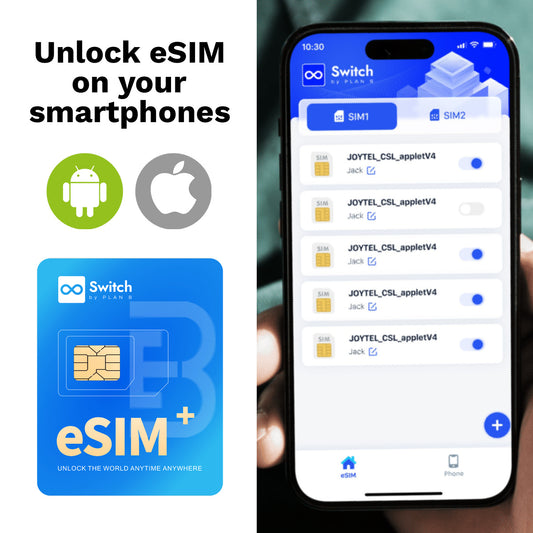
Holafly's model ties one data plan to one active eSIM slot on your phone — switching destinations means installing a new profile each time. The Bluetooth eSIM card reader bundle stores up to 15 eSIM profiles on a single card and loads whichever one you need without touching a phone's native eSIM menu at all.
That matters for anyone juggling multiple carriers or multiple countries in the same month rather than a single-destination trip.
Both make initial setup simple, in different ways
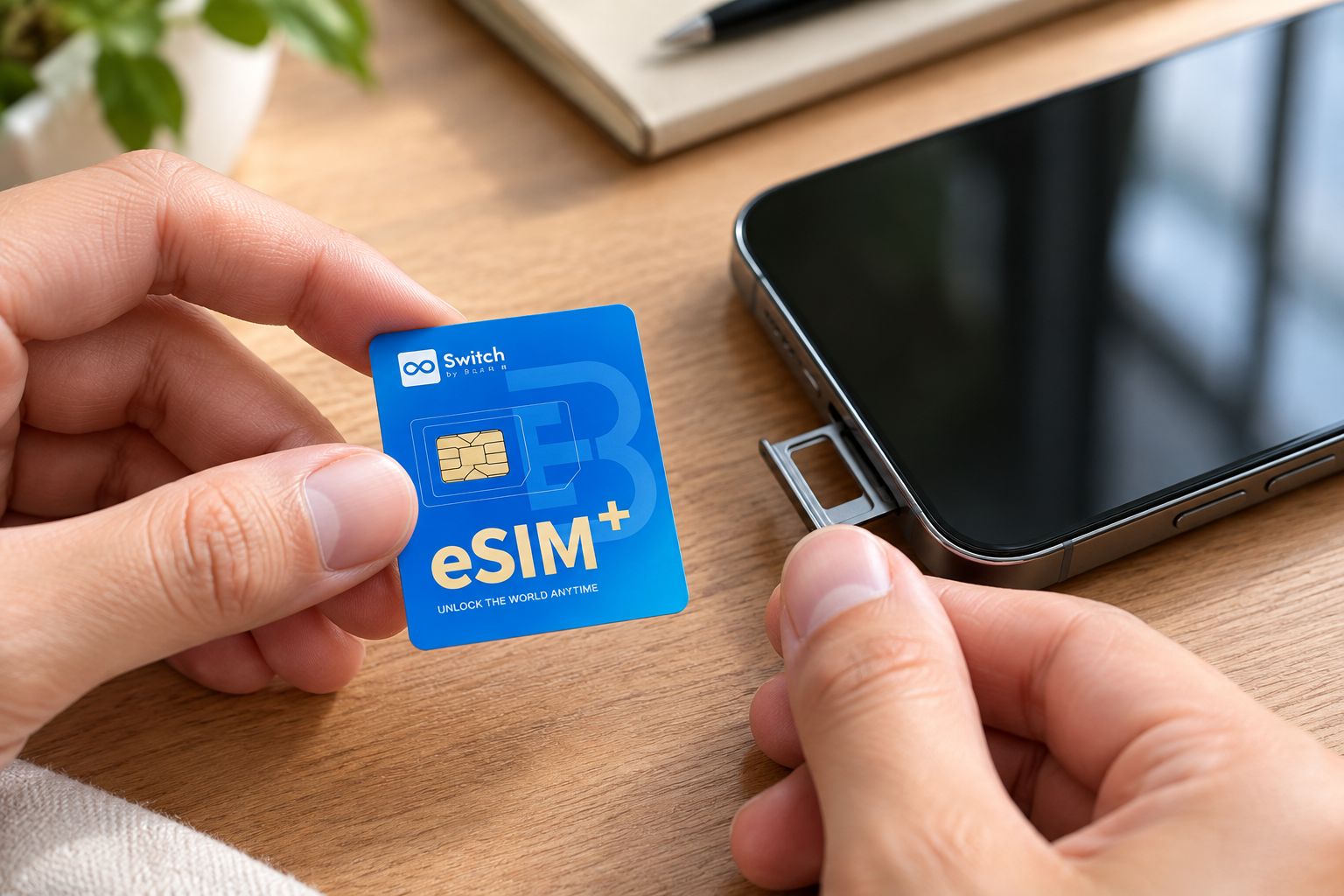
Neither product is hard to set up, they're just different processes. Holafly's QR scan takes a few minutes on any native-eSIM phone. Switch eSIM's card-plus-app pairing also takes a few minutes on a compatible Android phone, and the Bluetooth reader skips the phone step entirely for supported devices. Verdict: call this one a tie — the setup friction is roughly equal, it's just located in different places.
Switch eSIM gives you physical control of profiles; Holafly keeps everything on the eUICC
Switch eSIM's adapter cards are removable hardware — profiles live on the card, not welded into the phone's internal eUICC. That means you can pull the card, hand it to another compatible device, or reprovision it through the Bluetooth reader.
Holafly's plans are installed directly into the phone's native eUICC, same as any carrier eSIM. There's no removable component — the profile lives and dies with that phone's internal chip. Verdict: Switch eSIM's physical-card model gives you more control over where a profile lives.
Pricing models differ more than the numbers do
Switch eSIM sells hardware as a one-time purchase, with pre-loaded destination-data cards available for buyers who want data included at checkout rather than provisioning it separately. That's a predictable, buy-once model.
Holafly sells recurring, per-destination data plans — you buy a new plan every time you travel somewhere new, with no hardware cost attached. That's a pay-per-trip model: more flexible if you travel rarely, more expensive over time if you travel often. Check current pricing on each site directly since neither model is static.
Final verdict
Choose Switch eSIM if you're an Android user without native eSIM support, an iPhone user on a Switch Max-compatible model who wants to juggle several eSIM profiles, or you manage IoT devices, routers, or hotspots that only have a physical SIM slot.
Choose Holafly if you own a current eSIM-native iPhone or Android flagship and you want a single data plan installed directly for one upcoming trip, with no hardware to buy or carry.
“Switch eSIM solves a hardware problem; Holafly solves a data-plan problem — they only look like competitors from a distance.”
One-glance scorecard
| Dimension | Winner |
|---|---|
| Device compatibility | Switch eSIM |
| Setup simplicity for eSIM-native phones | Holafly |
| Profile storage capacity | Switch eSIM |
| Initial setup friction | Tie |
| Profile ownership/privacy | Switch eSIM |
| Pricing predictability | Tie (different models) |


FAQ
Is Switch eSIM better than Holafly in 2026?
They solve different problems in 2026: Switch eSIM sells adapter hardware for phones without native eSIM support, Holafly sells data plans for phones that already have native eSIM. Neither is universally better, the right pick depends on whether your phone supports eSIM natively.
Does Holafly work without an eSIM-capable phone?
No. Holafly's plans install directly into a phone's native eSIM chip, so the phone must support eSIM natively before you buy a plan.
Can Switch eSIM adapters work on any Android phone?
No. Switch Pro requires a compatible Android phone with a physical SIM slot; exact compatibility depends on the model, regional variant, carrier-lock status, and network bands.
Does Switch Max work on every iPhone?
No. Switch Max works on compatible iPhone models with a physical SIM tray, and compatibility varies by iPhone model, region, and carrier lock, so check the specific model before buying.
How many eSIM profiles can Switch eSIM store?
The Bluetooth eSIM card reader bundle stores up to 15 eSIM profiles and loads them onto a compatible card without needing a phone in the loop.
Which iPhones support native eSIM for Holafly?
Apple added eSIM support starting with the iPhone XS in 2018, so iPhone XS and later models can install Holafly plans natively, subject to carrier lock status.
Do Switch eSIM adapters need an app?
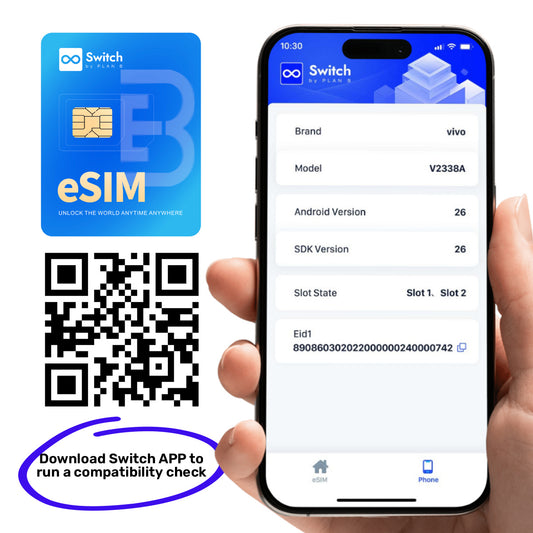
Switch Pro and Switch Max manage profiles through an Android app; the Bluetooth reader provisions profiles independently without requiring a phone app at all.
Is a physical eSIM adapter card safe to reuse across devices?
Switch eSIM's adapter cards are removable hardware, so a provisioned card can be moved between compatible devices, unlike a Holafly plan which is tied to one phone's internal eUICC.
One last thing
The detail buyers miss most in 2026: a Holafly plan and a Switch eSIM adapter can coexist on the same trip. Someone with a native-eSIM iPhone can run a Holafly data plan for that phone while carrying a Switch Max card as backup for a second, non-eSIM device — router, older phone, or a spare handset. Treating them as mutually exclusive is the wrong frame; they only compete when the buyer actually has an eSIM-native phone and no multi-device need.