
Switch eSIM vs Plan B eSIM: Switch Wins in 2026
Choose Switch eSIM if you need a documented Android setup, a card intended for a compatible iPhone, or a way to load profiles without an Android phone. Choose Plan B eSIM if its current documentation confirms your exact device and carrier combination and Switch does not. Switch eSIM is the better-documented hardware choice for buyers comparing Android, iPhone and reader-based provisioning in 2026; Plan B eSIM wins only when its verified device fit is stronger for your specific phone. Start with the SIM slot, not the brand name: an adapter card needs a compatible physical slot to work.
- Switch eSIM vs Plan B eSIM in 2026: choose Switch for documented Android, iPhone and Bluetooth-reader setup paths.
- Choose Plan B eSIM if its current compatibility guidance confirms your exact phone and carrier where Switch's does not.
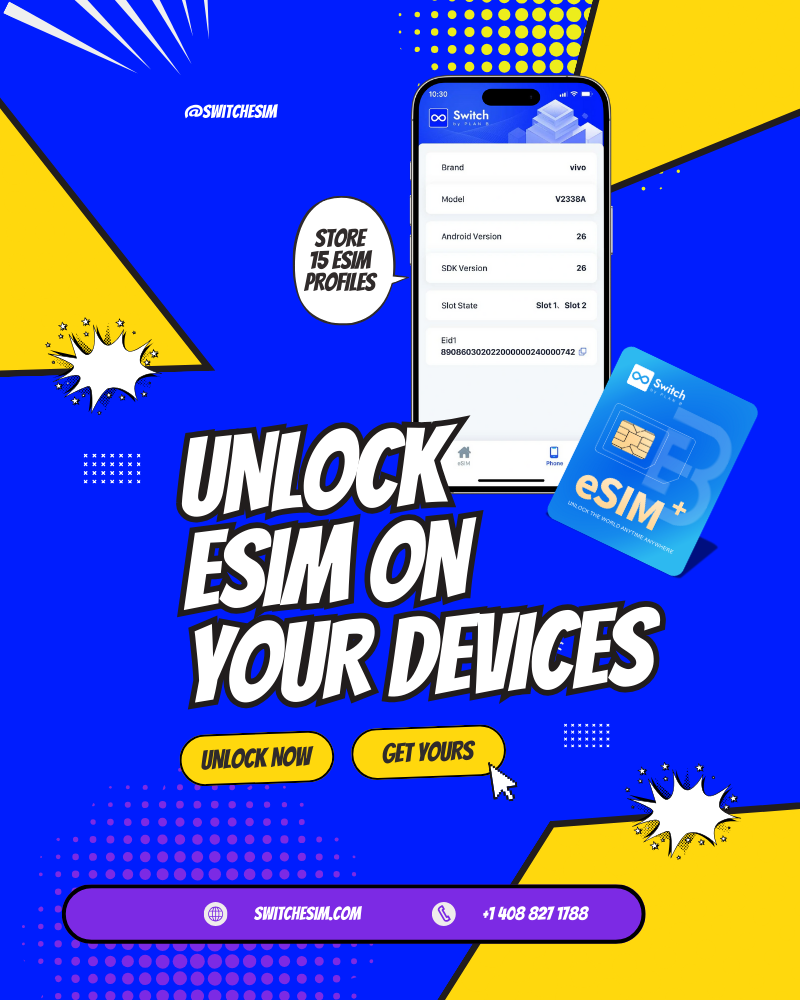
- Switch Max stores up to 15 eSIM profiles, according to its product listing.
- Neither option should be ordered before checking the physical SIM slot, carrier lock and eSIM provider requirements.
Why this matters
An eSIM adapter card sits in a physical SIM slot. It does not add a slot to an eSIM-only phone, remove a carrier lock or guarantee that a data provider accepts its profile-loading method. Those checks determine whether either option is useful before profile capacity or accessories matter.
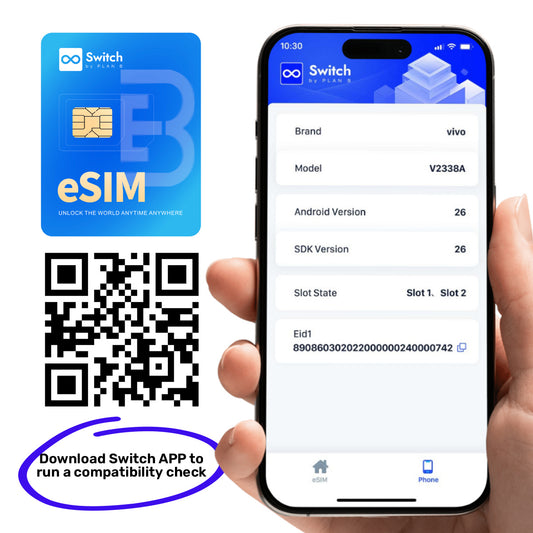
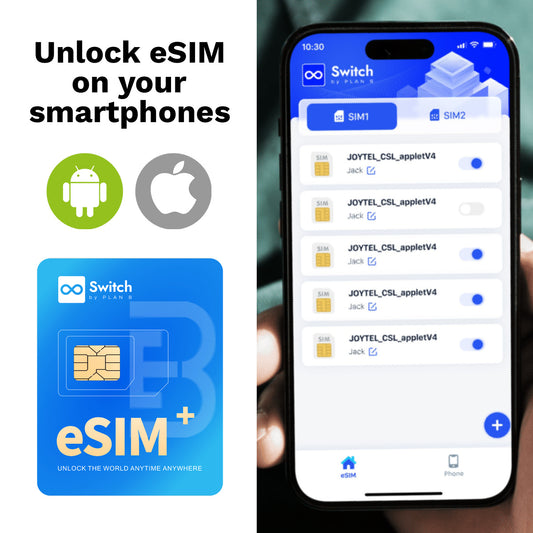
Switch separates two jobs buyers often confuse. Switch Pro uses Android-based profile management. Switch Max extends use to compatible iPhones, while the separate Bluetooth reader provides a way to load profiles without an Android phone. A configured Max card in an iPhone is not the same thing as using the Switch Android app to manage that card. The loading path matters if your only phone runs iOS.
The supplied information names Plan B eSIM as the comparison target but does not establish its current device list, loading method, profile limit or purchase terms. That prevents a feature-for-feature claim about Plan B. In 2026, give a verified match for your exact phone more weight than a general claim of iPhone or Android compatibility.
At a glance: device fit and setup path
| Dimension | Switch eSIM | Plan B eSIM |
|---|---|---|
| Best for | Buyers who need a stated Android, iPhone or reader-based path | Buyers whose exact device and carrier are confirmed by Plan B but not Switch |
| Physical SIM slot | A compatible physical SIM slot is required | Confirm the required card format and slot with Plan B |
| Android management | Switch Pro uses Android-based profile management | Current management method not established here |
| iPhone use | Switch Max is intended for compatible iPhones | Current model and regional coverage not established here |
| Loading without Android | An open-source Bluetooth reader loads profiles without an Android phone | Reader or alternative loading method not established here |
| Profile capacity | Switch Max holds up to 15 profiles, according to its listing | Current capacity not established here |
| Privacy model | The reader is described as working without an app or account | Account and app requirements not established here |
| Bulk supply | Bulk and white-label options are stated | Current supply terms not established here |
| Pricing model | Hardware products, with separate pre-loaded data-card options | Current purchase structure must be checked with Plan B |
Switch has a stated physical-slot requirement; verify Plan B's format
Switch does not fit a phone without a compatible physical SIM slot. Check the actual tray on your phone, not just a specification that says the model family supports SIM cards. Regional variants can differ. The phone also needs the relevant network bands, and a carrier lock can restrict which service you can use after the card is installed.
Plan B's card format and device requirements are not established by the supplied facts. Do not treat that absence as proof that Plan B works in more devices or fewer devices. Ask for confirmation covering the full model number, regional variant and SIM-tray configuration. In 2026, a named device match is more useful than a broad compatibility label.
Switch Pro defines the Android setup path more clearly
Switch Pro is the clearer choice when Android-based profile management is acceptable. The stated setup path uses Android to manage profiles on the adapter. That gives an Android buyer a concrete question to answer: does the phone support the app and the physical card, and will the intended eSIM provider supply a profile the setup can load?
The limitation is equally concrete. Buying Pro for an iPhone-only household leaves the buyer without the stated Android management path. Do not substitute an assumption that an iPhone can perform the same card-management steps. Plan B could be the better Android choice if its current instructions confirm your exact phone and Switch's do not, but no Plan B app, operating-system list or setup procedure is established here.
Switch Max has a named iPhone use case
Switch Max wins on documented iPhone positioning, not universal iPhone compatibility. It is the product Switch identifies for use in compatible iPhones. A phone still needs a suitable physical SIM slot; its model, regional variant, operating system and carrier-lock status remain part of the purchase check.
Keep provisioning separate from use. A configured Max card can be used in a compatible iPhone, but that does not mean the iPhone follows the Switch Pro Android-app setup. If you only have an iPhone, decide how profiles will be loaded before ordering. Plan B's current iPhone support is not established here, so there is no defensible claim that its iPhone coverage is broader or narrower.
Switch offers a loading path without an Android phone
Switch's Bluetooth reader is the distinct choice for an iPhone-only buyer who needs a stated loading route. Switch describes the reader as open source and able to load profiles without an Android phone. Its product listing also describes use without an app or account. Those are claims about the reader's setup path, not a promise that every eSIM provider or phone will accept every profile.
The reader is a separate device. You need an adapter card as well as the reader, and you still need to confirm the target phone's physical slot and service compatibility. Plan B's information supplied for this comparison does not identify a reader or another no-Android loading method. Ask Plan B for the actual steps rather than assuming it has one or assuming it cannot offer one.
Switch states a capacity; Plan B needs a confirmed figure
Switch Max holds up to 15 eSIM profiles, according to its product description. That is a storage claim, not a claim that 15 plans run simultaneously. It matters when you want to keep profiles available for later selection instead of replacing the card whenever your needs change.
Plan B's profile capacity is not established here. Switch wins on a published number, not on proven greater storage. Ask Plan B for its current capacity and whether its stated figure applies to the exact card you would buy. Also ask both sellers how profile loading and switching work on your intended operating system; a capacity figure alone does not describe the workflow.
The reader has a stated account-free path; compare privacy claims narrowly
Switch's reader has a documented no-app, no-account claim. That addresses the steps needed to load profiles through that device. It does not establish what data an eSIM provider collects, how a mobile carrier handles traffic or how either brand implements every part of card security. Keep those separate questions separate.
Plan B's app and account requirements are not established here. For a privacy-led decision in 2026, request the setup instructions for both options and identify every required app, account and provider interaction. Do not equate open-source reader hardware with an anonymous mobile service. Your carrier and eSIM provider remain part of the arrangement.
Switch names bulk and white-label options
Switch is the documented choice for a reseller who needs bulk or white-label supply. Its stated range includes retail, bulk and white-label adapter cards. The unbranded eUICC card listing specifies a 1,000-unit minimum order. That threshold makes the white-label option a sourcing decision, not a sensible route for someone buying a single travel card.
No corresponding Plan B supply terms are established here. A reseller should request its current minimum order, packaging options and provisioning instructions before making a supplier comparison. For an individual buyer, this dimension should not decide the purchase; device fit and loading method come first.
Check the setup before choosing a card
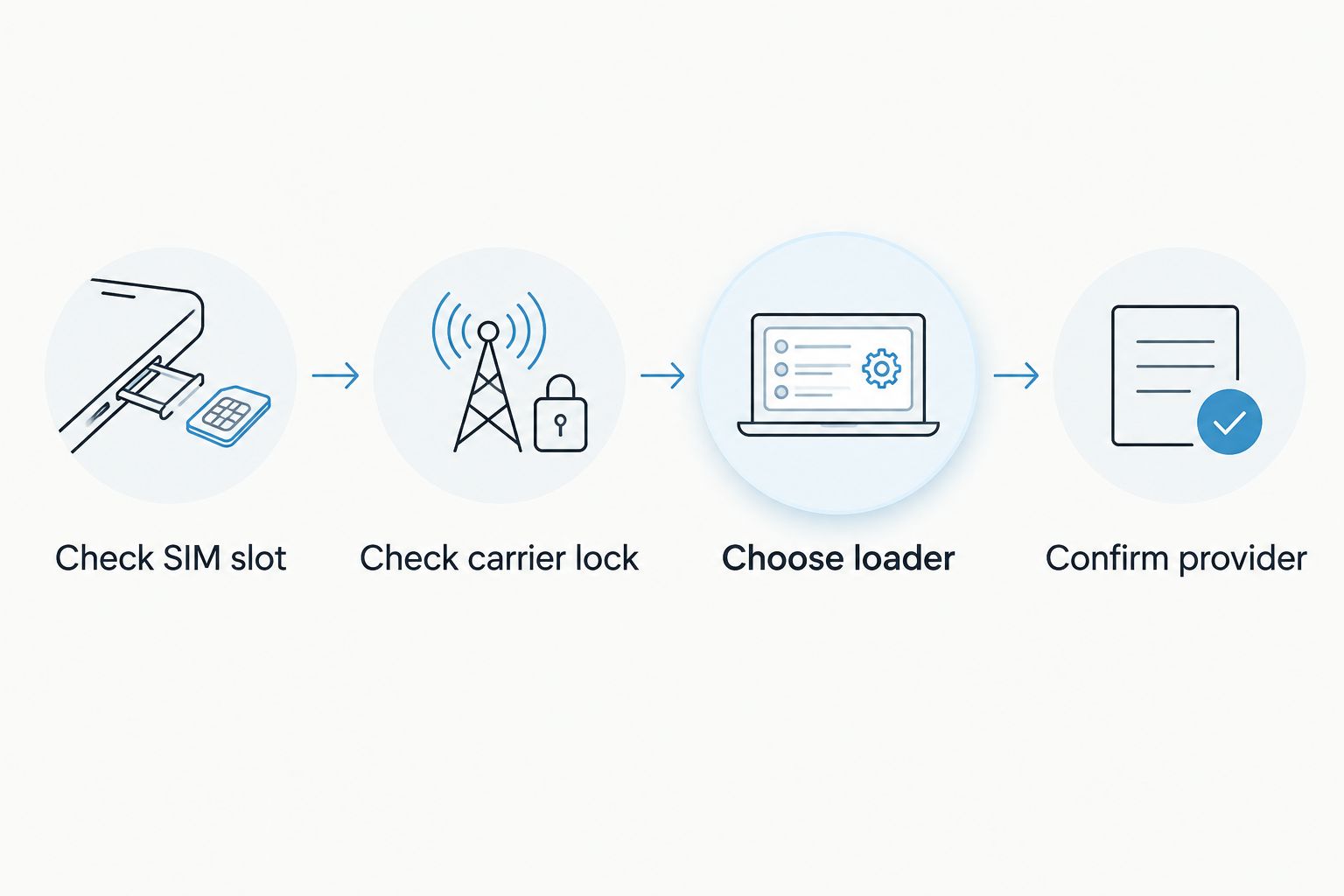
Use this sequence for either option in 2026. It catches a bad fit before you spend time comparing profile counts.
- Check SIM slot. Inspect your exact phone variant for a physical SIM tray and confirm the card format it accepts. A phone sold under the same model name in another region can have a different configuration.
- Check carrier lock. Confirm that your device can use the carrier or travel-data service you intend to load. An adapter is not a carrier-unlocking tool.
- Choose loader. For Switch Pro, identify the Android device used for profile management. For Switch Max on an iPhone, determine whether you will use a pre-loaded card or provision the card with the Bluetooth reader. Request Plan B's actual loading instructions before choosing it.
- Confirm provider. Check whether the intended eSIM provider's QR-code or manual activation process is supported by the chosen setup. Also check your device's network bands for the places you plan to use it.
A pre-loaded card changes the loading task, not the hardware requirement. Switch lists destination-data cards, including a product named for 10 GB over 30 days. Treat that as an example of how a card and data plan can be packaged together; confirm the current plan terms and your device fit separately. Do not assume a pre-loaded destination profile is interchangeable with every other provider's activation method.
Pricing: compare the hardware and data separately
There is no supported price winner between Switch and Plan B in this comparison. Switch lists adapter hardware, a separate reader, a bundle pairing a card with a reader, and pre-loaded data-card options. Those are different purchases with different setup paths. Choosing the card alone when you require reader-based provisioning does not cover the complete setup.
Plan B's current purchase structure is not established here. Before comparing checkout totals in 2026, identify exactly what its purchase includes: the card, a way to load profiles, and any destination data you need. Compare those components against the Switch configuration that actually fits your phone. A lower card-only checkout total would not settle the decision if the loading path is unusable; a bundle is unnecessary if you already have an accepted way to provision the card.


Final verdict: choose by confirmed fit
Choose Switch eSIM if you are an Android buyer who wants the stated Pro management path, an iPhone buyer with a compatible SIM tray who needs the Max use case, or a buyer who needs the reader's no-Android loading route. Switch is also the documented choice here for bulk or white-label sourcing. Confirm your phone variant, carrier and provider before selecting the product.
Choose Plan B eSIM if you have written confirmation that its current card and setup work with your exact phone, regional variant, carrier and intended provider, while Switch cannot confirm that combination. That is a genuine reason to prefer Plan B: verified device fit beats a better-described product that does not fit. Without that confirmation, its feature set cannot be awarded a win.
| Dimension | Winner |
|---|---|
| Stated Android management path | Switch |
| Named iPhone use case | Switch |
| Stated loading path without Android | Switch |
| Published profile capacity | Switch on documentation; raw capacity unproven |
| Stated account-free reader setup | Switch |
| Bulk and white-label terms | Switch on documentation |
| Exact device fit when Plan B alone confirms it | Plan B |
| Lowest total purchase cost | Neither established |
FAQ
Which is better, Switch eSIM or Plan B eSIM in 2026?
Choose Switch eSIM for its stated Android, compatible-iPhone and Bluetooth-reader paths. Choose Plan B eSIM if it confirms your exact device and carrier combination and Switch does not.
Does Switch Max work in every iPhone?
No. Switch Max is intended for compatible iPhones with a suitable physical SIM slot. Check the model, regional variant and carrier-lock status before ordering.
Can I load Switch profiles without an Android phone?
Yes, Switch describes its Bluetooth reader as a way to load profiles without an Android phone. Confirm that your adapter card and intended eSIM provider fit that setup.
How many profiles does Switch Max hold?
Switch Max holds up to 15 eSIM profiles, according to its product description. That is stored-profile capacity, not a claim that all profiles operate at once.
Is Plan B eSIM compatible with my iPhone?
Plan B's iPhone compatibility is not established by the supplied product information. Request confirmation for your exact model and regional variant, including the required physical SIM slot and loading procedure.
Is Plan B eSIM cheaper than Switch eSIM?
No price comparison is supported here. Compare the hardware and any required reader or data plan in the exact configuration you need.
Does an eSIM adapter remove a carrier lock?
No. Check your phone's carrier-lock status before buying an adapter and confirm that your intended service is permitted on the device.
One last thing
A high profile limit cannot rescue an unusable loading path. If your only phone is an iPhone, settle how the card will receive its first profile before comparing Switch's 15-profile Max claim with any Plan B capacity claim. For a 2026 purchase, ask for a setup procedure tied to your device and provider, not a compatibility slogan.