
Switch eSIM vs Twise 2026: Full Comparison & Verdict
Choose Switch eSIM if you need iPhone support, phone-free profile loading through a Bluetooth reader, or bulk and white-label supply for a business; choose Twise if you have already confirmed your exact phone model, region and carrier-lock status against Twise's current device list and only need a single Android-side physical eSIM adapter card. Both brands sell a physical eSIM adapter card that sits in a phone's SIM tray and holds separate eSIM profiles. In 2026 the real difference isn't that core mechanic — it's how many device paths and provisioning methods each brand actually documents and supports.
- Switch eSIM covers Android, iPhone via Switch Max, and phone-free loading; Twise's exact device list needs direct verification.
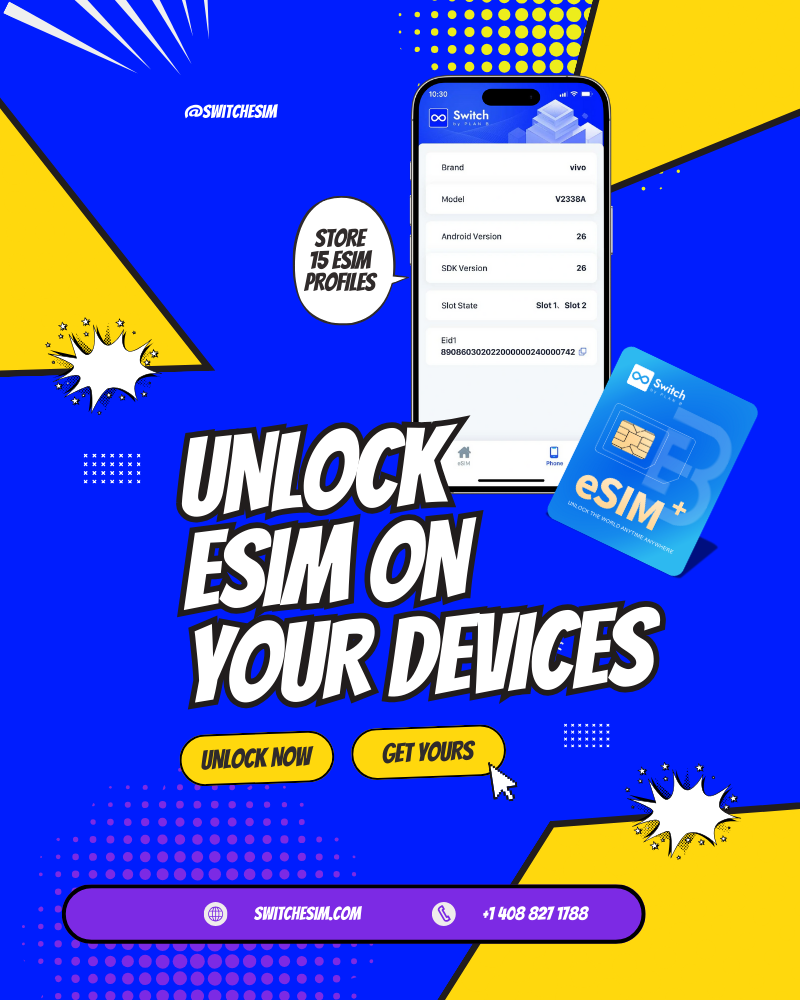
- The Switch Bluetooth reader stores up to 15 eSIM profiles without a paired Android phone.
- Switch eSIM runs bulk and white-label supply from 1,000 units; no published Twise equivalent exists as of 2026.
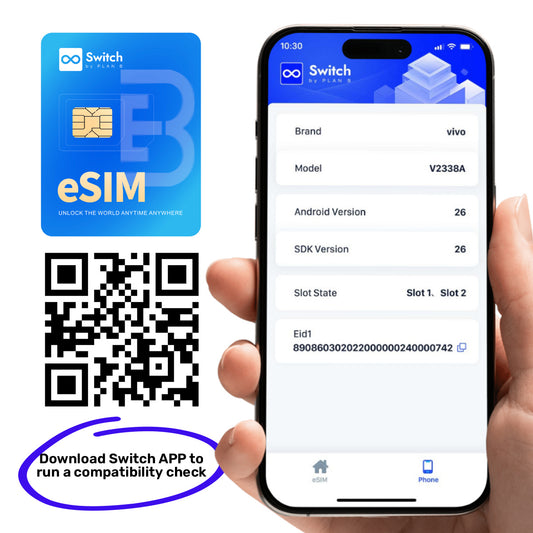
- Neither adapter works on any phone: a compatible physical SIM slot and unlocked carrier status are required.
Why this matters
A physical eSIM adapter card does not add native eSIM support to a phone that lacks it. It relocates an eSIM profile into the phone's physical SIM tray so the handset's modem reads it like a normal SIM card. That only works if the phone has an open physical SIM slot, is carrier-unlocked or accepts a foreign network, and runs an operating system version the adapter vendor has actually tested against.
Buyers weighing switch esim vs twise in 2026 need those specifics settled before price, design or brand reputation enter the decision. Skip the hardware check and neither adapter will do what the box implies.
“A physical eSIM adapter card cannot add native eSIM support to a phone — it only relocates an eSIM profile into the phone's physical SIM tray.”
Switch eSIM vs Twise at a glance
The table below sets the outline for every section that follows — each row gets its own verdict further down the page.
| Dimension | Switch eSIM | Twise |
|---|---|---|
| Best for | Multi-SIM users on Android and iPhone, plus IoT/router setups | Confirm against Twise's own current device list |
| Android profile management | App-based management via Switch Pro | Not independently verified |
| iPhone support | Switch Max, on compatible iPhone models | Not independently verified |
| Phone-free provisioning | Bluetooth card reader, no host phone required | Not published |
| Profile storage capacity | Up to 15 profiles on the Bluetooth reader | Not published |
| Bulk / white-label supply | Yes — 1,000-unit minimum, ODM, custom packaging | Not published |
| Pricing model | Per-card retail, pre-loaded data bundles, bulk tiers | Check Twise's site directly |
| Compatibility disclosure | Lists SIM-slot, carrier-lock and OS caveats up front | Verify before buying |
Switch eSIM supports more device paths than Twise (Android, iPhone and phone-free)
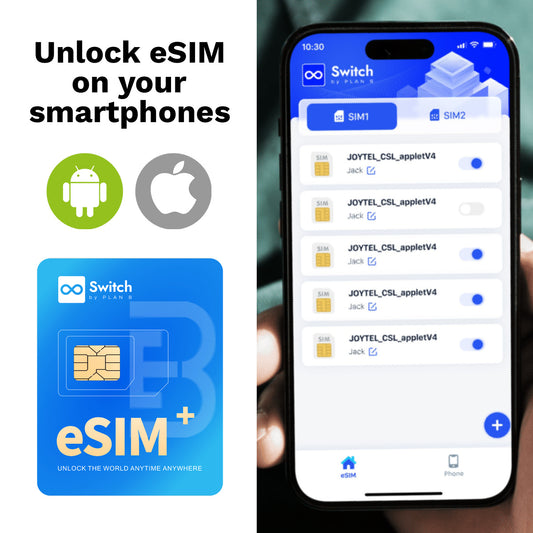
Switch Pro manages eSIM profiles through an Android app once the card sits in a phone's physical SIM slot. Switch Max extends that same card concept to compatible iPhone models, provided the iPhone's SIM tray, regional variant and carrier-lock status line up correctly. Neither product claims to work on any phone — model, region and OS version all factor into whether a given handset accepts the profile.
Twise, based on publicly available information, centers on a single physical adapter card aimed at travelers on Android and iPhone. Its exact model list, OS support and regional restrictions aren't something this comparison can verify — check Twise's own compatibility page directly before ordering, since that data changes independently of anything published here.
Switch eSIM's Bluetooth reader wins on phone-free provisioning
The Bluetooth card reader loads eSIM profiles onto a Switch adapter card without a host Android phone in the loop, and the paired card holds up to 15 profiles at once. That matters for routers, hotspots, tablets and IoT devices with a physical SIM slot but no eSIM management app of their own — the reader does the provisioning, then the card moves to whatever device needs it.
Twise's public materials do not describe an equivalent phone-free provisioning path as of 2026. If that's the deciding feature for a fleet of routers or a device without an Android host, verify it exists on Twise's side before comparing anything else.
Anyone running several routers or IoT gateways gets more use from a reader-based workflow than from an app tied to a single phone's operating system.


Switch eSIM covers bulk and white-label supply; Twise has not published one
Retailers and MVNOs can order the white-label eSIM adapter card starting at a 1,000-unit minimum, with ODM options and custom packaging built into the process. Twise does not list a comparable bulk or white-label program on its public site as of 2026. Anyone sourcing at reseller volume has one documented path here and one unverified one on Twise's side.
Both cards run on the same core mechanic (tie)
Strip away the app and the bundle options and both products do the same job: a physical card sits in an existing SIM tray and presents an eSIM profile to the handset's modem as if it were a standard SIM. Neither replaces native eSIM hardware inside the phone, and neither turns a locked or genuinely incompatible handset into a multi-profile device. On that base mechanic it's a tie — the differentiation lives entirely in the software, the provisioning path and the supply options built around the card, not the card's basic function.
Switch eSIM discloses compatibility limits before purchase; verify Twise does the same
Switch eSIM states upfront that compatibility depends on physical SIM slot availability, phone model, regional variant, OS version, carrier-lock status and supported network bands — not on the adapter card alone. That list gets published because most reported failures trace back to one of those factors rather than a defect in the card itself. Check whether Twise's product pages carry the same level of pre-purchase disclosure before you order, since a vendor that skips those caveats usually means more support tickets later, not fewer.
Pricing: two different models, not two different numbers
Switch eSIM sells the Pro and Max cards individually, bundles them with pre-loaded destination data (20GB to 75GB across 25+ destinations), and runs bulk tiers for resellers — a model built around picking the exact data allotment and device path a trip or fleet needs. Current pricing on any specific card or bundle is best checked on the Switch eSIM site directly, since listings update through 2026 as data plans and destinations change.
Twise's pricing structure should be checked on Twise's own site, since third-party listings and adapter pricing shift often enough that any figure printed in this comparison could be stale by the time you read it. The tradeoff worth evaluating isn't which number is lower — it's whether you want a per-trip data bundle handled for you or a bare adapter card you top up yourself through a separate eSIM provider.
Final verdict
Choose Switch eSIM if: you carry an iPhone and need Switch Max's compatibility path, you manage routers or IoT devices that need the Bluetooth reader's phone-free loading, or you're sourcing adapter cards at reseller volume with white-label packaging.
Choose Twise if: you've verified your specific phone model, region and carrier-lock status against Twise's current compatibility list, you only need Android-side profile switching, and you don't need bulk supply or a phone-free provisioning path.
Scorecard
| Dimension | Winner |
|---|---|
| Device paths (Android + iPhone) | Switch eSIM |
| Phone-free provisioning | Switch eSIM |
| Bulk / white-label supply | Switch eSIM |
| Core hardware mechanic | Tie |
| Compatibility disclosure | Switch eSIM |
| Pricing transparency | Verify directly with Twise |
FAQ
Is Switch eSIM better than Twise in 2026?
Switch eSIM documents more device paths (Android via Switch Pro, iPhone via Switch Max, phone-free via the Bluetooth reader) and a published bulk/white-label program. Twise's exact device list and bulk options aren't independently verified, so confirm those directly before comparing further.
Does either eSIM adapter work on any phone?
No. Both require a compatible physical SIM slot, and results also depend on phone model, regional variant, carrier-lock status, OS version and network bands. Check your exact phone against the vendor's stated compatibility before buying.
Can I use a Switch eSIM adapter without an Android phone?
Yes, through the Bluetooth card reader, which loads eSIM profiles onto the adapter card without a paired Android phone. That path also works for routers, hotspots and tablets with a physical SIM slot.
How many eSIM profiles can the Switch Bluetooth reader store?
The Bluetooth card reader stores up to 15 eSIM profiles on one card. That capacity covers most travelers and multi-SIM users without needing multiple cards.
Does Switch eSIM support iPhone?
Switch Max extends the adapter card concept to compatible iPhone models, contingent on the phone's SIM tray, regional variant and carrier-lock status. Not every iPhone model or region is guaranteed to work.
Does Twise offer bulk or white-label eSIM adapter cards?
No published bulk or white-label program for Twise was found as of 2026. Switch eSIM runs one with a 1,000-unit minimum, ODM options and custom packaging.
What's the main risk when buying either adapter?
The most common failure is a phone that's carrier-locked or has an incompatible SIM tray — not a defect in the adapter card itself. Verify your device's unlock status before ordering from either brand.
Which is cheaper, Switch eSIM or Twise?
Pricing on both changes through 2026 and isn't something this comparison locks in. Check current pricing on each brand's own site rather than relying on a fixed number here.
One last thing
The detail most buyers skip: a physical eSIM adapter card only works if the destination phone's SIM tray accepts a non-native carrier, meaning the phone itself has to be unlocked. That single line item — carrier-lock status — kills more setups than any spec sheet comparison between switch esim vs twise ever will. Check it first, in 2026 and every year after, before comparing anything else.