
Best eSIM Hardware for Resellers and MVNOs in 2026
The best eSIM hardware for resellers and MVNOs in 2026 splits by business model: the White Card eSIM Adapter wins for private-label programs, the Switch Pro and Max Bulk Purchase Offer wins for stocking mixed Android and iOS inventory, and the standalone Switch eSIM Adapter Pro wins as the lowest-cost entry point for an Android-only catalog.
- White Card eSIM Adapter is the top esim hardware for resellers building a private-label brand at a 1,000-unit MOQ.
- Switch Pro and Max Bulk Purchase Offer covers mixed Android and iOS stock without splitting SKUs.
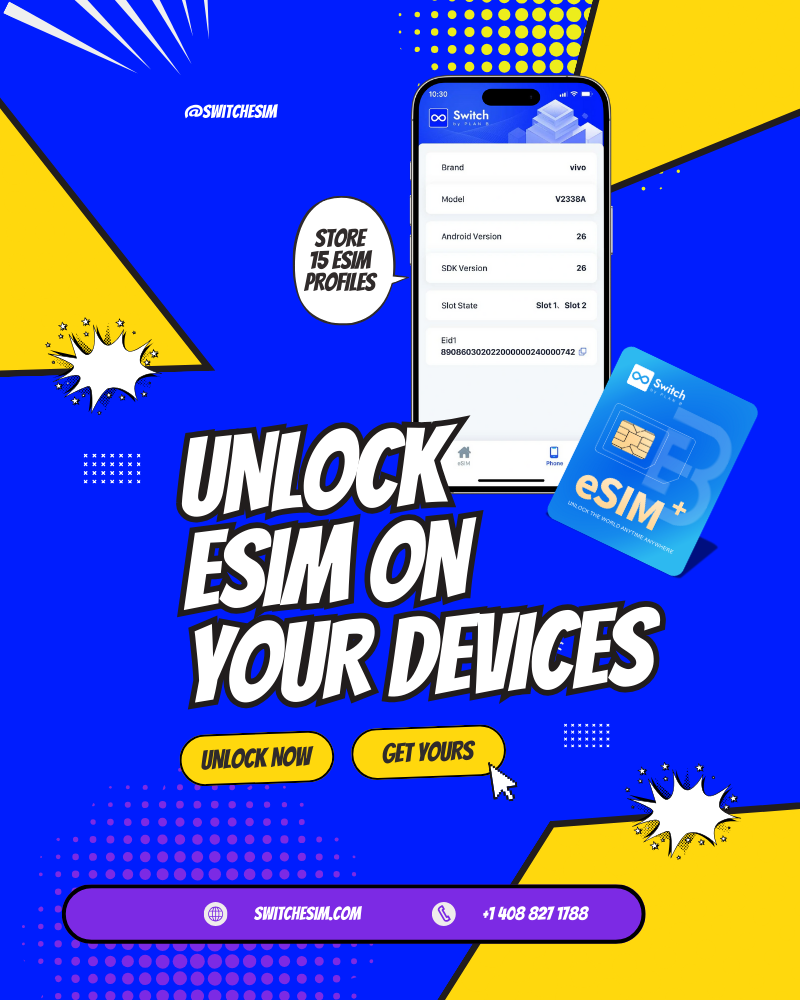
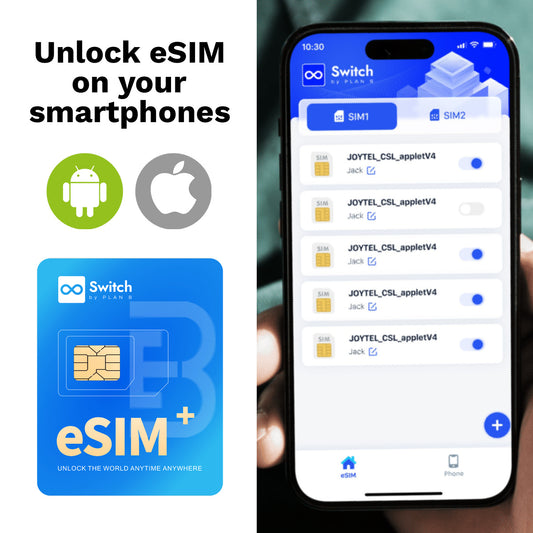
- Every Switch adapter card holds up to 15 eSIM profiles per physical card in 2026.
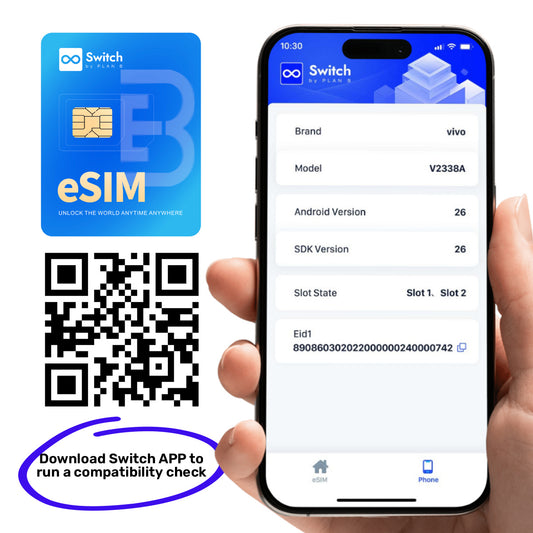
- iPhone support depends on a physical SIM tray, model, region and carrier lock, never "any iPhone."
- The Bluetooth eSIM card reader provisions profiles without a phone, useful for kiosk or counter resale.
Why this matters
Resellers and MVNOs don't sell connectivity the way carriers do — they sell the switching hardware that lets a customer carry five, ten, or fifteen eSIM profiles on a phone that never had native eSIM support. Switch eSIM makes the adapter cards and Bluetooth reader that make that switching possible, and the catalog splits cleanly by buyer: individual travelers order one card, resellers order pallets.
Stocking the wrong SKU costs margin twice — once on unsold inventory, once on support tickets from customers whose phone doesn't have a physical SIM slot at all. No physical SIM tray on the target phone means no adapter on this list works, regardless of profile capacity. Recent eSIM-only iPhone models sold in the US are the clearest example, and that single fact eliminates part of the addressable market before a reseller writes a single listing in 2026.
“No physical SIM tray on the target phone means no adapter on this list works, regardless of profile capacity.”
What makes the best eSIM hardware for resellers
- White-label availability — can the card ship blank, under your own brand, with custom packaging?
- Minimum order quantity and packaging — bulk versus retail-unit ordering, and whether packaging terms are negotiable.
- Profile capacity per card — how many eSIM profiles a single physical card holds before a customer needs a second one.
- OS and device coverage — Android app management, iPhone SIM-tray compatibility, or reader-based provisioning that skips the phone entirely.
- Provisioning method — app-based QR loading versus a physical Bluetooth reader for phone-independent setup.
- Carrier-lock and SIM-slot dependency — a carrier-locked or eSIM-only target phone won't work with any card, no matter how it's provisioned.
At a glance
| Item | Best for | Standout feature | Key limitation |
|---|---|---|---|
| White Card eSIM Adapter | Private-label resale | Unbranded eUICC, custom packaging, ODM | 1,000-unit minimum order |
| Switch Pro and Max Bulk Purchase Offer | Mixed Android/iOS stocking | Combines both SKUs in one order | Still Switch-branded, no rebrand option |
| Switch eSIM Adapter Pro (Android) | Android-only catalogs | Up to 15 profiles at the lowest per-unit cost | Android only, no iPhone use |
| Switch eSIM Adapter Max (Android & iOS) | Cross-platform resale | Works on Android and compatible iPhones with a SIM tray | iPhone use depends on model, region, carrier lock |
| Open Source Bluetooth eSIM Card Reader | Phone-independent provisioning | Loads profiles without a phone in the loop | Doesn't handle day-to-day switching once loaded |
| Pre-loaded eSIM Adapter Max with destination data | Travel-data resale bundles | Ships with a destination plan already provisioned | Fixed to that destination until reconfigured |
| eSIM Adapters + Bluetooth Card Reader bundle | Turnkey starter kits | Adapter and reader sold as one SKU | Higher unit cost than the adapter alone |
1. White Card eSIM Adapter (Unbranded eUICC): best for private-label reseller programs
The White Card eSIM Adapter ships as a blank, unprinted eUICC card with no Switch branding, sold at a 1,000-unit minimum order with custom packaging built into the ODM process. It's built for resellers and MVNOs who want their own name on the card instead of reselling a Switch-branded product.
White Card eSIM Adapter pros:
- Sells under your own brand name, no Switch logo or packaging
- Two hardware variants available for different device coverage needs
- Custom packaging design included in the ODM run
White Card eSIM Adapter cons:
- 1,000-unit minimum order is a real cash commitment before the first sale
- No retail-unit testing option before committing to volume
- Support and warranty terms shift to the reseller once rebranded
Best for: resellers ready to commit to a private-label SKU at volume. Verdict: Buy if 1,000+ units of demand are already lined up; Wait if the market is still unvalidated.
2. Switch Pro and Max Bulk Purchase Offer: best for MVNOs stocking mixed Android and iOS inventory
This bulk pack combines Switch eSIM Adapter Pro and Switch eSIM Adapter Max units in one order, letting an MVNO stock the Android-only card and the Android/iOS card without running two separate purchase orders.
Bulk Purchase Offer pros:
- One order covers both SKUs instead of two purchase negotiations
- Keeps Switch branding, so support and setup documentation carry over directly
- No custom packaging minimum, unlike the White Card variant
Bulk Purchase Offer cons:
- Switch-branded, so it doesn't suit a private-label play
- Per-unit mix between Pro and Max is fixed by the pack
- Device compatibility still needs a check per customer regardless of volume ordered
Best for: MVNOs wanting Switch-branded stock across both platforms in a single order. Verdict: Buy for multi-platform resale without private branding needs.
3. Switch eSIM Adapter Pro (Android): best for Android-only reseller catalogs
The Switch eSIM Adapter Pro is a physical eSIM adapter for compatible Android phones with a SIM slot, managed through the Switch Android app. It holds up to 15 eSIM profiles at once, so one card covers a home plan, a work line and several travel profiles.
Switch eSIM Adapter Pro pros:
- Lowest per-unit cost among the standalone Switch cards
- Up to 15 profiles per card reduces repeat-purchase pressure from active users
- Retail-unit ordering available, no MOQ commitment
Switch eSIM Adapter Pro cons:
- Android only — no iPhone profile management through this card
- Still needs a physical SIM tray on the target phone; eSIM-only Android models can't use it
- Carrier-locked target phones can block profile switching regardless of the adapter
Best for: reseller catalogs built around Android devices. Verdict: Buy as the entry-level SKU for an Android-focused storefront.
4. Switch eSIM Adapter Max (Android & iOS): best for cross-platform resale
The Switch eSIM Adapter Max is a SIM-sized card that adds eSIM switching to Android phones and to compatible iPhones with a physical SIM tray. It holds the same up to 15 eSIM profiles per card as the Pro.
Switch eSIM Adapter Max pros:
- Covers both Android and iPhone customers with one SKU
- Same 15-profile capacity as the Pro card
- Broadens the addressable customer base for a mixed-device storefront
Switch eSIM Adapter Max cons:
- iPhone compatibility depends on model, regional variant, carrier-lock status and network bands — never "any iPhone"
- eSIM-only iPhone models without a SIM tray can't use it at all
- Costs more per unit than the Android-only Pro card
Best for: stores selling to both Android and iPhone customers without splitting SKUs. Verdict: Buy, but flag the iPhone SIM-tray requirement clearly at checkout to cut return rates.
5. Open Source Bluetooth eSIM Card Reader: best for phone-independent provisioning
The Open Source Bluetooth eSIM Card Reader loads and manages profiles on a Switch adapter card without going through a phone — insert the card, connect over Bluetooth, load the profile from the reader.
Bluetooth eSIM Card Reader pros:
- Provisions cards without an Android phone in the loop, useful for in-store or kiosk setup
- Open-source firmware, so provisioning isn't locked to one app
- Works alongside any Switch adapter card already in a catalog
Bluetooth eSIM Card Reader cons:
- Doesn't replace day-to-day profile switching on the phone once cards are loaded
- Adds a second SKU and a setup step compared to phone-only provisioning
- Best value shows up at counter-service volume, not for one at-home user
Best for: retail counters and MVNO storefronts provisioning cards on the spot. Verdict: Buy as an add-on SKU for in-person resale, Skip for pure e-commerce fulfillment.
6. Pre-loaded eSIM Adapter Max with destination data: best for travel-data resale bundles
The pre-loaded eSIM adapter ships as a Switch Max card with a destination data plan already provisioned, aimed at customers who want hardware and connectivity in one purchase instead of loading a plan themselves.
Pre-loaded eSIM Adapter pros:
- Removes the profile-loading step for the end customer
- Works for both iOS and Android on the same card, same SIM-tray caveat as the standard Max
- Fits a travel-data resale angle rather than a pure hardware angle
Pre-loaded eSIM Adapter cons:
- Fixed to whatever destination is loaded until reconfigured
- Narrower resale use case than a blank adapter card
- Still bound by the same iPhone SIM-tray and carrier-lock limitations as the Max
Best for: resellers bundling hardware with a specific destination's data plan. Verdict: Hold unless the customer base is destination-specific travelers rather than general multi-profile users.
7. eSIM Adapters + Bluetooth Card Reader bundle: best for turnkey starter kits
The eSIM Adapters + Bluetooth Card Reader bundle pairs a Switch adapter card with the Open Source Bluetooth Card Reader in one SKU, covering storage of up to 15 profiles and phone-independent loading in a single purchase.
Bundle pros:
- One SKU instead of two separate purchase decisions for the customer
- Suits a starter-kit listing for new multi-SIM users
- Covers both the card and the provisioning tool in one box
Bundle cons:
- Higher unit cost than the adapter alone
- Redundant for customers who only need the card and already own a compatible phone
- Same device-compatibility caveats as the individual adapter inside it
Best for: a single turnkey listing aimed at new multi-SIM buyers. Verdict: Buy as a starter-kit SKU alongside, not instead of, standalone adapter listings.


How we ranked
Each item above got scored against the same six checks: white-label availability, MOQ and packaging, profile capacity, OS and device coverage, provisioning method, and the underlying SIM-slot and carrier-lock dependency that no adapter can override. The White Card eSIM Adapter ranks first because it's the only SKU built specifically for a private-label play in 2026. The Switch Pro and Max Bulk Purchase Offer ranks second for MVNOs that need Switch-branded volume across two device platforms without a rebrand. Everything below that fills a narrower use case — Android-only, cross-platform, phone-independent provisioning, or a pre-loaded travel bundle.
Which eSIM hardware should you stock?
Buy the White Card eSIM Adapter if a private-label brand is the goal and the 1,000-unit minimum is workable. Buy the Switch Pro and Max Bulk Purchase Offer to stock Switch-branded cards across Android and iOS in one order. Start with the standalone Switch eSIM Adapter Pro if the catalog is Android-only and the lowest per-unit entry point matters most before scaling to bulk or private-label orders later in 2026.
FAQ
What is the best eSIM hardware for resellers in 2026?
The White Card eSIM Adapter is the best esim hardware for resellers building a private-label brand, while the Switch Pro and Max Bulk Purchase Offer suits MVNOs stocking Switch-branded cards across Android and iOS. The right pick depends on whether the goal is a private-label SKU or branded volume.
Can eSIM adapter cards be white-labeled?
Yes. The White Card eSIM Adapter ships as a blank, unbranded eUICC card at a 1,000-unit minimum order, with custom packaging built into the ODM process.
What's the minimum order quantity for white-label eSIM adapters?
The White Card eSIM Adapter has a 1,000-unit minimum order requirement. Retail-unit ordering isn't available for the unbranded variant.
Do eSIM adapters work with any iPhone?
No. iPhone compatibility depends on the model, regional variant, carrier-lock status and network bands, and the phone still needs a physical SIM tray. Recent eSIM-only iPhone models sold in the US can't use a physical adapter at all.
How many eSIM profiles does a Switch adapter card hold?
Switch eSIM Adapter Pro and Switch eSIM Adapter Max both hold up to 15 eSIM profiles per card, covering a home plan, a work line and several travel profiles on one card.
Is a Bluetooth eSIM card reader necessary for reselling?
Not necessary, but useful. The Open Source Bluetooth eSIM Card Reader provisions profiles without a phone in the loop, which suits in-store or kiosk resale more than pure e-commerce fulfillment.
What's the difference between Switch Pro and Switch Max?
Switch eSIM Adapter Pro manages profiles on Android only through the Switch app. Switch eSIM Adapter Max extends that to compatible iPhones with a physical SIM tray, at a higher per-unit cost.
Do MVNOs need carrier agreements to resell eSIM adapter hardware?
Reselling the physical adapter hardware doesn't require a carrier agreement — the card just stores and switches eSIM profiles the customer already owns. A bundled data plan, like the pre-loaded destination card, is a separate commercial decision.
One last thing
The single biggest return driver for eSIM adapter resellers isn't a defective card — it's a customer whose phone has no physical SIM tray at all. Check the target device's SIM-slot presence and carrier-lock status before the sale, not after, and returns drop regardless of which card ends up in the box in 2026.